Yorkshire Terrier Grooming
Hair rather than fur, on a dog small enough to sit in one hand
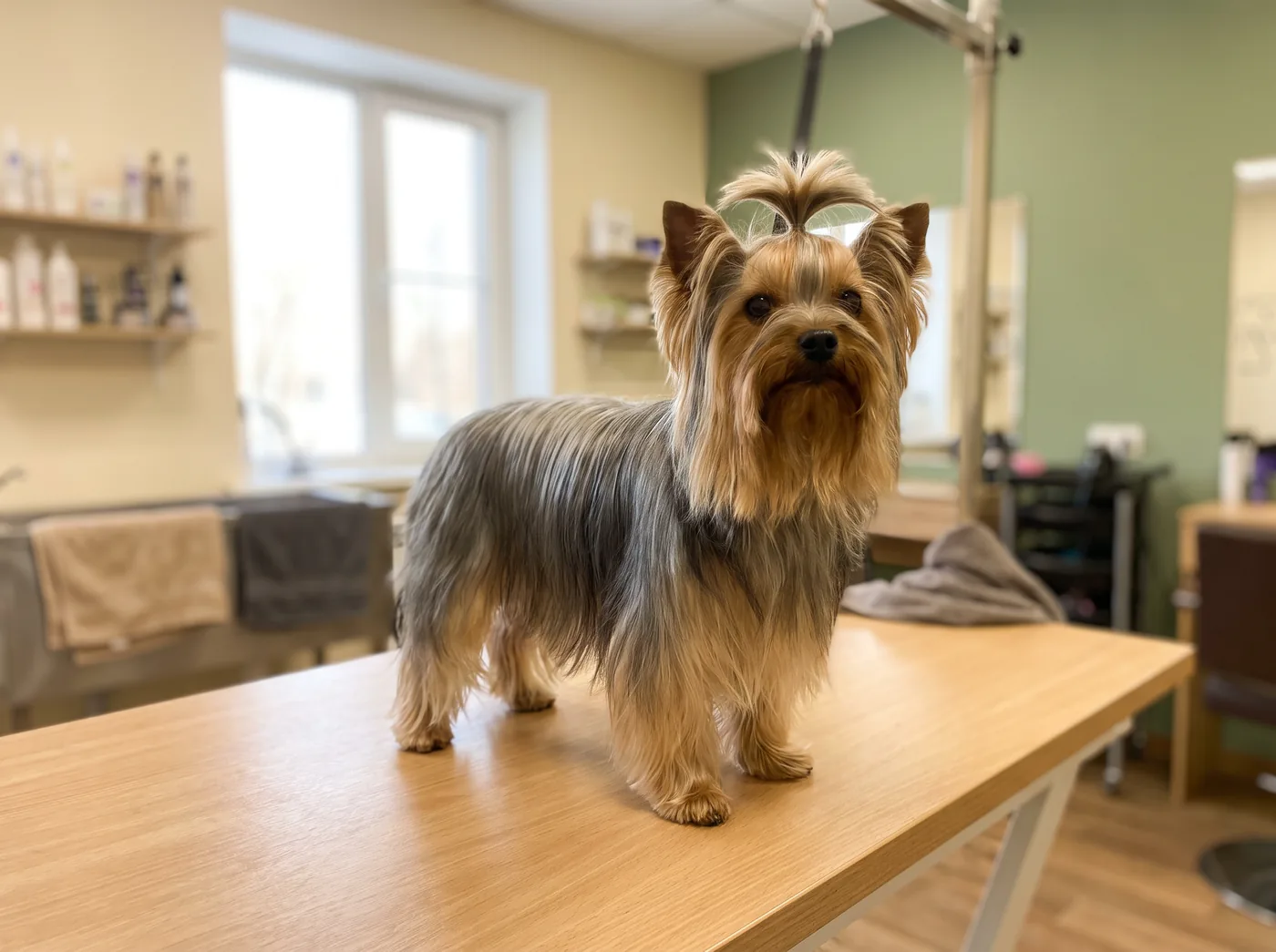
About the Yorkshire Terrier
A Yorkshire Terrier grows hair rather than fur. The coat is fine, straight, glossy and single layered, with no undercoat behind it, and it keeps growing the way human hair does rather than reaching a length and shedding out. A show coat reaches the floor and is kept wrapped between appearances.
That makes the Yorkie one of the lowest shedding dogs there is and one of the highest maintenance, which is the same trade every silky coated breed carries. It also makes the coat unusually easy to work with when it is looked after and unusually unforgiving when it is not.
The other thing that shapes every appointment is the size. At four to seven pounds this is a genuinely fragile animal, and how it is handled matters as much as what is done to the coat.
What a full groom involves
Quick to bathe, slow to finish, which is the pattern for the whole toy group.
A comb through first, dry. Then a bath, which takes minutes on a dog this size, then a full blow dry with a brush working the coat straight. Getting a Yorkie coat dry and straight is what makes it look like a Yorkie coat; left to air dry it goes wavy and tangles as it dries.
Then the detail work, which is most of the appointment. The face: either scissored short or left long and gathered into a topknot, and the hair around the eyes dealt with either way. The ears, which on this breed are usually trimmed short on the top third to keep them upright and clean. Nails, which are tiny and where the quick sits proportionally close to the tip. Pads cleared. A sanitary trim.
Then the body, which on a small dog in a pet trim is the quickest part of the whole thing.
About an hour and a half, and almost none of it is the haircut people picture.
How often, and what happens if you stretch it
Four to six weeks in a pet trim, and the face needs attention sooner than the body does.
What fails first is predictable. Hair grows into the eyes, which is a welfare problem rather than an untidy one. Then the sanitary area, which on a long coated dog this size becomes a hygiene issue quickly. Then the feet. The body coat is usually the last thing to actually matter and the first thing an owner notices.
Because there is no undercoat, a Yorkie coat mats less readily than a doodle or a Bichon, and it mats in fewer places: the armpits, behind the ears, under a collar or harness, and anywhere a knot has been left long enough to tighten. Combed daily it stays clear almost indefinitely. Left for a month it develops the tight, small, close mats that a fine coat produces, and those are painful to work out.
A full length show coat is a completely different commitment involving daily work and wrapping, and it is not what most pet Yorkies wear or should.
The coat problems a Yorkshire Terrier actually gets
Breakage is the one specific to this coat and it is not obvious. Yorkie hair is fine and long, and brushing a dry coat snaps it, particularly at the ends. A light detangling spray or a leave in conditioner before brushing makes a real difference to how the coat looks over months rather than days, and dry brushing is the reason plenty of coats look thin and ragged at the tips.
Then the face. Hair grows straight into the eyes on this breed and something has to be done about it, whether that is a topknot or a short face trim. Tear staining follows on lighter coated individuals, and it is easier to keep on top of daily than to remove later.
Then the usual matting sites: armpits, behind the ears, and the collar line, which is hidden.
Worth knowing separately: the Yorkie coat changes color and texture as the dog matures, often over the first two years, from black and tan to the steel blue and gold of an adult. That is normal development rather than anything to do with grooming.
What moves the price
Not the size, which is the thing owners expect. A Yorkie is among the quickest dogs to bathe and dry in any salon and is rarely the cheapest appointment, because everything after the bath is detail work carried out at a small scale with no margin for error.
What does move it: the finish. A short uniform puppy cut is quicker than a scissored trim with a long skirt and a topknot, and it holds its shape for longer.
Coat condition, as ever. Fine mats in a silky coat are slow to work out and often have to be cut.
And temperament, which on this breed is worth being honest about. Yorkies are terriers, they have opinions about being held still, and scissoring around the eyes of a dog that objects is a slow and careful job. A dog that has been handled since puppyhood is a completely different appointment.
What to tell your groomer
Say what you want on the face and whether you want a topknot kept. That decision changes the dog's expression and apparent age more than any body length does, and a photograph communicates it far better than a name.
Say whether the ears should be trimmed short on the top third, which is the usual treatment and keeps them upright and clean, or left.
Mention the collar. If your dog wears one all day, say so, because the mat under it is invisible and the groomer will check.
Say if the dog has a luxating patella, a history of tracheal trouble, or simply objects to its feet being handled. All three change how a good groomer works: no jumping down from the table, no pressure at the throat, and extra time on the feet rather than a struggle.
And use a harness rather than a collar for walking. It is the single most useful thing an owner of this breed can change, and it has nothing to do with the coat.
Keeping the coat between grooms
Mist before you brush
A light detangling spray or leave in conditioner first. Brushing a dry Yorkie coat snaps the hair and is why coats go thin and ragged at the ends.
Every time you brush
Comb to the skin
A pin brush through, then a metal comb from the skin outward to prove it. Armpits, behind the ears and under the collar first.
Daily
Keep hair out of the eyes
A topknot or a short face trim. Hair growing into the eye is a welfare problem, not a styling one.
Daily check
Lift, do not let them jump
A loose kneecap is common in the breed and a fall from table or sofa height is a serious injury on a five pound dog.
Every time
Common Questions About the Yorkshire Terrier
Do Yorkshire Terriers shed?
Barely. The coat is hair rather than fur, single layered with no undercoat, and it grows continuously rather than shedding out in cycles, so what comes loose tends to stay in the coat until it is combed out. That is why Yorkies suit many allergy sufferers, and it is also exactly why the coat needs daily combing and cutting every few weeks.
Should I keep the long coat or get a puppy cut?
A puppy cut, for almost every pet Yorkie. A full length coat needs daily brushing plus wrapping to protect it and a weekly bath and blow dry, and it is a genuine hobby rather than a maintenance task. A short trim looks like the breed, is far more comfortable, and takes nothing away permanently: the coat grows back with the same texture and color whenever you want it.
Why does my groomer insist on a harness instead of a collar?
Collapsing trachea is common in Yorkshire Terriers, and steady pressure on the throat aggravates it. Any pressure at the neck that produces a honking cough is a signal to stop. A harness spreads the load across the chest instead. Groomers who work with toy breeds are careful about this for the same reason they lift these dogs down from a table rather than letting them jump: a loose kneecap and a light frame make an ordinary fall a real injury.
Similar breeds
Same coat, same schedule, or the breeds this one is crossed from.


Goldendoodle
The busiest coat in any grooming salon, and the one owners are warned about least
GoldendoodleFind a groomer who knows this coat
Search 37,863 groomers by town, or keep reading the breed guide.
Find a Local Groomer View All Breeds