Shih Tzu Grooming
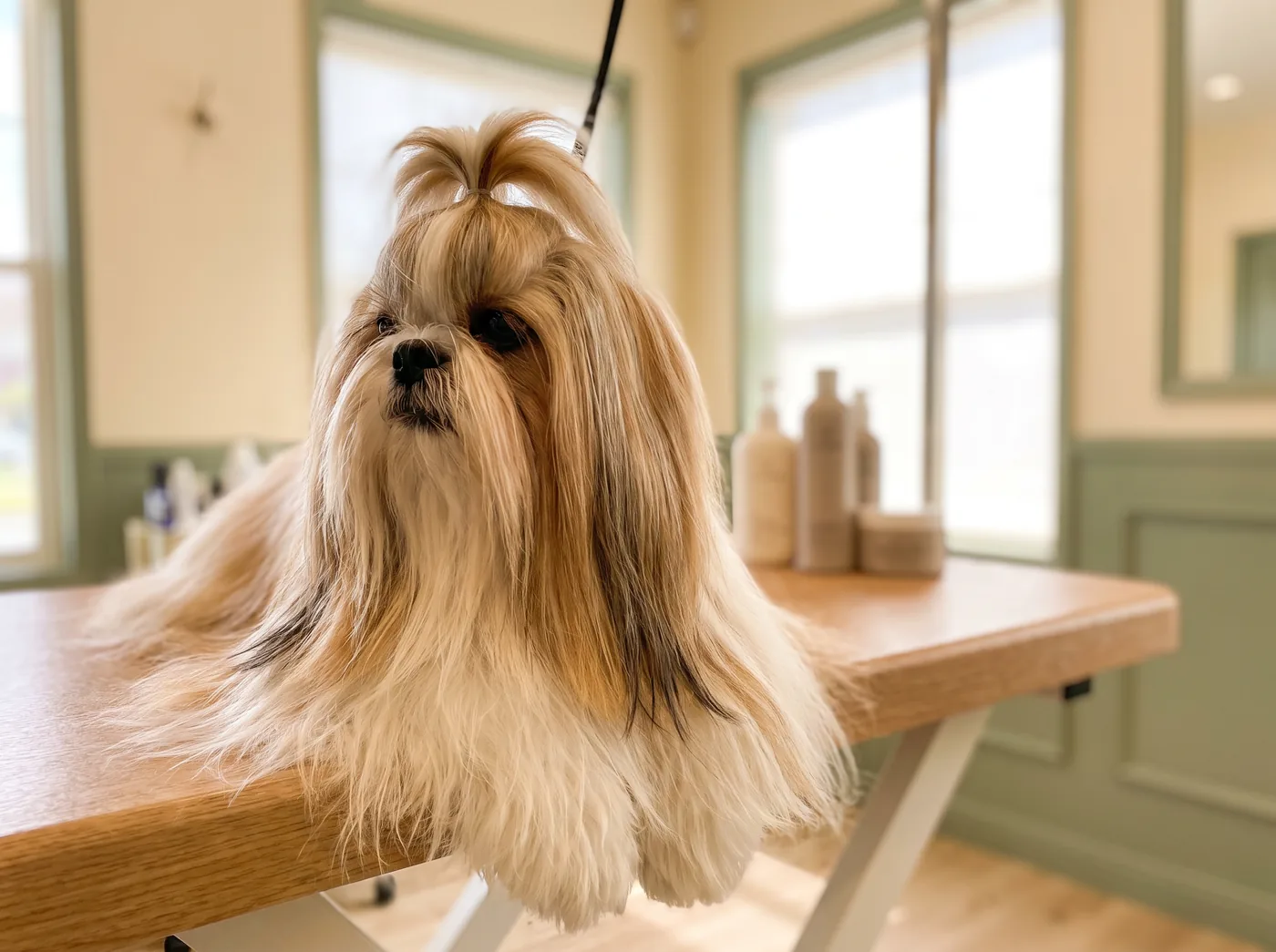
A floor length coat on a dog that would rather be on your lap
About the Shih Tzu
The Shih Tzu carries a long, fine, double layered coat that grows more or less continuously, the way human hair does, rather than reaching a length and shedding out. Left alone it reaches the floor. That is what the breed was developed for, and it is why a Shih Tzu sheds very little and needs a great deal of work.
Almost everything about grooming one comes down to a single decision: full coat or pet trim. The full coat is a daily commitment that people who keep it that way organize their week around. The pet trim is what the overwhelming majority of Shih Tzus wear, it looks like the breed, and it is not a compromise or a failure.
The other half of the job is the face, and on this breed the face is not a styling question.
What a full groom involves
A brush and comb through first, dry, before any water. On a coat this fine, tangles set in the bath and a coat that could have been combed out beforehand sometimes cannot be afterward.
Then the bath and, critically, a proper blow dry with a brush working through the coat. A Shih Tzu coat left to air dry goes wavy, tangles as it dries, and cannot be cut to a straight line. Getting it dry and straight is most of what makes a finished Shih Tzu look like one.
Then the detail work, which on this breed is the substance of the appointment. Eyes cleaned and the hair around them dealt with. Ears checked, cleaned and the hair inside thinned or plucked as needed. The nose fold wiped and dried. Pads cleared and the hair between the toes taken out. A sanitary trim, which on a long coated dog is not optional.
Then the trim itself: a clipper length over the body, scissored legs, a rounded or shortened face depending on what you asked for, and the ears and tail tidied.
Around two hours for a coat in reasonable condition.
How often, and what happens if you stretch it
Four to six weeks in a pet trim. Every four if the trim is longer, and it is the length rather than the calendar that should decide.
What goes wrong when it slips is specific rather than general. The face goes first, because hair grows straight into the eyes and there is no version of that which is merely untidy. Then the sanitary area, which on a long coated small dog becomes a genuine hygiene problem faster than owners expect. Then the feet, where hair between the pads knots and collects grit. The body coat is usually the last thing to become a problem and the first thing people notice.
Stretch it far enough and the coat mats against the skin, particularly in the armpits, behind the ears and on the chest, and the answer is a shorter clip than you wanted. It grows back true, with the same texture and color, so it is a setback rather than damage.
If you are keeping a full show length coat, the appointment interval matters less than the daily work, and the daily work is not negotiable.
The coat problems a Shih Tzu actually gets
Surface brushing is the big one, and it is the same failure that catches doodle owners. A pin brush passes over the top of a long coat and leaves the layer nearest the skin untouched, which is exactly where mats form. By the time one is visible from above it has been there a while.
The fix is line brushing. Lay the dog on its side, start at the lowest point, hold all the coat above your working line up out of the way, brush the exposed strip from the skin outward, then let another half inch down and work upward in lines to the spine. Finish every section with a comb, because a brush will pass over a mat that a comb catches on.
Then the face. Tear staining is close to universal on light coated Shih Tzus: the eyes water, the discharge oxidizes, and the hair below the eye turns reddish brown. It is far easier to keep on top of daily with a damp cloth than to remove later. The nose fold is a skin fold in the middle of the face and behaves like any other, so it gets wiped and then dried.
And the ears, which are heavy, drop, hairy inside and hold moisture. Head shaking or a smell is a veterinary matter rather than a grooming one.
What moves the price
Coat condition first, as always. A maintained coat is a straightforward two hour appointment; a matted one is a longer, harder job that finishes shorter.
Then the length and finish you ask for. A short uniform clip is quicker than a scissored trim with a rounded face and shaped legs, and it holds its shape for longer, which is a real saving across a year rather than just on the day.
Then temperament, which on this breed is usually good but matters at the face. A dog that will not hold still for scissor work around the eyes turns a ten minute job into a much longer and more careful one.
Size barely features. A Shih Tzu is quick to bathe and quick to dry, and almost none of the appointment is body work. This is the clearest illustration of the rule that size sets the floor on a groom and coat sets everything above it: a Shih Tzu costs more than a much larger short coated dog and it should.
What to tell your groomer
Say what you want done with the face, specifically, because it changes the dog more than anything else. A rounded full face reads younger and softer and needs daily wiping to stay clean. A short muzzle reads neater, stays cleaner and needs less of you. Neither is wrong and a photograph settles it faster than a description.
Say whether you want a top knot kept. It is not decoration: it holds the hair out of the eyes on a breed whose hair grows straight into them, and it is the alternative to a short face trim rather than an addition to it.
Mention any tear staining, any past ear trouble, and whether the dog objects to having its feet handled.
And say honestly how much brushing happens. A groomer told "a few times a week" will suggest a length that survives a few times a week. A groomer told "every day" will leave it longer, and if that turns out to be optimistic the next appointment is the one that pays for it.
Keeping the coat between grooms
Line brush to the skin
Lay the dog on its side and work upward in layers, brushing each strip from the skin outward. Finish every section with a comb to prove it.
Daily
Wipe the eyes and nose fold
A damp cloth under each eye and through the fold across the muzzle, then dry it. Drying is the half that gets skipped and the half that matters.
Daily
Keep the sanitary area short
Long hair around the rear collects waste and mats solid. If you keep one area short between appointments, keep this one.
Between grooms as needed
Check between the pads
Hair grows between the toes, knots, and collects grit. It also costs the dog grip on a smooth floor.
Weekly
Common Questions About the Shih Tzu
Should I keep my Shih Tzu in a long coat or a pet trim?
A pet trim, unless you genuinely want a daily grooming routine. A full length coat needs brushing to the skin every day plus a weekly bath and blow dry, and it is a real commitment rather than an exaggeration used to sell grooming. The pet trim looks like the breed, is far more comfortable for the dog, and closes nothing off: the coat grows back true with the same texture and color whenever you want it long again.
How do I get rid of the reddish stains under my Shih Tzu's eyes?
Prevention beats removal. The stain is discharge that has oxidized in the hair, so wiping the area with a damp cloth daily and keeping the hair there short or tied back stops new staining. Hair already stained will not bleach out and generally has to grow out or be trimmed off. If the watering is heavy or sudden, have the eye checked: blocked tear ducts, an inward turning lash or a scratch all present this way and none is a grooming problem.
Do Shih Tzus shed?
Very little, and that is the trade rather than a free lunch. The coat holds shed hair instead of dropping it, so it stays out of your house and stays on the dog, which is precisely why it mats and why it needs cutting on a schedule. Low shedding and low maintenance are close to opposites in dogs, and this breed is the clearest example of it.
Similar breeds
Same coat, same schedule, or the breeds this one is crossed from.


Find a groomer who knows this coat
Search 37,863 groomers by town, or keep reading the breed guide.
Find a Local Groomer View All Breeds