Mudi Grooming
The third Hungarian herding coat, and the only one you can look after with a brush
About the Mudi
Three Hungarian herding breeds, one job, and three grooming answers that have almost nothing in common. This is the third and the easy one.
A Puli forms cords that are separated by hand for years and take days to dry.
A Pumi has corkscrew curls that are combed damp and air dried, and a high velocity dryer ruins the look.
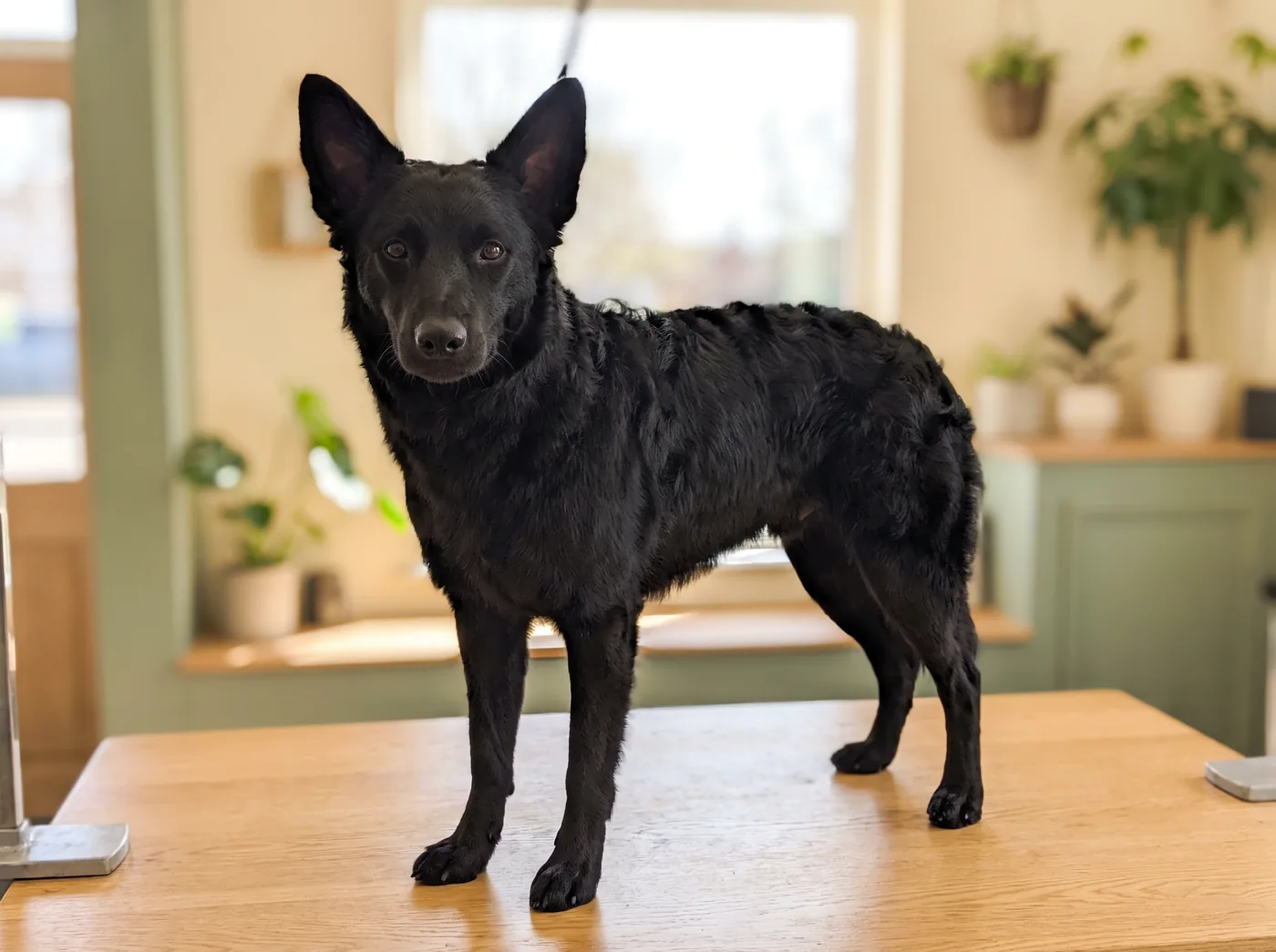
A Mudi has a dense wavy to slightly curly coat, about one to three inches long over the body, with short smooth hair on the head and the front of the legs. It needs a brush once a week.
No stripping, no scissoring, no cording, no special drying, no salon appointment.
The country, the job and the group tell you nothing about the grooming, and these three dogs are the proof.
The Mudi has a double coat that regulates its own temperature. Shaving it does not keep the animal cooler, removes the protection against sun and insects, and the top coat often grows back patchy or never returns correctly. A thorough deshed takes out the undercoat and does the job the owner was actually asking for.
A weekly brush, and that is genuinely it
Brush weekly with a slicker or a pin brush and follow with a comb through the ruff, the britches and the tail, which carry the most coat.
The wave lies flat rather than standing away, it does not felt, and the coat sheds dirt as it dries. Matting is a low risk and confined to the usual friction points behind the ears and in the armpits.
Bathe every couple of months or when the dog finds something. The coat dries quickly, which is a genuine contrast with the other two Hungarians.
Do not clip. It is a weather resistant working coat and there is no reason to take it off.
Trimming is limited to the pads and the sanitary area, and the standard wants a natural dog, so a groomer should not be shaping anything.
Shedding is moderate and increases seasonally, when a couple of extra brushings a week handles it.
Colors include a merle pattern known in Hungary as cifra, and that carries a real consequence covered below.
Merle, and the same warning as the Catahoula
Merle turns up in the Mudi and it carries the same genetic consequence it does in every breed that has it.
The gene that breaks up the coat color also affects the pigment cells the inner ear needs to work and the ones involved in eye development. A single merle dog is usually fine. A dog with two copies, from breeding merle to merle, is often deaf, sometimes blind, and frequently both.
Two merle parents is the thing to ask a breeder about, and a responsible breeder will not do it.
The practical grooming instruction is the one from the Catahoula page and it is the same for a deaf cat: approach where the dog can see you and never start a dryer behind it. A deaf dog startled from behind by a machine it never heard start reacts, and it is not being difficult.
Say it at the booking rather than hoping it will be noticed.
Deafness can be partial and easy to miss, so a dog that is inconsistent about responding is worth testing rather than training harder.
Merle also means pale or pink skin under the light patches, which sunburns.
The three Hungarians, side by side
Worth setting out properly, because there is no clearer illustration of the point.
Puli: cords, formed and separated by hand from puppyhood, essentially never brushed, and a bath that takes a day to dry. High effort forever.
Pumi: corkscrew curls, combed damp and air dried so the curl re-forms, scissored to a natural outline every six to eight weeks. Moderate effort with a specific technique.
Mudi: waves, brushed weekly, dried normally, trimmed almost not at all. Low effort.
Three medium herding dogs from one country, all sharing ancestry, all doing the same job on the same farms.
Nothing about a dog's breed, group or origin predicts what its coat needs. Only the coat does.
The corollary for an owner is that "I want a Hungarian herding dog" is not a grooming decision, and the three answers here differ by an order of magnitude in time.
The corollary for a groomer is that recognizing the country buys you nothing at all.
The rest of the routine
With almost no coat work, the routine is the parts that get forgotten on easy dogs.
Ears are erect and pointed, which is close to the best ventilated shape there is, so infection is uncommon. Wipe the visible part weekly.
Nails every three to four weeks.
Teeth brushed. The breed is long lived and generally very healthy.
Feel for ribs monthly, though a wavy coat hides less than a plush one.
Check the pads and between the toes after work on rough ground, since this is a genuine working dog that will be running on farm surfaces.
Hip dysplasia and elbow dysplasia are worth asking a breeder about, along with eye conditions and epilepsy.
The temperament matters more than the coat: Mudik are intensely energetic, vocal, quick to react and need a real job. A bored Mudi is a loud Mudi. On a table that shows as a dog that will not settle rather than one that is frightened, and it is worth saying so.
What to tell your groomer
Say a bath, a brush, nails, ears and pads. There is nothing to strip, scissor or cord.
Say it is a Mudi and not a Pumi, since the names and the country are shared and the coats are not.
If the dog is merle, say so, and say whether it has any hearing loss.
Ask them to approach where the dog can see them and never start a dryer behind it.
Ask for the coat left natural, with no shaping.
Say the dog is loud and busy by breed rather than anxious.
Keeping the coat between grooms
Brush once a week
The whole coat routine. Waves lie flat, do not felt and dry quickly.
Weekly
Approach where it can see you
If the dog is merle it may be partly deaf. Never start a dryer behind it.
Every visit
Pads and sanitary only
The standard wants a natural dog. Nothing here gets shaped.
As needed
Give it a job first
A bored Mudi is a loud Mudi, and it shows up on the table as one.
Daily
Common Questions About the Mudi
How much grooming does a Mudi need?
A brush once a week, and that is genuinely the whole coat routine. The dense wavy coat lies flat rather than standing away, does not felt, and sheds dirt as it dries, so matting is limited to the usual friction points behind the ears and in the armpits. Bathe every couple of months, do not clip, and trim only the pads and sanitary area. It is by a wide margin the easiest of the three Hungarian herding breeds, and it needs no professional appointment at all.
What is the difference between a Mudi, a Pumi and a Puli?
The coat, and it is a difference of an order of magnitude in effort. A Puli forms cords that are separated by hand for years and take a day to dry. A Pumi has corkscrew curls that are combed damp and air dried, with a scissor trim every six to eight weeks. A Mudi has waves that need a weekly brush and nothing else. Three medium herding dogs from one country, sharing ancestry and the same job, with three incompatible grooming answers.
Is merle a problem in Mudis?
It carries the same consequence it does in every merle breed. The gene that breaks up the coat color also affects the pigment cells the inner ear needs, so a dog with two copies, from breeding merle to merle, is often deaf and sometimes blind. A single merle is usually fine. Ask a breeder about it, and if your dog has any hearing loss, tell a groomer to approach where the dog can see them and never start a dryer behind it.
Similar breeds
Same coat, same schedule, or the breeds this one is crossed from.


Catahoula Leopard Dog
A ten minute coat, and a color gene that can take the hearing with it
Catahoula Leopard DogFind a groomer who knows this coat
Search 37,863 groomers by town, or keep reading the breed guide.
Find a Local Groomer View All Breeds