Nebelung Grooming
The semi longhair of the three blue cats, and the one that actually needs combing
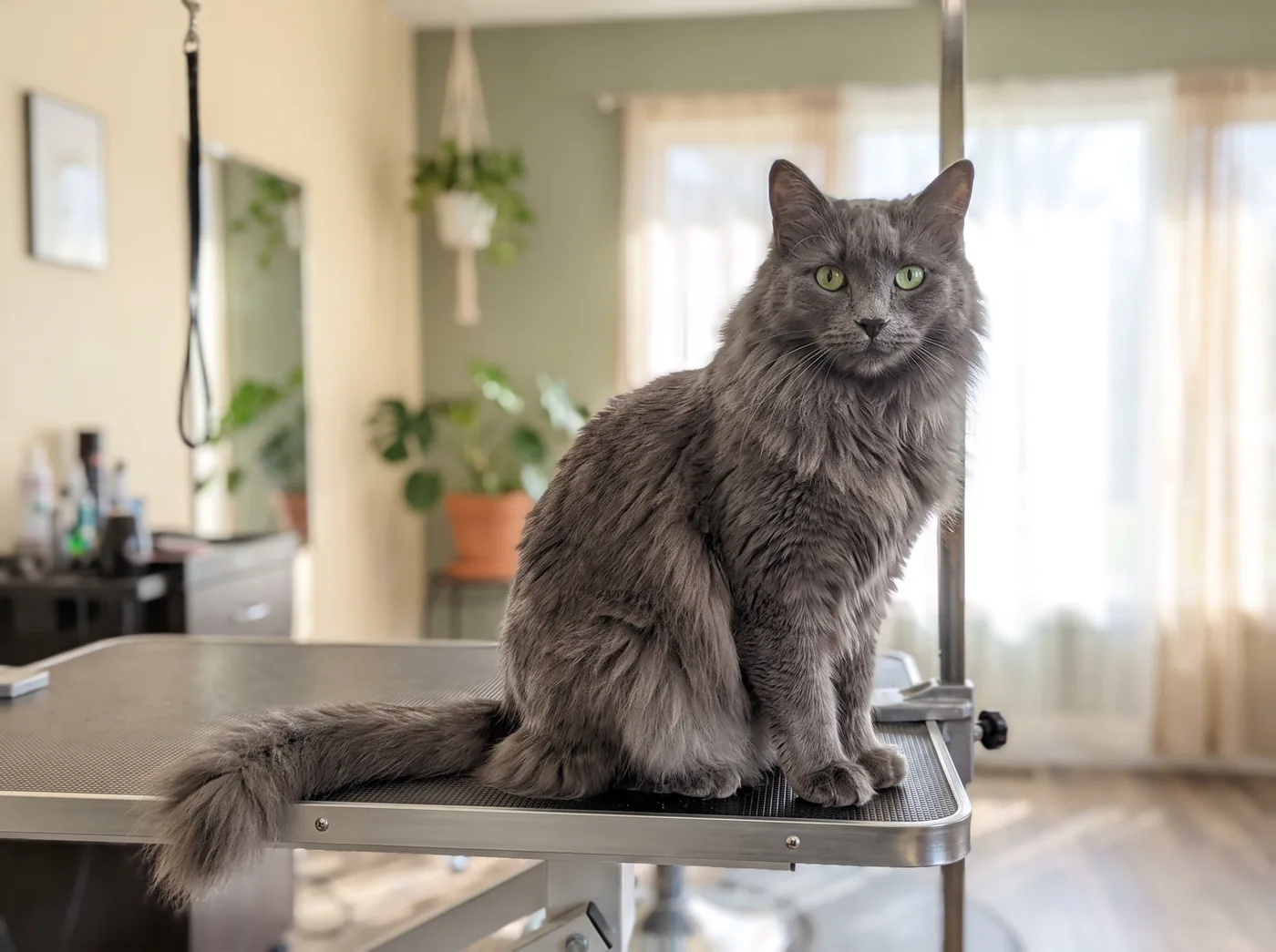
About the Nebelung
There are three gray blue cats and they need three different amounts of work, which is worth setting out plainly because they are confused constantly.
A Russian Blue has a short even plush double coat that effectively never mats and is happy with a weekly comb. A Chartreux has a woolly coat that breaks at the neck and flanks and genuinely does tangle. A Nebelung is the semi longhaired one, developed from Russian Blue lines, and it carries the same dense double coat at two or three times the length.
That makes it the most work of the three, and the only one where mats form readily if the routine slips. It is still an easy cat by longhair standards.
The Nebelung has a double coat that regulates its own temperature. Shaving it does not keep the animal cooler, removes the protection against sun and insects, and the top coat often grows back patchy or never returns correctly. A thorough deshed takes out the undercoat and does the job the owner was actually asking for.
A double coat at longhair length
The coat is semi long, fine and soft, in a solid blue with silver tipped guard hairs that give the breed its shimmering look. The name comes from the German for mist, which describes the effect well.
Underneath there is a genuine dense undercoat, and that is the difference from a Balinese or a Turkish Van. Undercoat is what felts, and a semi long coat gives it room to do so.
Comb every two or three days with a fine metal comb, working to the skin rather than skimming the surface. The places that matter are the ruff around the neck and chest, behind and under the front legs, the britches at the back of the hind legs, and the belly.
The belly is the one owners skip because it means turning the cat over, and it is where mats are found late.
Mats on a Nebelung tend to be small and tight rather than large pelts, and caught early a comb takes them out. Left alone they pull the skin and the cat starts refusing to be combed, which is how it escalates.
Never cut a mat out with scissors. Cat skin is thin and lifts into the blades, and it is the commonest serious injury owners cause.
The seasonal change, and the tail
A Nebelung sheds moderately year round and then more heavily in spring and autumn, when the undercoat lifts over several weeks.
Comb daily through the change. It is when tangles form fastest, because the loose undercoat has a long outer coat above it to catch in rather than dropping free.
It is also the main control on hairballs.
The tail plume is the showiest part of the cat and the last thing to change, and it holds tangles at the base where it meets the body.
Males typically carry a fuller ruff than females, and the ruff is more pronounced in winter, so the same cat is noticeably different work in January and July.
Do not clip. The coat is doing an insulating job, and a fine double coat that is clipped often comes back with a different texture. Clipping is for a coat that is already pelted, done by a professional as a rescue.
Bathing is not routine. A healthy Nebelung keeps itself clean and the coat is dense enough that drying it properly is a real job.
A shy cat, and what that means for grooming
Nebelungs are typically reserved, quiet and slow to trust strangers, bonding closely with one or two people and disappearing when visitors arrive. That is normal breed temperament rather than a fault or a sign of poor socialisation.
It has direct grooming consequences.
A cat like this does not take well to being handed to a stranger in a noisy salon, and a professional grooming appointment is more stressful for a Nebelung than for most breeds. Home combing by the person it trusts is far better tolerated, and on a coat this manageable it is entirely realistic.
Start in kittenhood, keep sessions short, do them in the same quiet place, and stop before the cat has had enough rather than after.
If a professional groom is genuinely needed, a mobile groomer or a cat only salon is worth seeking out, and so is a vet who will do nails during a routine visit.
Changes in routine unsettle this breed more than most, so a sudden refusal to be handled may be about something else that has changed in the house rather than about the grooming.
Weight, claws and the rest
Nebelungs are long, fine boned cats that look larger than they weigh because of the coat, and they mature slowly, taking around two years to fill out.
Feel for the ribs rather than judging weight by outline, since a semi long coat over a long frame hides condition well.
Weight matters for the usual reason: a cat that cannot turn and reach its own britches and belly stops maintaining exactly the areas that mat.
New matting on the rump of a cat that used to be immaculate is a weight, arthritis or dental pain signal and deserves a veterinary conversation before a grooming one.
Claws want tipping every two to three weeks, the sharp tip only, clear of the quick. Provide a post and do not consider declawing.
Ears get a weekly wipe on the visible part only. Teeth as for every cat.
These are long lived cats, often into their late teens, so the routine you set up in the first year is one you will run for a very long time.
What to tell your groomer or vet
Say it is a Nebelung rather than a Russian Blue, because this one has length and does mat and the advice differs.
Ask for a fine metal comb to the skin, including the belly and britches.
Say the coat is not to be clipped unless it is genuinely pelted.
Say the cat is shy and slow to trust, and ask for a quiet space and an unhurried approach.
Ask for claws tipped, and mention if the cat has been reaching its back end less.
Say never scissors on a mat.
Keeping the coat between grooms
Comb to the skin
Ruff, armpits, britches and belly. There is a real undercoat under this length.
Every two to three days
Turn the cat over
The belly is the mat found late, because checking it takes deliberate effort.
Every session
Groom at home, quietly
A shy breed finds a salon genuinely stressful. Same place, short sessions.
Ongoing
Tip the claws
Sharp tip only, clear of the quick. A post, never declawing.
Every two to three weeks
Common Questions About the Nebelung
Is a Nebelung just a longhaired Russian Blue?
That is a fair description of where it came from, and the coats behave differently enough to matter. A Russian Blue has a short even plush double coat that effectively never mats and needs a weekly comb. A Nebelung carries the same dense undercoat at two or three times the length, and undercoat plus length is what felts, so it needs combing every two or three days and can mat in the ruff, britches and belly. Of the three blue cats it is the most work, with the Chartreux in between.
Should I take a Nebelung to a groomer?
Usually not, and the temperament is why. Nebelungs are reserved and slow to trust, bond closely with one or two people and find a busy salon genuinely stressful, so professional grooming costs this breed more than most. The coat is manageable at home with a fine comb every two or three days, and that is by far the better answer. If a groom is truly needed, look for a mobile groomer or a cat only salon, and consider asking a vet to do nails during a routine visit.
Where does a Nebelung mat?
The ruff around the neck and chest, behind and under the front legs, the britches at the back of the hind legs, and the belly. The belly is the one most owners skip, because checking it means turning the cat over, and it is where mats get found late. Comb to the skin rather than skimming the surface, every two or three days and daily during the spring and autumn coat changes. Caught early the mats are small and tight and comb out; left alone they pull the skin and the cat stops cooperating.
Similar breeds
Same coat, same schedule, or the breeds this one is crossed from.

Russian Blue
A short coat dense enough to stand away from the body, and the silver tips that do the work
Russian Blue

Siberian
A triple coat built for a Russian winter, and the most credible of the low allergen claims
SiberianFind a groomer who knows this coat
Search 37,863 groomers by town, or keep reading the breed guide.
Find a Local Groomer View All Breeds