Norfolk Terrier Grooming
The same breed as the Norwich until 1964, and the one with folded ears
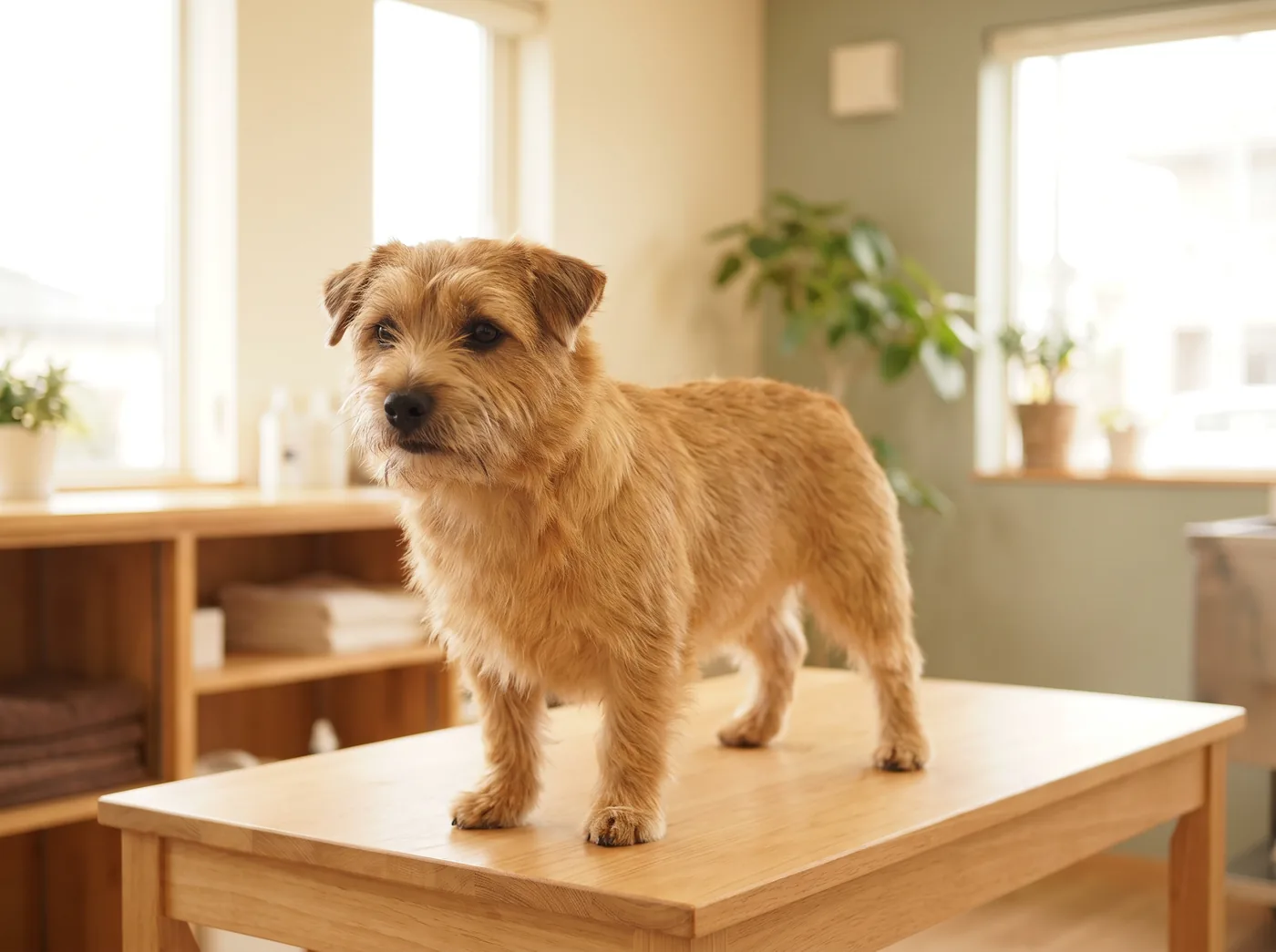
About the Norfolk Terrier
The Norwich Terrier page covers this breed almost completely, because until 1964 they were the same breed and the only thing that separated them was ear carriage.
The Norfolk is the one whose ears fold neatly forward over the skull, tips pointing toward the eye. The Norwich has them standing erect.
Everything else is shared: eleven or twelve pounds, about ten inches, a hard wiry weatherproof jacket in red, wheaten, black and tan or grizzle, soft furnishings on the legs, a slight beard, and a bold sociable terrier temperament.
The grooming is the same job. Roll the jacket by hand every few weeks or accept a clipped coat that softens over time, comb the furnishings, keep the beard clean.
The one thing this page adds is the ear, and it is a real difference rather than a cosmetic one.
This coat can be clipped, but the texture or the color may change and it will not always come back the same. Talk it through with your groomer before the first one.
The ear, which is the only real difference
A folded ear lies over the opening of the canal, which reduces air circulation and holds warmth and moisture underneath. That is the same architecture that causes trouble in spaniels, and while a Norfolk ear is small and light rather than long and heavy, the principle holds.
It is not a serious problem in this breed and it is worth a minute a week.
Lift the flap weekly, look and smell. Healthy smells of nothing. Yeast is sweet and musty and unmistakable once you have met it.
Dry the ears after every bath and every wet walk, since this is a dog that goes through undergrowth and puddles.
Keep any hair around the opening trimmed short so air reaches it.
Head shaking, scratching at an ear, a tilt, redness or dark discharge means a veterinarian rather than a bottle of ear cleaner.
A working terrier also gets grass seeds and debris in and around the ear, so check after walks in cover, and check the ear leather for tears.
The jacket and the furnishings
Two coats on one small dog, and they need opposite things.
The jacket is hard, wiry and weatherproof. It sheds almost nothing, it rarely mats, and brushing it does very little. What it needs is stripping: rolling a little every few weeks, or a full strip out two or three times a year.
The furnishings are the soft longer hair on the legs, the chest and around the muzzle, and they mat readily. Comb them through with a metal comb every few days, paying attention to the armpits, the chest between the front legs and the beard.
That split is the single most useful thing to understand about any terrier, and it is why owners who brush conscientiously still arrive with matted dogs. They are brushing the part that does not need it.
A Norfolk is small enough that hand stripping at home is very achievable, and it is one of the better breeds to learn on: a dead hair comes away easily between finger and thumb, and anything that resists should be left.
Clipping softens and fades the jacket permanently, which is a fair trade for a pet made knowingly.
A working terrier that gets filthy
Norfolks were bred to bolt foxes and kill vermin, and they behave accordingly. They dig, they hunt, they go into things, and they come home carrying half of it.
That makes the after walk check as much a part of the routine as the brushing: burrs and grass seeds in the furnishings and between the toes, ticks on the ears and neck, and mud in the beard.
Grass seeds are the one that causes real trouble, working into the skin between the toes and abscessing, and a small dog with furnished feet collects them readily.
Keep the hair between the pads cleared, which helps with both seeds and grip on hard floors.
Bathe every eight weeks or so. Over-bathing softens a harsh jacket, and a wiry coat sheds dried mud remarkably well if you leave it alone.
Nails every three to four weeks. A small dog that is not working hard does not wear them down.
Unusually for terriers, Norfolks and Norwiches are generally sociable with other dogs, which makes a busy salon less of a problem than it is for some of the group.
Teeth, breathing and a long life
Norfolks live twelve to sixteen years, which is a long time for anything to go untreated.
Teeth are the main one. Small dogs carry full sized teeth in small jaws, food packs between them, and disease starts early. Brush daily from puppyhood and expect professional cleanings.
The breed shares the Norwich's known upper airway condition, which causes noisy breathing and reduced exercise tolerance. A Norfolk that snorts, wheezes or tires quickly needs a veterinary assessment rather than being written off as unfit, and it is a reason to keep grooming sessions cool, short and unhurried rather than pushing through.
Watch the weight. A compact dog under a wiry coat hides gain, and these are enthusiastic eaters.
Keep the eyes clear of hair, though the modest eyebrows on this breed rarely cause trouble.
The weekly session is a good moment to run hands over the whole dog for lumps and ticks, which matters on an animal that spends its time in undergrowth.
What to tell your groomer
Say it is a Norfolk and not a Norwich if the booking was taken by breed, though the coat work is identical.
Ask whether they hand strip, and say whether you want the jacket rolled, stripped out or clipped.
Say the furnishings and beard mat, not the jacket.
Ask for the ears lifted, checked, dried and the hair around the opening kept short, since this is the drop eared one of the pair.
Ask them to check between the toes for grass seeds.
Mention any noisy breathing, and ask for cool unhurried sessions.
Keeping the coat between grooms
Lift, look, smell, dry
The folded ear is the one real difference from the Norwich. A minute a week.
Weekly
Comb the furnishings
Legs, armpits, chest and beard. The jacket is not the part that mats.
Every few days
Roll the jacket
Strip what is loose. Small enough to do on your lap and easy to learn on.
Every few weeks
Check after every walk
A digger and a hunter. Grass seeds between the toes abscess if left.
After walks
Common Questions About the Norfolk Terrier
Is a Norfolk Terrier groomed differently from a Norwich?
No, the coat work is identical, because they were one breed until 1964 and differ only in ear carriage. Both have a hard wiry jacket that wants stripping rather than brushing, and soft furnishings and a beard that mat. The one real difference is the ear: a Norfolk's folds forward over the canal, reducing airflow and holding moisture, so it needs the weekly lift, look and smell and drying after wet walks. A Norwich's erect ear is well ventilated and rarely troublesome.
Why does my Norfolk mat when I brush it every day?
Because you are almost certainly brushing the jacket, which does not need it. A terrier carries two coats: a hard wiry jacket that sheds little and rarely mats, and soft furnishings on the legs, chest and muzzle that mat readily. Brushing the jacket achieves very little while the furnishings quietly felt. Comb the legs, armpits, chest and beard through with a metal comb every few days, and dry them after wet walks, since a working terrier comes home damp and muddy.
My Norfolk breathes noisily. Is that normal for a small dog?
It should not be assumed to be. Both Norfolk and Norwich Terriers have a recognized upper airway condition that causes noisy breathing and reduced exercise tolerance, and it is common enough in the breeds to be worth a veterinary assessment rather than putting down to being unfit or excited. It also matters at a groomer: keep sessions cool, short and unhurried rather than working through, and mention it when booking so nobody pushes a dog that is struggling.
Similar breeds
Same coat, same schedule, or the breeds this one is crossed from.

Norwich Terrier
One breed with the Norfolk until 1964, and the one with upright ears
Norwich Terrier
Border Terrier
The plainest terrier there is, stripped two or three times a year and left alone between
Border Terrier
Cairn Terrier
A working jacket meant to look natural, and the one terrier where a neat outline is wrong
Cairn TerrierFind a groomer who knows this coat
Search 37,863 groomers by town, or keep reading the breed guide.
Find a Local Groomer View All Breeds