Norwich Terrier Grooming
One breed with the Norfolk until 1964, and the one with upright ears
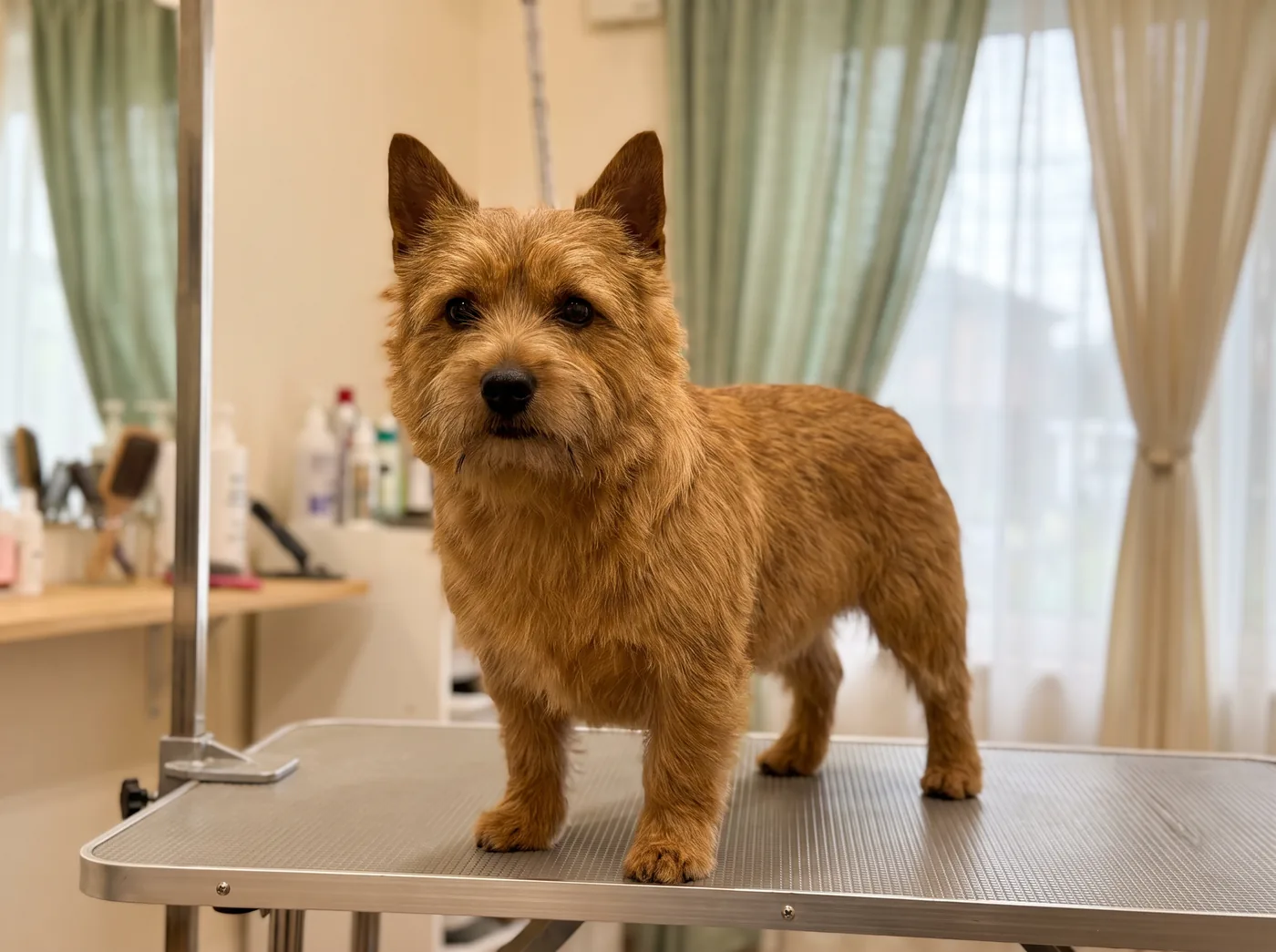
About the Norwich Terrier
Until 1964 the Norwich and the Norfolk were a single breed, registered together and differing only in ear carriage. The Kennel Club separated them, the American Kennel Club followed in 1979, and they have been distinct ever since.
The Norwich is the one with prick ears: small, pointed and standing fully erect. Everything else about the two, the size, the harsh red or wheaten jacket, the sturdy low body, the temperament, is close to identical, and so is the grooming.
This is a very small dog carrying a proper terrier coat, and that is the whole story. A harsh wiry jacket that sheds almost nothing and rarely mats, over soft furnishings on the legs and a modest beard.
The decision is the same one every wire coat faces, and on a dog this size it is genuinely doable at home.
This coat can be clipped, but the texture or the color may change and it will not always come back the same. Talk it through with your groomer before the first one.
Norwich or Norfolk, and why it matters here
The single difference between the two breeds is the ear. A Norwich has small pointed ears standing fully erect. A Norfolk has ears that fold neatly forward, dropping over the skull with the tips pointing toward the eye.
That is genuinely the whole distinction. They were one breed for decades, both come in red, wheaten, black and tan and grizzle, both stand about ten inches and weigh eleven or twelve pounds, and both carry the same coat.
The grooming is identical with one practical exception, which is the ear itself.
An erect Norwich ear is well ventilated and rarely gives trouble. A folded Norfolk ear covers the canal and needs the weekly lift, look and smell that any drop eared breed does.
Beyond that, treat any advice for one as advice for the other.
Both are on the smaller side of the terrier group and both are, unusually for terriers, comparatively sociable with other dogs, which matters at a salon.
Stripping a jacket this small
Hand stripping pulls the dead jacket hairs out at the root using finger and thumb or a stripping knife used as a grip. Done at the right point in the cycle it does not hurt, because a dead hair sits loose and comes away easily. If it fights, the coat is not ready, and that is the entire test.
On a dog this size, rolling is the usual approach: strip a little every few weeks so the jacket stays somewhere in the middle of its growth cycle and the dog always looks presentable.
It is also one of the easiest breeds on which to learn. The dog is small enough to sit on your lap, the tools cost very little, and the risk of doing harm is close to zero, since anything that resists should be left.
A stripped Norwich keeps a hard, close, weatherproof jacket in a rich color.
Between sessions, brush the jacket weekly with a slicker, which is more a check over the dog than a need.
The full strip out, taking the whole jacket down two or three times a year, is the alternative and leaves the dog looking bare for a few weeks before it comes back harsh.
Clipping, and what it costs
Most pet Norwich Terriers are clipped, because fewer salons hand strip than used to.
The trade is the familiar one and it accumulates. Clipping cuts the dead hair off and leaves the root, so the soft undercoat comes to dominate and the coat returns softer, thicker and duller with each clip. A rich red fades toward a dusty tan.
The practical cost is that a soft jacket starts to mat where a harsh one never did, and it holds dirt and water instead of shedding them, which on a dog bred to work in hedges and go to ground is a real loss of function.
It is also close to one way in the medium term. A coat clipped for a year or two may not strip back to harsh texture for a long time.
For a companion dog whose owner does not care about coat texture, a clipped Norwich is comfortable and perfectly reasonable. Decide it knowingly rather than by drift.
What is not a good outcome is neither: an unstripped, unclipped jacket holds its dead coat, the furnishings felt, and the dog ends up shaved.
The furnishings, the teeth and a busy little dog
The furnishings are the soft longer hair on the legs, the chest and around the muzzle, and unlike the jacket they do mat. Comb them through with a metal comb every few days, and check the armpits, the chest and the beard.
The beard goes into the water bowl at every drink. Wipe and dry it after meals, and keep the hair right around the mouth trimmed shorter.
Teeth matter on any small dog. Norwich Terriers are long lived, often twelve to sixteen years, and dental disease over that span is what limits comfort. Brush daily.
The breed has a well known condition affecting the upper airway, sometimes called upper airway syndrome, which causes noisy breathing and reduced exercise tolerance. A Norwich that is snorting, wheezing or tiring quickly needs a veterinary assessment rather than being assumed to be unfit, and it is a reason to keep grooming sessions cool and unhurried.
Keep the hair between the pads cleared. Nails every three to four weeks.
They are diggers and hunters, so check for burrs, ticks and grass seeds after walks.
What to tell your groomer
Ask whether they hand strip before booking, since it decides what the coat becomes.
Say whether you want the jacket rolled, stripped out or clipped, and understand that clipping softens and fades it permanently.
Say the furnishings and beard are what actually mat, not the jacket.
Ask for the beard washed and dried and the hair around the mouth kept short.
Mention any noisy breathing, since the breed has a known airway condition and sessions should stay cool and unhurried.
Ask them to check between the toes for grass seeds after a working walk.
Keeping the coat between grooms
Roll the jacket
Strip what is loose every few weeks. A dead hair comes away; a live one fights.
Every few weeks
Comb the furnishings
Legs, chest and beard. The jacket rarely mats and the soft hair always does.
Every few days
Brush the teeth
Twelve to sixteen years is a long time to live with a bad mouth.
Daily
Listen to the breathing
A known airway condition in the breed. Noisy breathing is a vet visit, not unfitness.
Every session
Common Questions About the Norwich Terrier
What is the difference between a Norwich and a Norfolk Terrier?
The ears, and essentially nothing else. They were one breed until 1964, when the Kennel Club separated them, and the American Kennel Club followed in 1979. A Norwich has small pointed ears standing fully erect; a Norfolk has ears that fold forward over the skull. Size, coat, colors, build and temperament are the same. The one grooming consequence is that a folded Norfolk ear covers the canal and needs the weekly lift, look and smell that every drop eared breed gets, while an erect Norwich ear is well ventilated.
Can I learn to hand strip a Norwich Terrier myself?
Yes, and it is one of the best breeds to learn on. The dog is small enough to sit on your lap, the tools are inexpensive, and the risk of harm is close to zero because the test is simple: a dead hair comes away easily between finger and thumb, and anything that resists is a live hair and should be left. The usual method is rolling, stripping a little every few weeks so the jacket stays in the middle of its cycle and the dog always looks presentable.
What happens if a Norwich Terrier is clipped instead?
The coat softens and fades a little more with each clip, because clipping cuts the dead hair off and leaves the root, letting the soft undercoat dominate. A rich red goes dusty, and the jacket loses the hard weatherproof texture it is meant to have. The practical cost is that a soft jacket starts to mat where a harsh one did not, and it holds dirt and water instead of shedding them. It is also slow to reverse, so a coat clipped for a couple of years may not strip back for a long time.
Similar breeds
Same coat, same schedule, or the breeds this one is crossed from.

Norfolk Terrier
The same breed as the Norwich until 1964, and the one with folded ears
Norfolk Terrier
Cairn Terrier
A working jacket meant to look natural, and the one terrier where a neat outline is wrong
Cairn Terrier
Border Terrier
The plainest terrier there is, stripped two or three times a year and left alone between
Border TerrierFind a groomer who knows this coat
Search 37,863 groomers by town, or keep reading the breed guide.
Find a Local Groomer View All Breeds