Pekingese Grooming
A flat face under one of the heaviest coats in the toy group, so both daily jobs apply in full
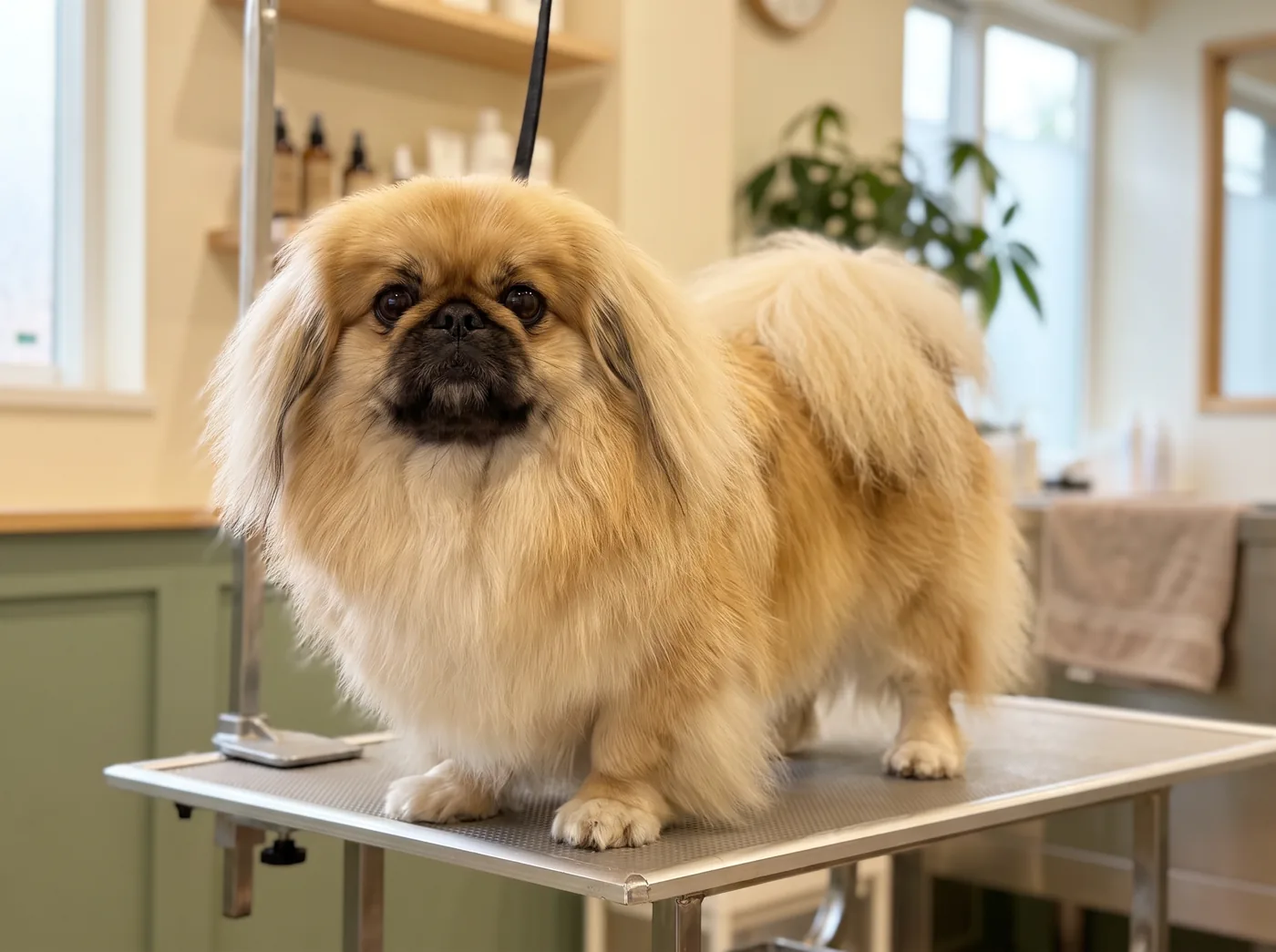
About the Pekingese
The Exotic Shorthair page makes an argument from the easy side in cats: take a flat faced breed, remove the coat work, and you have halved the job while leaving the face untouched. The Himalayan is the same face with the coat work put back, and it is the hardest combination in cats.
The Pekingese is that combination in dogs. It carries a long, coarse, profuse standing double coat with an enormous mane over the shoulders and heavy feathering on the ears, legs and tail, on a body that is a fraction of the size of the coat it is wearing. And it has one of the flattest faces in dogs.
So both routines apply in full and both are daily: combing to the skin, and cleaning and drying the face. Neither substitutes for the other, and this is not a low effort dog despite being a small one.
This coat can be clipped, but the texture or the color may change and it will not always come back the same. Talk it through with your groomer before the first one.
The coat, and where the mane fails
Two layers, and the outer one is coarse and stands away from the body rather than lying flat, which is what gives the breed its lion outline. Underneath is a thick soft undercoat, and that is the layer that causes the trouble.
The coat is very unevenly distributed. It is heaviest by a wide margin at the mane over the neck and shoulders, then the trousers, the tail, the ear feathering and the feathering behind the front legs. The back and flanks carry far less.
Every one of those heavy areas is where a Pekingese mats, and every one is where a casual brush skims over the top. A Peke can look magnificent while carrying a solid felted layer under the mane and behind the ears.
The method is line brushing: part the coat down to the skin and work outward in sections, so every hair passes through from root to tip. A pin brush or slicker for the body, then a metal comb to prove it. If the comb will not pass freely from skin to tip, that section is not brushed.
Every day, and the mane, behind the ears and the trousers every time.
The other thing to know: Pekingese shed heavily, which surprises owners of a small dog. The undercoat releases year round with heavier periods, and dead undercoat left in place is exactly what felts.
Never bathe a matted coat. Water tightens a mat like a wet knot, so combing comes first, always.
The face, the fold and the breathing
The Pekingese has the most extreme brachycephalic head of any breed: the muzzle is essentially absent, and there is a deep fold of skin, the nose wrinkle, crossing the face above it.
That fold is warm, enclosed and permanently damp from tear overflow, and it behaves exactly as any other skin fold does. The progression when it is neglected is a sour smell first, before anything is visible, then redness, then a raw painful surface.
Wipe right into the fold with a damp cloth or unscented wipe and then dry it, daily, and do the same under each eye. The drying is the half that gets skipped and it is the half that decides the outcome.
Keep the hair around the eyes and on the muzzle trimmed short. On a Peke the coat grows straight into the face, and hair against a cornea is a genuine injury risk rather than an untidiness.
Breathing follows the skull shape. A Pekingese cannot cool itself efficiently by panting, so it overheats in conditions another dog finds pleasant, and that makes the appointment a heat management job. Warm rather than hot water, a dryer on cool or low and never at the face, short bursts with breaks, someone watching the dog rather than a timer, and never a cage dryer.
Book early in the day in summer, and treat noisy laboured breathing, a widening tongue or a change in gum color as an emergency.
The eyes, and the emergency every owner should know
This is the most serious handling fact about any toy breed and it deserves stating plainly.
A Pekingese has large, round, prominent eyes sitting in extremely shallow sockets, because the skull that would normally contain them has been shortened. There is very little bone holding the eyeball in place.
The consequence is proptosis: the eyeball can come forward out of the socket, and the eyelids close behind it and trap it there. It is caused by relatively minor trauma, a knock to the head, a dog fight, or being restrained too firmly by the scruff of the neck, and it is a genuine emergency that can cost the eye.
Practically, at grooming time: never scruff a Pekingese, never press around the eyes, never restrain the head firmly, and keep the dog secure so it cannot fall or jump from a table. Say this to a groomer who has not handled the breed.
If it happens, keep the eye moist with saline or a clean wet cloth, do not attempt to push it back, and go to a veterinarian immediately. Time matters for saving vision.
Short of that, the eyes need daily attention anyway. Corneal ulcers are common because the surface is so exposed and the dog cannot fully blink over it. Squinting, holding an eye closed, pawing at the face, cloudiness or a sudden increase in discharge is a same day veterinary matter.
And never spray anything toward the face at bath time.
The rear, the skirt and whether to clip
A Pekingese is a heavy bodied dog on very short bowed legs, carrying a great deal of coat close to the ground. The rear is a genuine problem area and it gets forgotten.
Keep the sanitary area and the hair around it clipped short. A low, short legged, heavily coated dog cannot keep itself clean, and long coat there catches waste and mats solid. This is not tidiness, it is welfare, and it is the single most useful trim on the breed.
The skirt and trousers drag through wet grass and mud, hold it, and mat faster when damp, so rinse and dry the underside after wet walks.
The feet want the hair between the pads kept flush, both for grip and because a Peke picks up everything.
Then the clipping question, which owners ask constantly. A Pekingese can be kept in a shorter pet trim and a great many are, and it makes a real difference to a dog struggling in heat or an owner who cannot keep up with daily line brushing.
The honest caveats: it is a double coat, so clipping carries the usual risk that the regrowth comes back softer, patchier and more prone to matting, and the breed's outline is largely the coat. Set against that, a badly matted Peke is a miserable animal and a shorter trim it can actually live with is better than a magnificent coat maintained by good intentions.
Decide deliberately, and if you clip, keep the interval.
What to tell your groomer
Say the dog is severely flat faced, and ask directly whether they use a cage dryer on brachycephalic breeds. The answer must be no.
Say the eyes are prominent and that the dog must never be scruffed or restrained by the head, and explain why. This is the instruction that matters most.
Ask for the nose fold cleaned and dried, the hair around the eyes trimmed short, and the sanitary area kept clipped.
Say honestly when the mane and behind the ears were last combed to the skin.
Say whether you want the coat kept long or a shorter pet trim, and bring a photograph.
Book early in the day in summer, and mention any breathing or overheating history.
Keeping the coat between grooms
Line brush the mane and behind the ears
Part to the skin and prove it with a comb. The mane looks magnificent while felting underneath.
Daily
Clean and DRY the nose fold
Into the wrinkle and under each eye, then dry. Under a minute, and the drying is the half that matters.
Daily
Never scruff or press the head
Very shallow eye sockets mean the eye can come out of the socket from minor trauma. Say this to any groomer.
Always
Keep the sanitary area clipped
A low, short legged, heavily coated dog cannot keep itself clean. This is welfare rather than tidiness.
Every few weeks
Common Questions About the Pekingese
Should I have my Pekingese clipped short?
It is a legitimate choice and many pet Pekes wear a shorter trim, particularly dogs that struggle in heat or whose owners cannot keep up with daily line brushing. The caveats are real: it is a double coat, so the regrowth can come back softer, patchier and more mat prone, and the breed's whole outline is the coat. But a badly matted Peke is a miserable dog, and a shorter trim that is actually maintained beats a magnificent coat maintained by good intentions. Decide deliberately and keep the interval.
What is proptosis and why does it matter for a Pekingese?
It is the eyeball coming forward out of its socket, with the eyelids closing behind and trapping it. Pekingese are at real risk because the shortened skull leaves very shallow eye sockets with little bone holding the eye in place, so relatively minor trauma can cause it: a knock to the head, a scuffle, or being restrained firmly by the scruff. Never scruff a Peke or press around its eyes. If it happens, keep the eye moist, do not push it back, and get to a vet immediately.
How do I clean a Pekingese face fold?
Wipe right into the nose wrinkle with a damp cloth or an unscented wipe, then dry it thoroughly, and do the same under each eye. Daily, and it takes under a minute. The drying is the part people skip and the part that matters, because a clean but damp fold is still the warm wet environment causing the problem. Keep the hair around the eyes and muzzle trimmed short too, since coat growing into a cornea is an injury risk rather than untidiness.
Similar breeds
Same coat, same schedule, or the breeds this one is crossed from.

Himalayan
A Persian coat and a flat face on the same cat, which is the hardest combination there is
Himalayan

English Bulldog
The definitive fold breed, where the coat takes ten minutes and the face takes every day
English BulldogFind a groomer who knows this coat
Search 37,863 groomers by town, or keep reading the breed guide.
Find a Local Groomer View All Breeds