Peterbald Grooming
The Donskoy gene on an oriental body, in five coat types from bald to full
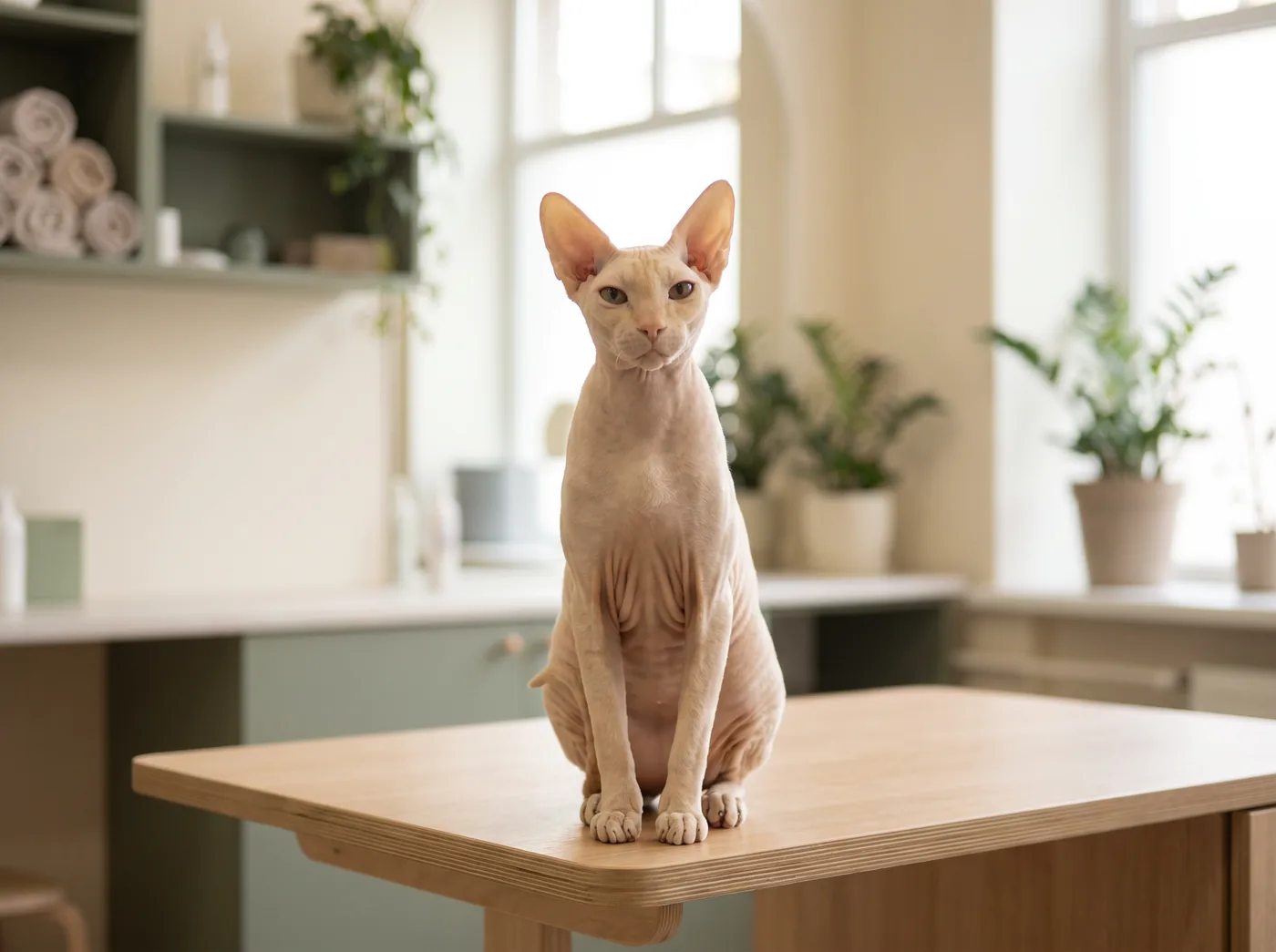
About the Peterbald
A Peterbald is what you get when the Donskoy's dominant hairless gene is crossed onto an Oriental Shorthair body, which happened in St Petersburg in 1994.
The result is a very slender, long legged, huge eared cat carrying a gene that expresses across a wider range than in any other breed: five recognized coat types, from completely bald to a full normal coat.
That last one matters and is genuinely confusing. A Peterbald with a full straight coat is still a Peterbald, and the breed standard accepts it, though those cats cannot be shown in the hairless classes.
For grooming it means there is no single Peterbald routine. A bald one needs the Sphynx treatment. A fully coated one needs a comb once a week and nothing else. And a flocked one, which feels like warm suede, sits between.
The Peterbald has a double coat that regulates its own temperature. Shaving it does not keep the animal cooler, removes the protection against sun and insects, and the top coat often grows back patchy or never returns correctly. A thorough deshed takes out the undercoat and does the job the owner was actually asking for.
Five coat types, five routines
Knowing which one you have decides everything, so it is worth being precise.
Bald, sometimes called ultra bald, is completely hairless with no eyebrows or whiskers, and the skin feels sticky or tacky to the touch. This one needs the full Sphynx routine.
Chamois or flock is a very fine covering, about a tenth of a millimetre, feeling like warm suede or a peach. Nearly the same routine as bald, with slightly less oil on the surface.
Velour is a longer covering, up to about five millimetres, often with bald patches, and it frequently thins toward baldness over the first two years.
Brush is a coarse, wiry, uneven coat, sometimes curly, and these cats often keep it for life.
Straight is a full normal short coat with normal whiskers. These cats do not carry the hairless gene and are used in breeding, and they need nothing more than a weekly comb.
A cat can also change type as it matures, most often losing coat rather than gaining it, and that is expected rather than a health problem.
Ask the breeder which type a kitten is, because it determines whether you are taking on a weekly bath or a weekly comb.
The bald and flocked routine
For a bald or chamois Peterbald the skin does what all bare skin does: it produces oil that would normally be spread through a coat, and with nowhere to go it collects on the surface, in any folds, and in the nail beds, where it goes brown and waxy.
Wipe the cat down with a damp cloth every few days, and bathe roughly weekly to every ten days with a plain gentle shampoo.
A Peterbald has far fewer wrinkles than a Donskoy, being built on a lean oriental frame, so there is less folding to clean into, but the armpits and the base of the tail still want attention.
Dry thoroughly and keep the cat warm while it dries.
Clean the nail beds weekly with a soft damp cloth, and wipe the visible part of those very large ears, which collect wax quickly on a hairless cat.
Avoid heavy lotions, which block pores. If the skin is genuinely dry, a light unscented lotion occasionally is enough.
Sunburn is a real risk on bare skin, including through window glass, so limit strong direct sun.
Lean, bald and cold
A Peterbald combines the two things that lose heat fastest: no coat, and the very lean, fine boned, low body fat build of the oriental breeds.
It is the most cold sensitive cat there is, and it should be treated accordingly. Keep the house warm, provide covered beds and blankets, and expect the cat to be inside them or against a person constantly.
Bath water and drying air comfortably warm, never hot, and the cat never left damp.
Hairless cats also eat more than coated cats of the same size because they burn calories staying warm, which is expected. A Peterbald that stays thin despite eating well should see a vet rather than simply be fed more.
They are also highly social, vocal and demanding, in the full oriental tradition, and they do badly left alone for long stretches.
That makes handling easy: a cat that wants to be involved in everything is a cat you can teach to accept bathing, nail clipping and tooth brushing from kittenhood.
Start early and keep sessions short, because a weekly bath for fifteen years is a lot of sessions.
The hairless cats, side by side
There are four hairless cat breeds and they are not interchangeable.
Sphynx: recessive gene, born bald and stays bald, sturdy body, quite wrinkled, weekly bathing.
Donskoy: dominant gene, four types, may be born coated and go bald or shed seasonally, elastic and notably wrinkled skin, sweats, weekly bathing into the folds.
Peterbald: the Donskoy gene on an oriental body, five types including a fully coated one, few wrinkles, extremely lean and the most cold sensitive.
The Cornish and Devon Rex are not hairless at all, though they are often lumped in: they have fragile down coats that break if worked.
The single most useful question a groomer can ask is not what breed it is, but how much skin is exposed and how oily it feels, because that is what decides the schedule.
That is the same principle as every coat page here: the coat decides the care.
What to tell your groomer or vet
Say which of the five coat types the cat is, since a bald one needs weekly bathing and a straight coated one needs a weekly comb.
Say the breed can change coat type as it matures, usually losing coat, and that is normal rather than a disease.
Ask for a plain gentle shampoo, thorough drying, and the nail beds and ears cleaned.
Say this is the most cold sensitive cat you are likely to handle: warm room, warm water, never left damp.
Say no heavy lotions on the skin.
Mention that whiskers may be absent or crinkled, which is correct for the breed rather than damage.
Keeping the coat between grooms
Know which of the five it is
A bald one needs a weekly bath and a straight coated one needs a weekly comb.
Once, then adjust
Bathe if bald or flocked
Plain shampoo, weekly to ten days, armpits and tail base, dried thoroughly.
Weekly to ten days
Keep it very warm
No coat plus a lean oriental build. The most cold sensitive cat on the site.
Always
Nail beds and those ears
Brown waxy oil collects in both, and the ears are enormous and very open.
Weekly
Common Questions About the Peterbald
How many coat types does a Peterbald have?
Five, and they need different routines. Bald is fully hairless with tacky feeling skin. Chamois or flock is a very fine suede-like covering. Velour is a longer covering that often thins toward baldness over two years. Brush is a coarse wiry coat many cats keep for life. Straight is a full normal short coat with normal whiskers, and those cats are still Peterbalds. A bald one needs a weekly bath; a straight coated one needs a weekly comb and nothing else.
Is a Peterbald just a Sphynx with a different name?
No. A Sphynx is hairless from a recessive gene and is born bald and stays bald. A Peterbald carries the Donskoy's dominant hairless gene, crossed onto an Oriental Shorthair body in St Petersburg in 1994, and it expresses across five coat types including a fully coated one. Physically it is far leaner and finer boned than a Sphynx, with much less wrinkling and enormous ears, and that lean build makes it the most cold sensitive cat there is.
Why is my Peterbald always cold?
Because it combines the two things that lose heat fastest: little or no coat, and the very lean, fine boned, low body fat build of the oriental breeds. Keep the house warm, provide covered beds and blankets to burrow into, and expect the cat to be inside them or pressed against you. Keep bath water and drying air comfortably warm rather than hot and never leave the cat damp. Hairless cats also eat more than coated cats of the same size, because they burn calories staying warm.
Similar breeds
Same coat, same schedule, or the breeds this one is crossed from.


Oriental Shorthair
A Siamese in every color there is, with even less coat and even less padding
Oriental Shorthair
Find a groomer who knows this coat
Search 37,863 groomers by town, or keep reading the breed guide.
Find a Local Groomer View All Breeds