Donskoy Grooming
Hairless from a DOMINANT gene, so some are born coated and lose it later
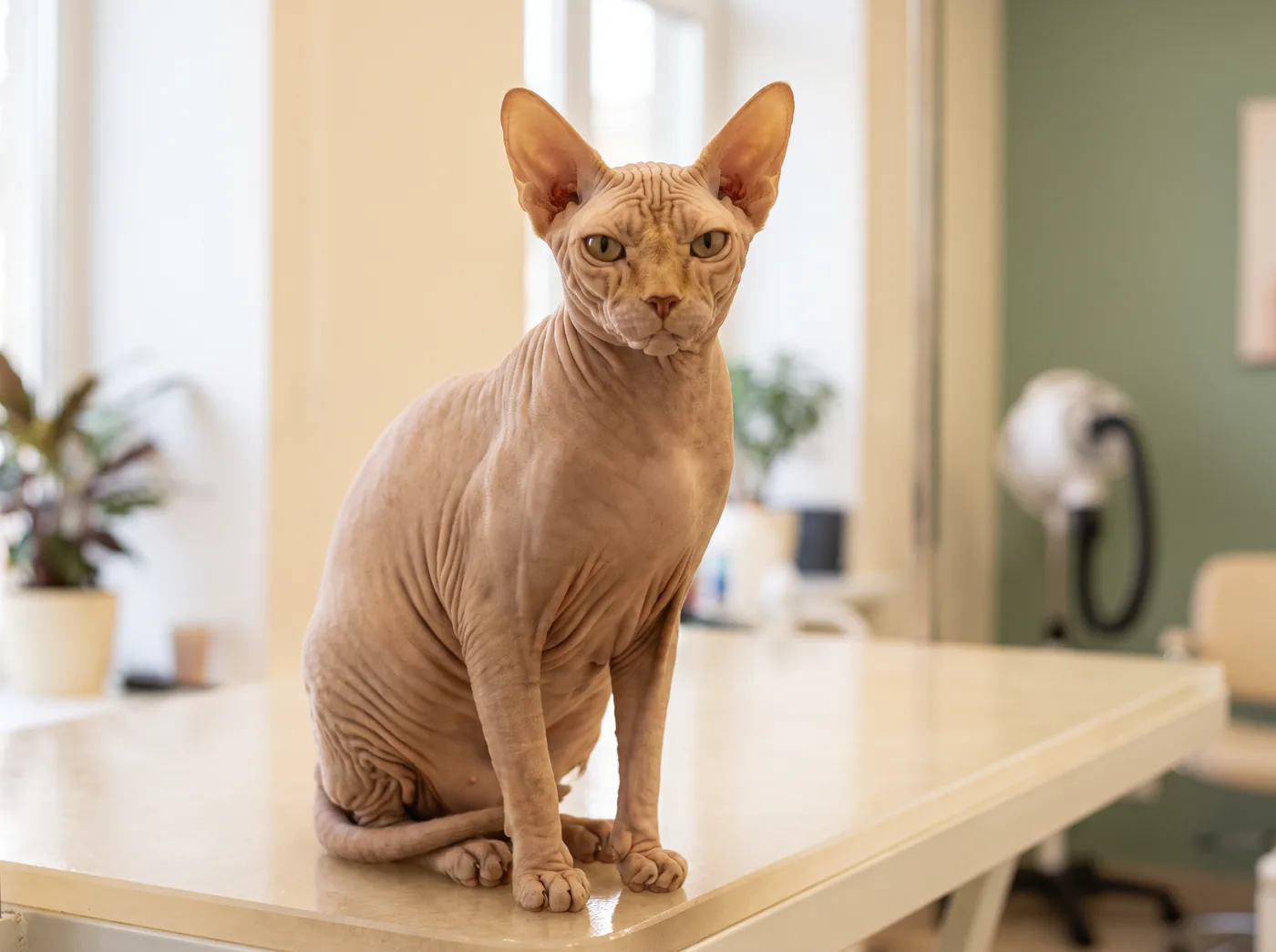
About the Donskoy
Every hairless cat gets treated as a Sphynx, and the Donskoy is genuinely a different animal.
The Sphynx is hairless because of a recessive gene: two copies are needed, kittens are born essentially bald, and they stay that way.
The Donskoy is hairless because of a completely unrelated dominant gene that arose in Rostov-on-Don in 1987. One copy is enough, and the way it expresses is far stranger. Some Donskoy kittens are born bald. Some are born with a full coat and lose it over the first year or two. Some lose coat and regrow it seasonally, keeping more in winter. Some keep a thin residual coat for life.
That matters practically: a Donskoy losing its coat is doing what the breed does, and it is not ringworm, alopecia or a thyroid problem.
The skin is also different: more elastic and more wrinkled than a Sphynx, and it sweats.
The Donskoy has a double coat that regulates its own temperature. Shaving it does not keep the animal cooler, removes the protection against sun and insects, and the top coat often grows back patchy or never returns correctly. A thorough deshed takes out the undercoat and does the job the owner was actually asking for.
Four coat types, and a coat that comes and goes
The breed recognizes four types, and knowing which one you have prevents a lot of unnecessary worry.
Rubber bald cats are born completely hairless and stay that way.
Flocked cats have a soft downy covering that feels like suede, and it usually disappears over the first year or two, leaving a bald cat.
Velour cats are born with a coat and a bald patch on the head, and most of the coat is lost over the first two years, though some keep a little on the face, legs and tail.
Brush cats keep a coarse, bristly, uneven coat for life, sometimes with bald patches, and may lose and regrow parts of it seasonally.
Only brush cats can safely be bred to each other in most programs, and they are essential to the breed's genetic health, which is why they exist rather than being a fault.
The practical point for an owner or a groomer is that hair loss in a Donskoy is expected and not a disease. A cat going bald over its first two years is on schedule. What is not normal is patchy loss with itching, scabbing, redness or a smell, which needs a veterinarian like it would in any cat.
The skin, and the sweating
Donskoy skin is noticeably more elastic and more wrinkled than a Sphynx's, particularly on the head, neck, armpits and belly, and the wrinkles are pronounced enough to be a defining feature.
Like the Sphynx, a Donskoy produces skin oil with no coat to absorb it, so the oil collects on the skin, in the wrinkles and in the nail beds, and it goes brown and sticky.
Donskoys also sweat, in the way the American Hairless Terrier does, which adds moisture into those folds.
So the routine is closer to the Sphynx than the Xolo: wipe the cat down with a damp cloth every few days, and bathe roughly weekly to every ten days with a plain gentle shampoo.
Get into the wrinkles. Oil and sweat sit in the folds of the neck and armpits and cause soreness and infection if they are left, and this is the main way Donskoy skin goes wrong.
Dry thoroughly afterwards, and keep the cat warm while it dries.
Clean the nail beds every week with a soft damp cloth, since brown waxy buildup collects there on every hairless cat.
Warmth, sun and food
No coat means no insulation, and a hairless cat loses heat fast. A Donskoy will seek out radiators, laps, sunbeams and other animals, and that is normal behavior rather than illness.
Keep the house warm, provide beds with sides and blankets to burrow into, and expect the cat to be under the covers.
Bath water and drying air should be comfortably warm rather than hot, and the cat should not be left damp.
Sun is the mirror problem. Bare skin burns, and a hairless cat lying in a window can be sunburned through glass, so limit access to strong direct sun and be aware that repeated burning carries a skin cancer risk over a long life.
Hairless cats also eat more than coated cats of the same size, because they burn calories keeping warm. That is expected, and a Donskoy that is thin despite eating well is worth a veterinary check rather than simply being fed more.
Ears are large and open and collect wax quickly on a hairless cat, so wipe the visible part weekly with a soft damp cloth.
A welfare question worth stating
The dominant gene that makes a Donskoy hairless is linked in some lines to ectodermal dysplasia, which can affect teeth as well as hair, and dental problems including missing or poorly formed teeth are reported in the breed.
That is the same category of concern as the Xolo's missing premolars, and it is worth asking a breeder about directly.
Some registries have declined to recognize the Donskoy for exactly this reason, and that disagreement is genuine rather than bureaucratic.
For an owner it means dental care matters more rather than less: brush daily if the cat will allow it, and have the mouth checked yearly.
It also means buying from a breeder who is open about health, tests where tests exist, and does not breed two hairless cats together, since in a dominant gene breed that combination is avoided.
None of this changes the day to day routine, which is bathing, wrinkles, warmth and nail beds. It changes what you ask before buying.
What to tell your groomer or vet
Say it is a Donskoy and not a Sphynx, since the gene is dominant rather than recessive and the coat behaves completely differently.
Say that losing coat over the first two years is normal for the breed and not alopecia or ringworm.
Ask for a plain gentle shampoo, weekly to every ten days, with the wrinkles cleaned and dried properly.
Say the cat chills very fast, so keep the room warm and do not leave it damp.
Ask for the nail beds cleaned and the ears wiped, since both collect brown waxy oil.
Mention any dental history, since the breed has reported tooth problems.
Keeping the coat between grooms
Bathe weekly, into the wrinkles
Oil and sweat collect in the neck and armpit folds. That is where skin fails.
Weekly to ten days
Clean the nail beds
Brown waxy oil collects there on every hairless cat and is easily missed.
Weekly
Keep it warm and dry
No insulation at all. Warm room, warm water, never left damp, blankets to burrow.
Always
Brush the teeth
The gene is linked to tooth problems in some lines, so this matters more here.
Daily if you can
Common Questions About the Donskoy
Is a Donskoy the same as a Sphynx?
No, and the difference is genetic. A Sphynx is hairless from a recessive gene, needs two copies, and is born bald and stays bald. A Donskoy is hairless from an entirely unrelated dominant gene that arose in Russia in 1987, needs only one copy, and expresses in four different ways: born bald, born with a downy flocked coat that disappears, born coated and losing it over two years, or keeping a coarse brush coat for life. A Donskoy going bald is on schedule, not ill.
My Donskoy is losing its coat. Should I worry?
Almost certainly not. Depending on which of the four coat types it is, a Donskoy may be born with a full or downy coat and lose most of it over the first one to two years, and some lose and regrow parts of it seasonally, keeping more in winter. That is the breed doing what the gene does. What is not normal, and needs a vet, is patchy loss that comes with itching, scabbing, redness or a smell, exactly as it would be in any other cat.
How often does a Donskoy need bathing?
About weekly to every ten days, which is closer to a Sphynx than to a hairless dog like a Xolo. The skin produces oil with no coat to absorb it, so it collects on the skin, in the wrinkles and in the nail beds and goes brown and sticky, and Donskoys sweat as well, which adds moisture into the folds. Get into the wrinkles on the neck, armpits and belly, since that is where the skin actually goes wrong, dry thoroughly, and keep the cat warm afterwards.
Similar breeds
Same coat, same schedule, or the breeds this one is crossed from.


Find a groomer who knows this coat
Search 37,863 groomers by town, or keep reading the breed guide.
Find a Local Groomer View All Breeds