German Shorthaired Pointer Grooming
A short harsh coat built for cold water, that sheds far more than it looks like it should
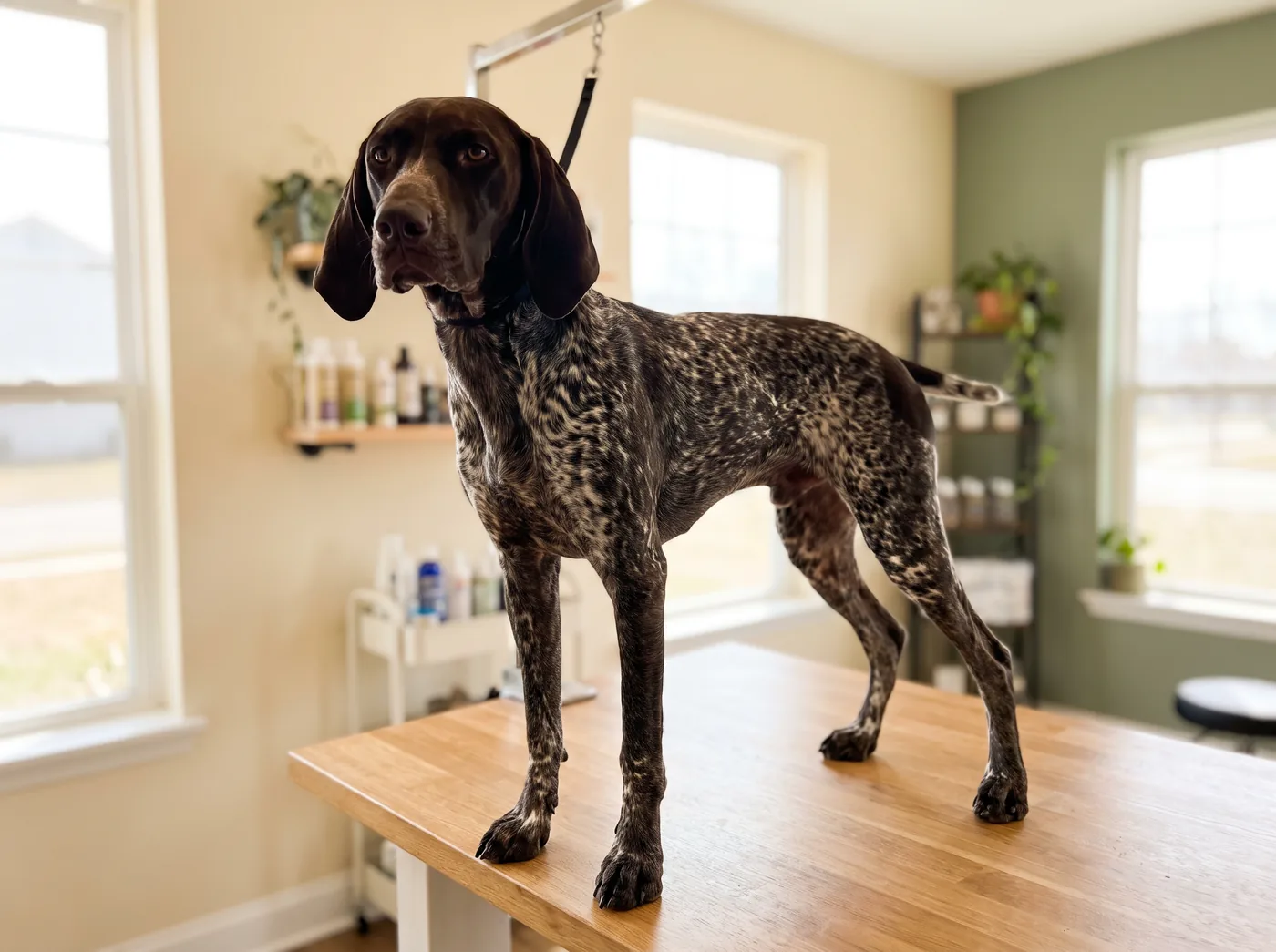
About the German Shorthaired Pointer
The German Shorthaired Pointer carries a short, dense, harsh coat that is thicker on the back and shoulders and finer on the head and ears. It was developed as an all round hunting dog expected to work on land and in cold water, and the coat reflects that: it is short enough to dry fast and harsh enough to shed water and resist thorn.
The grooming routine is ten minutes a week and there is nothing to cut. What surprises almost every new owner is the shedding, which is heavy, constant, and made worse by the fact that the hairs are short, stiff and needle straight, so they embed in fabric rather than resting on it.
The other two things worth knowing both come from what the dog does rather than what it looks like: it swims, which is a problem for a heavy drop ear, and it runs through cover at speed, which is a problem for feet, ears and skin.
The coat, and the shedding nobody expects
A GSP coat is genuinely short, but it is dense and the individual hairs are coarse and stiff. That combination produces a great deal of shed hair with none of the visual warning a long coat gives.
The hairs behave like Dalmatian hairs: short, straight and stiff enough to work into upholstery point first rather than sitting on the surface where a lint roller can lift them. On a liver and white dog they show on everything.
Shedding is heavy and year round, with a noticeable increase in spring and autumn. There is no dramatic coat blow because the undercoat is light, so it never stops and it never spikes much either.
The tool is a rubber curry or a hound glove, worked in circles against the lie and finished along it. Ten minutes twice a week, outdoors, removes a surprising quantity. A grooming mitt is often easier than a brush on a dog this active, because it can be done while the dog is being fussed rather than as a separate event.
A deshedding bath a few times a year helps, since warm water and a proper dry release hair that brushing leaves behind.
Bathe every couple of months at most. The coat is naturally water resistant and over bathing strips the oils that make it so.
There is nothing to cut, nothing that mats, and no reason to clip a GSP at all.
The ears, because this dog swims
A GSP has a moderately long, wide, flat drop ear that lies close against the head. On its own that is a manageable design. Combined with a dog that will get into any body of water it can find, it is the reason ear infections are the most common veterinary complaint in the breed.
The canal runs down and then turns inward, so it does not drain by gravity, and a flat ear over the opening holds whatever went in. Pond water, lake water and sea water all carry things that a warm sealed canal is happy to grow.
The routine is weekly, and after every swim. Lift the flap, look, and smell. Healthy is pale and smells of nothing; yeast is sweet and musty and unmistakable once met.
Dry the ears properly after every swim and every wet walk. This is the single most effective thing and the one most often skipped, because a short coated dog looks dry long before its ears are.
Head shaking, scratching at an ear, a head tilt, redness, or brown or black discharge means a veterinarian rather than a bottle of cleaner. Recurring infections need the cause identified rather than repeated treatment.
Use a cleaner only on veterinary advice, and never push anything into the canal.
The ears are also thin and lightly coated, so they get torn on wire and brambles more easily than the rest of the dog and are worth checking after a run in cover.
Feet, skin and what a working dog brings home
A GSP that gets the exercise it needs is running through fields, hedgerows and water several times a week, and most of what a groomer finds on one comes from that.
Check between the toes after every countryside walk. Grass seeds work in between the pads, cause a sudden limp and a swelling, and need veterinary removal. This is the classic summer injury for any working gundog.
Keep the hair between the pads trimmed flush, which is a small job on a coat this short but still worth doing.
Nails every three to four weeks. An athletic dog on soft ground wears down less than people assume.
Skin is easy to inspect because the coat is short. GSPs have a moderate rate of allergic skin disease, and they also collect scrapes, thorn punctures and the occasional tear from wire. Anything gaping needs a vet; anything red and spreading needs one too.
Watch the ear leather and the thinly coated belly for sunburn on a mostly white dog.
Lastly, the practical point that shapes every appointment: a GSP is one of the highest energy breeds there is, bred to hunt all day, and a dog that has not been exercised will not stand still on a table for any length of time. Walk it first. It is the single most useful thing an owner can do for the groomer, and it is free.
A note on the longhaired and wirehaired relatives
The German pointing breeds come as a family and they are frequently confused, which matters because the grooming is completely different.
The German Shorthaired Pointer is this page: short, dense, harsh, nothing to cut.
The German Wirehaired Pointer is a separate breed with a harsh wire jacket, a beard and eyebrows, and it is a stripping or clipping proposition much like a terrier jacket. Everything on the wire coat page applies and almost nothing on this page does.
The German Longhaired Pointer has a medium silky coat with feathering, closer to a setter, and needs combing rather than currying.
They look related because they are, and a dog described loosely as a German Pointer could be any of the three.
If you have a wirehaired dog, say so when booking, because a groomer expecting a shorthair will have booked twenty minutes for an appointment that needs two hours.
What to tell your groomer
Ask for a deshedding bath rather than a bath and brush. That is where the entire value is on this coat.
Say whether the dog swims, and ask them to dry the ears properly and check them.
Mention any ear history at all, because it is the breed's defining problem.
Ask them to check between the toes and clear the pads, and say if the dog has had a grass seed before.
Ask for the nails, which is the other job worth paying for on a dog with no haircut.
And exercise the dog properly beforehand. A GSP with unspent energy is a genuinely different animal on a table.
Keeping the coat between grooms
Rubber curry or mitt, outdoors
Short stiff hairs work into fabric point first. Removing them before they land is the whole game.
Twice a week
Dry the ears after every swim
A flat drop ear over a canal that does not drain, on a dog that swims in anything. This is the breed's main health problem.
After every swim
Check between the toes
Grass seeds work in between the pads, cause a sudden limp and need veterinary removal. The classic summer injury.
After countryside walks
Exercise before the appointment
One of the highest energy breeds there is. A GSP with unspent energy will not stand still for anyone.
Every visit
Common Questions About the German Shorthaired Pointer
Do German Shorthaired Pointers shed a lot?
Yes, heavily and constantly, which catches most owners out given how short the coat is. It is dense and the individual hairs are coarse and stiff, so they work into upholstery and clothing point first rather than resting on the surface. There is no dramatic seasonal blow because the undercoat is light, but there is also never a quiet period. A rubber curry or hound glove twice a week, done outdoors, plus a deshedding bath a few times a year, is the realistic answer.
Why does my GSP keep getting ear infections?
Because the ear design and the dog's habits work against each other. The canal turns a corner and does not drain by gravity, a wide flat drop ear seals the opening, and a GSP will swim in anything it can find. Pond and lake water sitting in a warm closed canal is what yeast and bacteria need. Dry the ears after every swim and wet walk, check weekly by lifting and smelling, and treat recurring infections as needing a diagnosis rather than a stronger cleaner.
Does a German Shorthaired Pointer need professional grooming?
Not for the coat. There is nothing to cut, nothing that mats, and a weekly curry at home covers it. Where a salon is worth booking is a deshedding bath a few times a year, which removes far more than brushing does, and the nails, which are easy to leave too long on an athletic dog. Never have a GSP clipped: the coat is short, water resistant and does its job, and there is nothing to gain.
Similar breeds
Same coat, same schedule, or the breeds this one is crossed from.

Labrador Retriever
A short coat with a full undercoat under it, and the shedding to prove it
Labrador Retriever
English Springer Spaniel
The ears are the appointment, and the show and working coats are two different dogs
English Springer SpanielFind a groomer who knows this coat
Search 37,863 groomers by town, or keep reading the breed guide.
Find a Local Groomer View All Breeds