Vizsla Grooming
The thinnest coat in the sporting group, on the dog least able to be left alone at a salon
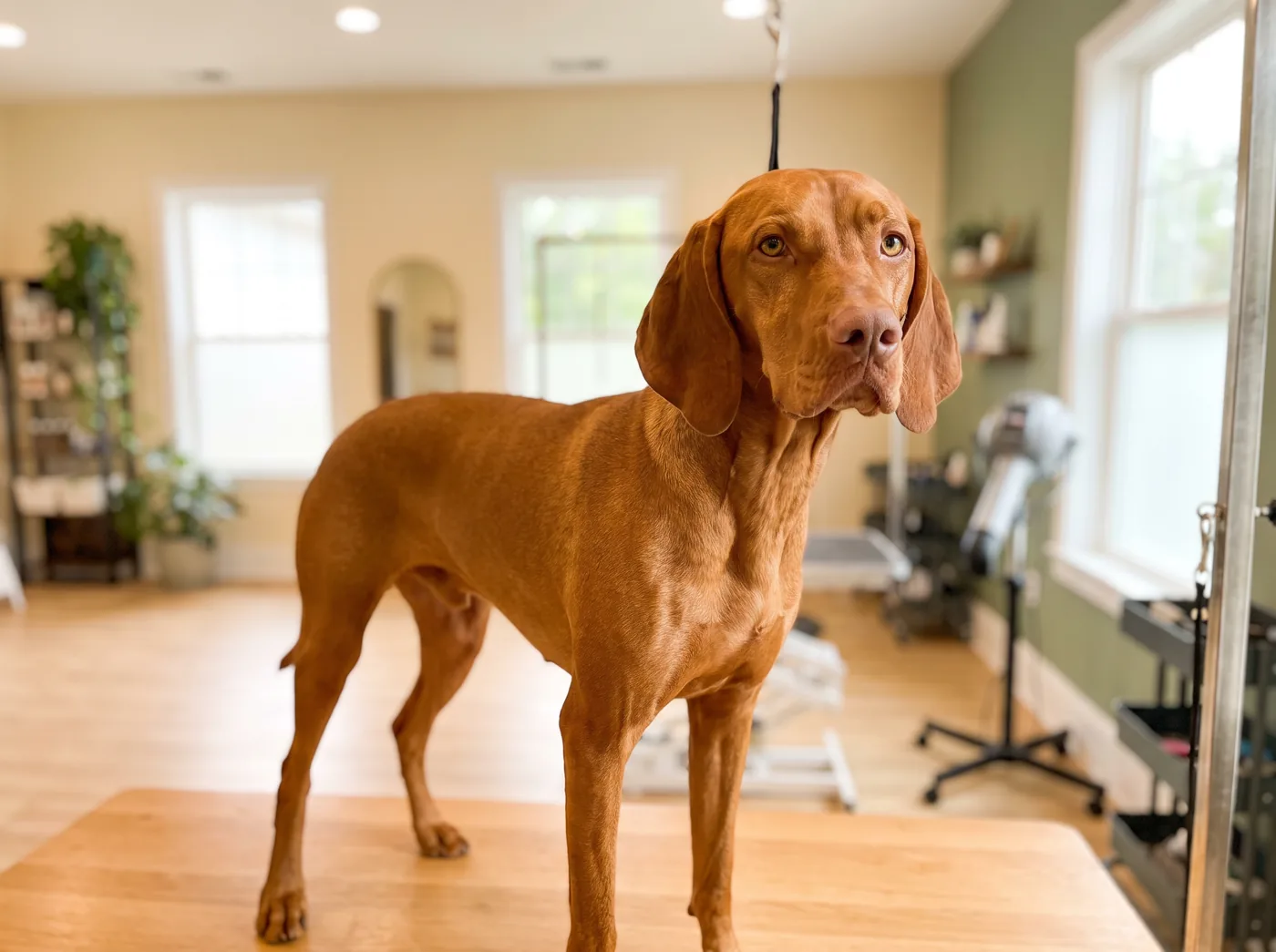
About the Vizsla
The Vizsla has the shortest, thinnest coat in the sporting group: smooth, close lying, genuinely single, with no undercoat anywhere and no feathering. There is nothing to cut, nothing that mats, and five minutes a week covers it completely.
What follows from that is a dog with almost nothing between it and the weather. A Vizsla has no undercoat, very little body fat, and thin skin over a lean athletic frame, so it feels cold in conditions most gundogs ignore and it scrapes and tears more easily in cover.
The other thing worth knowing has nothing to do with hair, and it matters more than the coat does. The Vizsla is about the most people-dependent breed there is, to the point that separation is a recognized problem in the breed rather than an individual quirk. Most salons ask you to drop a dog off for several hours. For this breed that is a genuinely bad plan, and it is worth arranging differently.
The coat, and the five minutes it takes
Short, smooth, dense enough to lie flat and completely single. It puts the Vizsla with the Boxer, the Doberman and the Whippet rather than with the short-but-double breeds like the German Shorthaired Pointer, which looks similar and behaves differently.
Shedding is moderate and steady with no seasonal blow, because there is no undercoat to release. The hairs are short, stiff and rust colored, and they show on dark fabric, but the volume is manageable.
A rubber grooming mitt or a hound glove once a week, in circles then along the lie. That lifts the loose hair and spreads the skin oils, which is what produces the coat's characteristic sheen.
A bath every couple of months at most. Over bathing a thin single coat strips the oils and leaves the skin dry and flaky, and there is no coat mass to hide that.
Nails every three to four weeks. Ears are thin, drop and lightly coated, and want a weekly lift and smell, particularly on a dog that swims.
There is nothing to cut and no reason to clip a Vizsla, and there is genuinely no professional appointment this coat requires.
Cold and skin, because there is nothing in the way
No undercoat, minimal body fat, a lean frame and a large surface area. A Vizsla loses heat quickly and it is one of the breeds where a coat in winter is practical rather than decorative.
The signals are the same as on any thin coated dog: shivering, standing hunched with the back arched, lifting feet off cold ground, and reluctance to go out. A Vizsla shivering in the yard is telling you something real.
A fitted waterproof coat for cold or wet weather, a warm dry bed away from drafts, and shorter walks in freezing conditions. Most Vizslas will get under a blanket or into a bed with you given any opportunity, and that is heat seeking as much as affection.
Bath time deserves the same care: warm water, a warm room, and a prompt thorough dry rather than a towel and out.
The skin matters too. It is thin, and a Vizsla is a dog that runs flat out through cover, so scrapes, thorn punctures and the occasional tear from wire are routine. Check the dog over after a run in the countryside, and treat anything gaping as a veterinary matter.
Sun is the other direction. A short rust coat over thin skin burns, particularly on the belly of a dog that sunbathes and on the thin ear leather, so shade in strong sun is worth arranging.
Hot spots also appear more readily than people expect on a coat this short, usually after swimming, so dry the dog properly.
Being left at a salon, which is a real problem for this breed
Vizslas are about the most people-dependent dogs there are. They were developed as close working companions to a single hunter, spending the whole day in contact with one person, and they retain that completely. The breed nickname, the velcro dog, is not affectionate exaggeration.
Separation distress is a recognized breed problem rather than a training failure in an individual dog, and it presents as pacing, whining, howling, drooling, refusing food, and sometimes destructive panic.
That collides directly with how most salons operate. The normal pattern is that you drop a dog off in the morning, it waits in a crate or a run until its turn, gets bathed and dried, and waits again until you collect it. For most breeds that is unremarkable. For a Vizsla it can be several hours of genuine distress, and a distressed dog is harder to handle, which makes the appointment worse for everyone.
The fix is straightforward and worth asking for: a by-appointment salon that takes the dog, works on it, and hands it straight back, or a mobile groomer who works with you present or nearby.
Given that the coat needs almost nothing, the honest answer for most Vizsla owners is to do the bathing at home and use a salon only for nails, which is a fifteen minute visit rather than a day.
If you do need a longer appointment, say plainly that the dog does not cope with being left, and ask them to keep it out where people are rather than in a back run.
The wirehaired Vizsla, and the rest of the routine
There is a separate breed, the Wirehaired Vizsla, which is not a coat variety of this one but a distinct breed developed in the 1930s by crossing Vizslas with German Wirehaired Pointers to produce a dog that could work in colder, wetter conditions.
It carries a harsh wire jacket with a beard and eyebrows, and it is a completely different grooming proposition: stripping or clipping every six to eight weeks, and everything on the wire coat page applies. If you have one, say so when booking, because a salon expecting a smooth Vizsla has the wrong time in the diary.
Beyond that the routine is short. Nails every three to four weeks, and this matters on a breed this athletic. Teeth, as always. Ears weekly.
Feet and legs after any run in cover, checking between the toes for grass seeds, which are the standard summer hazard for any dog that works in long grass.
And exercise, which is not grooming but decides everything about an appointment. The Vizsla is a high energy hunting breed that needs a serious amount of work every day, and one that has not had it will not stand still for anybody. Walk the dog first.
What to tell your groomer
Say the dog does not cope with being left, and ask for an appointment where it is worked on and handed back rather than kept for a day.
Ask for a proper dry rather than a towel and out, because this dog gets genuinely cold.
Ask for the nails, which is the main practical reason to book at all.
Say if the dog swims, and mention any hot spot or ear history.
Point out any scrapes or old scars on thin skin so they are worked around, and ask them to use soft tools rather than a slicker.
And say if you have a Wirehaired Vizsla rather than a smooth one, because it is a different breed and a completely different appointment.
Keeping the coat between grooms
Mitt the coat
Once a week, in circles then along the lie. Soft tools only on thin skin, and no slicker.
Weekly
Keep the dog warm
No undercoat and no body fat. A fitted coat in cold or wet weather and a prompt full dry after any bath.
Cold weather
Book short, not all day
Separation distress is a breed problem here. Ask to be worked on and handed back rather than left in a run.
Every visit
Check the skin after cover
Thin skin on a dog that runs flat out through brambles. Scrapes and tears are routine and anything gaping needs a vet.
After countryside walks
Common Questions About the Vizsla
Do Vizslas shed?
Moderately and steadily, with no seasonal blow, because the coat is genuinely single with no undercoat to release. The hairs are short, stiff and rust colored, so they show on dark fabric and work into it, but the overall volume is much lower than a short double coated breed like a German Shorthaired Pointer. A rubber mitt or hound glove once a week handles it, and there is no deshedding appointment worth booking.
Does a Vizsla need a coat in winter?
Usually yes. There is no undercoat, very little body fat and a lean frame with a lot of surface area, so a Vizsla loses heat faster than most dogs its size. Shivering, hunching with an arched back, lifting feet off cold ground and getting under blankets are all genuine signals rather than fussiness. A fitted waterproof coat in cold or wet weather, a warm bed away from drafts, and a prompt full dry after any bath.
Can I leave my Vizsla at the groomer all day?
It is worth avoiding. Separation distress is a recognized problem in this breed rather than an individual quirk, and the usual salon pattern of dropping off in the morning and collecting in the afternoon can mean hours of real distress in a crate or run. Ask for an appointment where the dog is worked on and handed straight back, or use a mobile groomer. Since the coat needs almost nothing anyway, most owners bathe at home and use a salon only for nails.
Similar breeds
Same coat, same schedule, or the breeds this one is crossed from.

German Shorthaired Pointer
A short harsh coat built for cold water, that sheds far more than it looks like it should
German Shorthaired Pointer
Find a groomer who knows this coat
Search 37,863 groomers by town, or keep reading the breed guide.
Find a Local Groomer View All Breeds