Shetland Sheepdog Grooming
An enormous coat on a small dog, and the one most often shaved by mistake
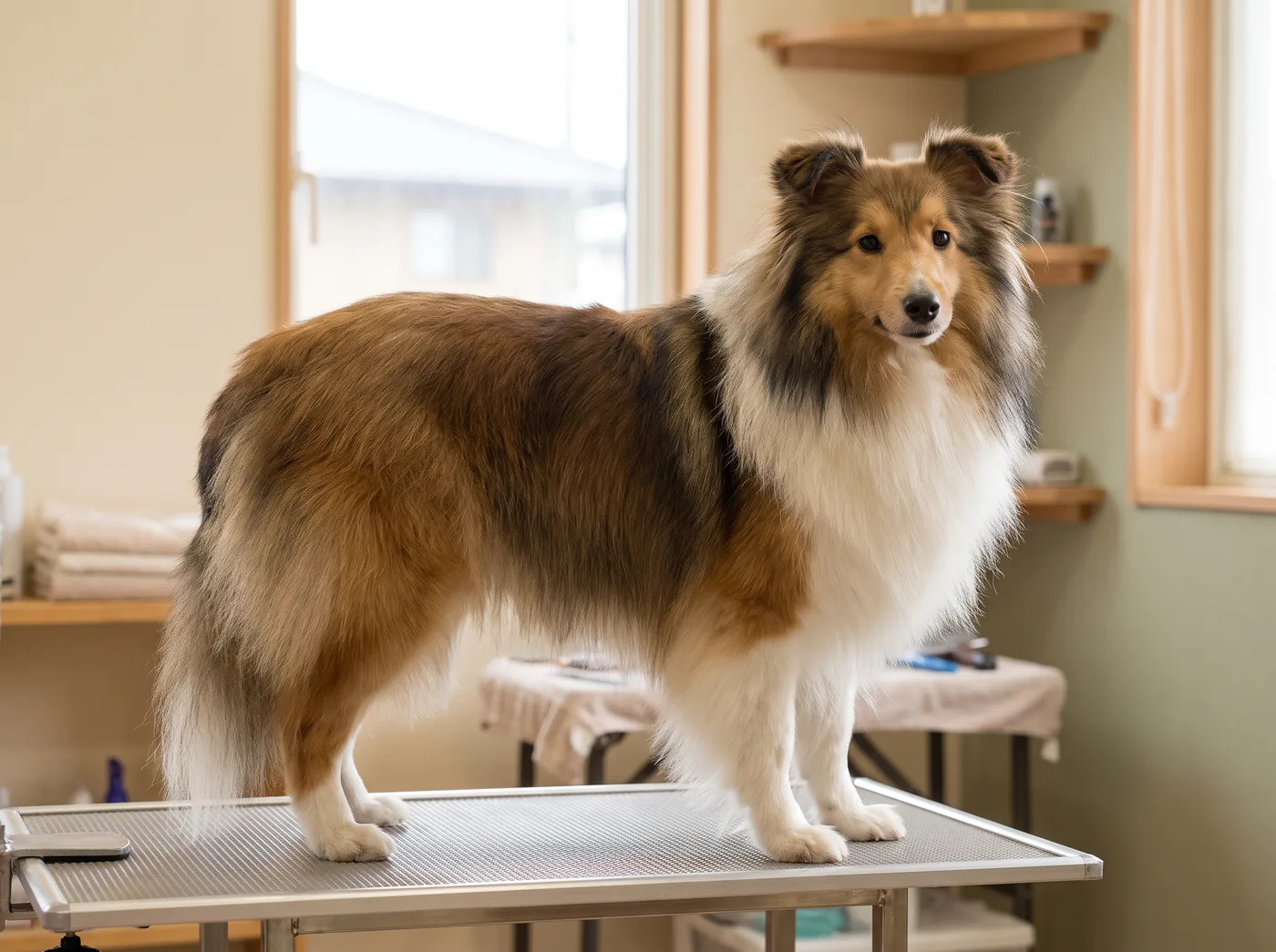
About the Shetland Sheepdog
The Shetland Sheepdog carries one of the largest coat volumes relative to body size of any breed: a long, harsh, straight outer coat standing away from the body over a short, dense, woolly undercoat, with an enormous mane around the neck and chest and heavy feathering on the legs and tail.
The frame underneath is small. A Sheltie is a fifteen to twenty five pound dog that looks half again its size when the coat is at full length, and owners are routinely astonished at how little dog is there after a bath.
That mismatch is the source of every problem on this page. The coat is a full working double coat with all the demands of one, on a dog small enough that people think of grooming it as a haircut. It is not. It needs line brushing every two or three days, a professional appointment every six to eight weeks, and it must never be shaved.
The Shetland Sheepdog has a double coat that regulates its own temperature. Shaving it does not keep the animal cooler, removes the protection against sun and insects, and the top coat often grows back patchy or never returns correctly. A thorough deshed takes out the undercoat and does the job the owner was actually asking for.
The coat, and why the mane is the problem
Two layers doing two jobs, as with any double coat. The outer coat is long, harsh and straight, and it stands off the body rather than lying flat, which is what gives the breed its outline. The undercoat is short, soft and so dense that the skin is genuinely difficult to reach.
The distribution is uneven, and that is what matters practically. The coat is heaviest at the mane around the neck and chest, on the trousers at the back of the hind legs, on the tail, and behind and under the ears. The back and sides carry far less.
Those heavy areas are exactly where a Sheltie mats, and they are also the areas an owner brushing casually tends to skim over. A dog can look magnificent from above while carrying a solid felted layer under the mane and inside the back legs.
The coat also changes dramatically with age and season. Sheltie puppies carry a soft fluffy coat that is replaced entirely, often going through an awkward stage around six to twelve months where the adult coat comes in unevenly. Spayed and neutered dogs frequently grow a softer, thicker, more cotton like coat than intact dogs, and that version mats considerably more readily. If your dog's coat changed after neutering, that is why, and it means more brushing rather than a problem.
Line brushing, and where to actually look
Line brushing means parting the coat down to the skin and working outward in sections, so that every hair from root to tip passes through the brush. It is the only method that works on a dense double coat, and brushing over the top of one is close to useless: the surface looks perfect while the layer underneath compacts.
Use a slicker for the body and a metal comb to check your work. The comb is the test. If it will not pass freely from skin to tip in a section, that section is not brushed, whatever it looks like.
Every two or three days, and the six places that matter are always the same: behind and under the ears, the mane at the throat and chest, the armpits, the trousers on the back legs, the base of the tail and around the sanitary area.
Behind the ears is the classic Sheltie failure. The hair there is fine, soft and different in texture from the body coat, it sits where the ear moves against the head, and it felts into a hard pad faster than anywhere else on the dog. Check it every single time.
Never brush a dry coat hard, and never bathe a matted one. Water tightens a mat exactly like a wet knot, so combing comes first, always.
If you find a mat, work it apart with fingers and a comb from the outside in, holding the hair at the base so you are not dragging on skin. Anything solid is a job for a groomer.
Shedding, and the twice yearly blow
Shelties shed a great deal, year round, and then twice a year they release the entire undercoat over two to four weeks. The volume from a twenty pound dog is genuinely startling.
Intact females often blow coat after a season as well, and neutered dogs of both sexes tend to shed less predictably and can look permanently mid-blow rather than having two clean cycles.
The tools are an undercoat rake and a slicker, used in sections, plus a comb to check. During a blow this becomes daily and should happen outside.
A bath and a high velocity dry at the start of each blow is the single most effective intervention available. Warm water loosens the dead undercoat and the dryer drives it out, and one appointment removes more than several weeks of brushing.
The critical point is that dead undercoat left in place is what causes matting. It packs down against the skin, binds with the growing coat, and becomes a felted layer that holds moisture and causes hot spots underneath. Almost every badly matted Sheltie got there through a coat blow that nobody kept up with.
Never shave a Sheltie
This happens to Shelties more than to any other double coated breed, because the dog is small, the coat is obviously enormous, and a shave down sounds like a sensible summer haircut. It is the same mistake as shaving a Samoyed and it does the same damage.
Shaving removes the long harsh outer coat, which is the layer that blocks sun and holds an insulating pocket of air, while leaving the dense woolly undercoat that actually traps heat. The dog ends up hotter rather than cooler, and with skin exposed to direct sun for the first time, which matters on the pale skin under a white mane.
The regrowth is frequently permanently altered. Undercoat grows back faster than guard hairs and comes to dominate, so the coat returns woolly, dull, uneven and far more prone to matting than the original. On some dogs, particularly older ones, sections never come back properly at all. Shelties are among the breeds most often reported with post clipping alopecia, where the coat simply fails to regrow for months or years.
The right response to a hot Sheltie is a thoroughly deshedded coat, which lets air move to the skin, plus shade, water and walking at the ends of the day.
The one legitimate exception is a coat so badly pelted that brushing it out would mean hours of dragging on skin. Then clipping is the kind option, and the lesson belongs to the months beforehand.
Trimming is different and entirely fine: the feet tidied, the hocks neatened, the sanitary area and the hair between the pads kept short. That is normal Sheltie grooming and no reputable groomer will confuse it with a shave down.
What to tell your groomer
Ask whether they have a high velocity dryer and enough time booked. A coat this dense goes home damp at the skin otherwise, and damp undercoat is where hot spots start.
Ask for a deshedding treatment rather than a plain bath and brush, and book one at the start of each coat blow.
Say honestly when the dog was last brushed to the skin, and specifically whether you have checked behind the ears.
Ask for the feet, hocks and sanitary area tidied and nothing else cut.
Mention if the dog has been neutered and the coat has changed texture, because a softer cotton coat mats faster and may need a shorter interval.
And if anyone offers to shave the dog for summer, decline. It is the clearest sign available that they do not understand the coat.
Keeping the coat between grooms
Check behind the ears every time
The fine soft hair there felts into a hard pad faster than anywhere else on the dog. It is the classic Sheltie failure.
Every two or three days
Line brush, then prove it with a comb
Part to the skin and work outward. If the comb will not pass freely, that section is not brushed however good it looks.
Every two or three days
Deshed at each coat blow
Dead undercoat left in place is what mats. A bath and a high velocity dry beats weeks of brushing.
Spring and autumn
Never shave the coat
It removes the sun barrier and leaves the insulation, and this breed is among the worst for coat that never grows back properly.
Always
Common Questions About the Shetland Sheepdog
Should I shave my Sheltie in summer?
No, and Shelties get shaved more than almost any other double coated breed because the dog is small and the coat looks excessive. Shaving removes the outer coat that blocks sun and holds insulating air, while leaving the dense undercoat that traps heat, so the dog gets hotter and burns more easily. The regrowth is often permanently woolly, uneven and mat prone, and Shelties are among the breeds most associated with coat that fails to regrow at all for months or years. Deshed it thoroughly instead.
Where do Shelties mat the worst?
Behind and under the ears, first and worst. The hair there is finer and softer than the body coat and sits where the ear moves against the head, so it felts into a hard pad faster than anywhere else. After that: the mane at the throat and chest, the armpits, the trousers on the back legs, the tail base and around the sanitary area. All of them are heavy coated areas that a casual brush skims over, which is why a Sheltie can look magnificent while carrying a solid layer underneath.
Why did my Sheltie coat change after being neutered?
It is common and well recognized. Neutered and spayed dogs of many double coated breeds grow a softer, thicker, more cotton like coat than intact dogs, with proportionally more undercoat, and Shelties show it clearly. The shedding cycle often becomes less predictable too, so instead of two clean blows a year the dog can look permanently mid-shed. It is not a health problem, but the softer coat mats considerably more readily, so it usually means more frequent brushing and sometimes a shorter grooming interval.
Similar breeds
Same coat, same schedule, or the breeds this one is crossed from.


Pomeranian
A northern double coat on a five pound dog, and the breed shave downs ruin most often
PomeranianFind a groomer who knows this coat
Search 37,863 groomers by town, or keep reading the breed guide.
Find a Local Groomer View All Breeds