Sussex Spaniel Grooming
A heavy feathered coat on the lowest, longest and slowest of the spaniels
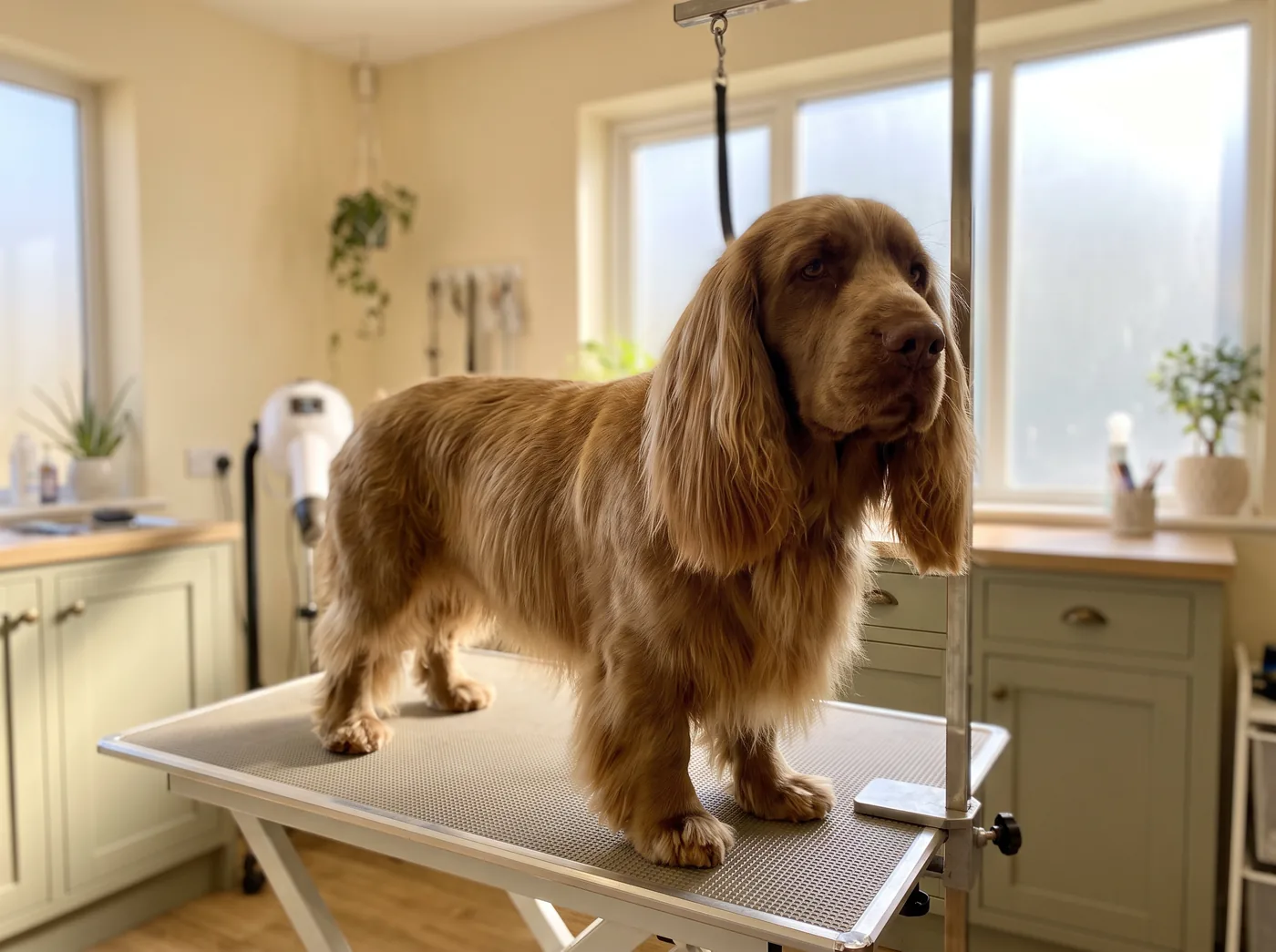
About the Sussex Spaniel
The heaviest built and lowest of the spaniels, and one of the rarest dogs in Britain: a solid thirty five to forty five pound dog on thirteen inch legs, in a rich golden liver found in no other breed.
It combines two problems that usually turn up separately and rarely together.
The coat is abundant and flat, with heavy feathering on the ears, chest, legs and belly. That is the Cocker problem: feathering that mats and collects.
The body is long, low and heavy. That is the Dachshund problem: a back that should never take a jump.
Put them together and the feathering on the belly and the backs of the legs is close to the ground on a dog that pushes through cover, so it collects everything and mats where the owner cannot see.
The ears are the third problem, and every spaniel has it.
The Sussex Spaniel has a double coat that regulates its own temperature. Shaving it does not keep the animal cooler, removes the protection against sun and insects, and the top coat often grows back patchy or never returns correctly. A thorough deshed takes out the undercoat and does the job the owner was actually asking for.
The feathering that drags
On a taller spaniel the belly feathering hangs clear of the ground most of the time. On a Sussex it does not.
The result is that the belly, the groin and the backs of the legs collect mud, burrs, seeds and whatever the dog has walked through, and they mat there quietly because it is the part nobody looks at.
So the routine is a comb to the skin every two to three days, and the belly is not optional. Stand the dog up or roll it over and work the underside deliberately.
The other trouble spots are behind and under the ears, the armpits, and the chest where the front legs rub.
Never cut a mat out with scissors. Under heavy feathering the skin is much closer than it looks.
Trim the feathering on the belly and the backs of the hocks shorter if the dog works or lives on mud. That is a practical decision, not a compromise, and it makes a real difference.
Comb the dog out completely BEFORE bathing, since water tightens a tangle into felt.
Clear the hair between the pads, which packs with mud on a dog this low.
A long low back on a heavy dog
Forty pounds on thirteen inch legs, with a body noticeably longer than it is tall, is a lot of dog on a long spine.
Treat it exactly as the Dachshund, Dandie Dinmont and PBGV pages describe: never let it jump down from a grooming table, a bath, a bed or a car, and lift it with one arm under the chest and the other supporting the hindquarters.
Say it at the first appointment. A groomer seeing a solid spaniel does not necessarily register the proportions, and a Sussex is heavier than it looks.
Keep the dog lean. The breed puts on weight readily and it is slow moving by nature, so it is easy to let happen, and weight on a long back is not kind.
Ramps rather than stairs and jumps, where you can.
Intervertebral disc disease occurs in the breed and the risk is what all of the above is about.
Hip dysplasia and heart conditions are also worth asking a breeder about.
The ear, which every spaniel pays
Large, lobe shaped, set moderately low, thickly covered in soft feathering and lying flat over the canal, on a dog whose head is close to wet ground all day.
That is the spaniel ear in its heaviest form.
Check weekly. Lift the leather fully, look and smell.
Wipe the visible part with a vet-approved cleaner and dry thoroughly after every bath and every wet walk.
Comb the ear feathering through a couple of times a week. It mats close to the head where it rubs, and a matted ear traps warmth against the canal.
Trimming the feathering on the underside of the ear shorter genuinely reduces recurring infections and is worth doing on a working or swimming dog.
Head shaking, scratching, a yeasty smell, redness or dark discharge all mean it has already started, and repeated infections need a veterinarian.
The ear tips also reach the food bowl, so a narrow deep bowl helps.
Trimming, and how much
The Sussex is shown as a natural dog and the standard does not want heavy sculpting.
The legitimate trimming is practical: neaten the feet, tidy the hocks, clear the hair between the pads, trim the sanitary area, and thin the feathering under the ears if infections recur.
The body coat is not scissored into shape and not clipped.
Clipping a Sussex takes the flat weather resistant outer coat off and lets the undercoat dominate, which produces a softer coat that mats more, and the color often comes back duller than the distinctive golden liver.
For a heavily matted dog a short clip is still the humane answer, and that is a management decision rather than a failure.
A pet trim taking the belly and leg feathering down moderately is a reasonable middle course for a dog that lives outdoors or in mud, and it keeps the look while halving the work.
Say which you want, since a groomer who does not know the breed will either over-trim it or leave everything.
What to tell your groomer
Say the dog is long, low and heavy and must be lifted on and off, never allowed to jump.
Ask for combing to the skin on the belly and groin specifically, since that is where it mats unseen.
Say the ears need lifting, checking and drying, and the ear feathering combing.
Ask for practical trimming only: feet, hocks, pads, sanitary. No body clipping.
Say never scissors on a mat, and that a short clip beats a cut.
Say the breed is rare, so expect to explain the coat.
Keeping the coat between grooms
Do the underside deliberately
Thirteen inch legs mean the belly feathering drags and mats unseen.
Every two to three days
Lift it, never let it jump
Forty pounds on a long spine, and disc disease occurs in the breed.
Every time
Comb and check the ear
The heaviest spaniel ear there is, lying flat over the canal.
Weekly
Trim practically, clip nothing
Feet, hocks, pads, sanitary and under the ears. The body stays natural.
Every six to eight weeks
Common Questions About the Sussex Spaniel
Where does a Sussex Spaniel mat?
Underneath, which is why it goes unnoticed. The dog is only thirteen inches tall with heavy belly and leg feathering, so that feathering is close to the ground and collects mud, burrs and seeds as it pushes through cover, then mats where nobody looks. Comb to the skin every two to three days and do the belly and groin deliberately, standing the dog up or rolling it over. The ears, armpits and chest are the other trouble spots.
Does a Sussex Spaniel need special handling?
Yes, for its shape. It is forty odd pounds on thirteen inch legs with a body noticeably longer than it is tall, which is a lot of dog on a long spine, and intervertebral disc disease occurs in the breed. Never let it jump down from a table, bath, bed or car, and lift it with one arm under the chest and one supporting the hindquarters. Keep it lean too, since it puts on weight readily and is slow moving by nature.
Can the feathering be trimmed shorter?
Yes, and on a dog that works or lives in mud it is sensible rather than a compromise. Taking the belly and hock feathering down moderately keeps the breed's look while roughly halving the combing, and thinning the feathering under the ears genuinely reduces recurring ear infections. What should not happen is clipping the body coat, which takes off the flat weather resistant outer coat, lets the undercoat dominate and often dulls the distinctive golden liver color.
Similar breeds
Same coat, same schedule, or the breeds this one is crossed from.

Clumber Spaniel
The heaviest spaniel, with the most feathering, the most drool and deep set eyes
Clumber Spaniel

Basset Hound
A very short coat and a very long list, because none of the work is on the hair
Basset HoundFind a groomer who knows this coat
Search 37,863 groomers by town, or keep reading the breed guide.
Find a Local Groomer View All Breeds