Barbet Grooming
A woolly curly coat that mats to the skin, with a beard that goes in the water first
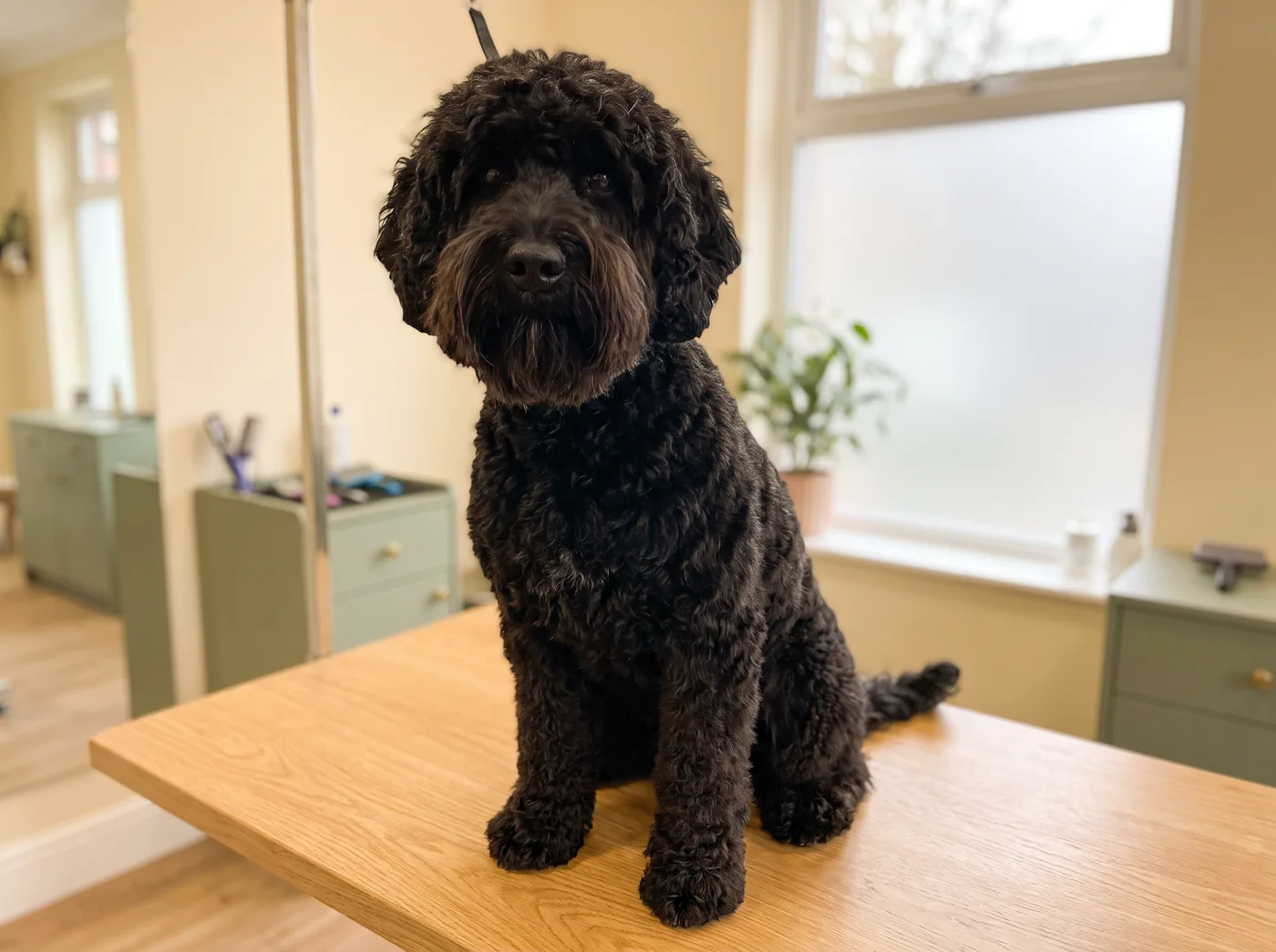
About the Barbet
An old French water dog, ancestor to several breeds including the Poodle, and one of the hardest working water coats there is.
The coat is a thick, woolly, curly single coat with no undercoat, covering the whole dog including a full beard over the muzzle. The breed name comes from barbe, French for beard.
It sheds very little, which is why it is sold as a low shedding dog, and that is the trap. A woolly single coat that does not shed keeps every loose hair, and those hairs felt into the curl and mat to the skin.
Combing to the skin every two to three days is not a suggestion here, and a Barbet left a month has to be shaved.
The beard is a second job on its own: it goes in the water before the rest of the dog and it comes back with whatever was in there.
Low shedding is not low maintenance
A Barbet holds its loose hair rather than dropping it, and the curl wraps around it.
The result is that matting starts at the skin, under a coat that looks fine from above, and the first sign an owner usually gets is a groomer saying the dog has to be clipped off.
So the routine is a metal comb and a slicker, every two to three days, in sections, lifting the coat and working down to the skin rather than passing over the surface.
The places that go first are behind and under the ears, the armpits, the groin, the britches, the tail base and anywhere a collar or harness sits.
Line brushing is the technique: part the coat, work the exposed line, move up an inch, repeat.
A slicker on its own is not enough. It glides over the top of a felted patch and leaves it there.
Always comb the dog out completely BEFORE a bath. Water tightens an existing tangle into felt that cannot be combed out afterward.
Never cut a mat out with scissors on any dog. Skin lifts into the blades.
The beard, and the water
A Barbet's beard is thick, woolly and covers the whole muzzle, and it goes into the water first because that is how the dog is shaped.
It holds pond water, weed and mud after work, food after every meal and water after every drink, and left damp it sours and stains and can go sore underneath.
Rinse and dry it daily. Comb it every couple of days along with the rest.
Some owners keep the beard trimmed shorter than the show length purely for practicality, and that is a reasonable choice on a companion dog that swims.
The ears are long, drop, covered in coat and lie flat over the canal on a dog that swims constantly, which is the same problem the spaniel pages describe and slightly worse.
Dry the ears thoroughly after every swim and every bath, check weekly, and keep the hair on the underside of the ear thinned if infections recur.
Hair growing in the ear canal itself is common in curly coated breeds and worth discussing with a vet rather than plucking on a whim, since routine plucking is no longer generally recommended.
Clipping, which is fine here
Unlike most coats of this kind, a Barbet can be clipped without harming anything, and for many owners it is the sensible answer.
It is a single coat with no undercoat to disrupt and no harsh guard hairs to destroy, so a shorter all-over trim every six to eight weeks grows back the same.
A pet clip of one to two inches keeps the look, cuts the combing down and makes the drying manageable.
The show coat is longer and natural, with the curl left alone rather than scissored into shape, and it is a considerable commitment.
What does need saying: the coat is water absorbent and slow to dry at full length, so a wet Barbet needs a proper dry rather than being left, and a damp woolly coat against skin causes hot spots.
Clear the hair between the pads. A water dog with a woolly coat picks up everything.
Nails every three to four weeks and teeth brushed.
The five water dogs, ranked by work
Now that the set is complete, it is worth ordering them honestly.
Chesapeake Bay Retriever: least work. Short harsh oily coat, bathed as little as possible, never clipped.
American Water Spaniel: little work. Oily waves, weekly comb, minimal trimming.
Spanish Water Dog: cords left alone, then shorn off once a year. Low effort, unusual method.
Portuguese Water Dog: a single coat clipped every six to eight weeks with regular combing.
Barbet, and the Irish Water Spaniel beside it: the most work of all, a dense single coat that mats to the skin.
All five swim, all five have ear problems, and they range from a rubber mitt to a daily comb. "Water dog" describes the job, not the coat, and the coat is what you pay for.
Two of the five must never be clipped and three of them should be.
What to tell your groomer
Say the coat mats to the skin and ask for line brushing rather than a slicker over the top.
Say whether you want the show length or a pet clip, and that a pet clip is fine on this coat.
Ask for the beard washed and dried properly, and say if you want it shortened.
Ask for the ears dried thoroughly, since the dog swims.
Say never scissors on a mat, and that you would rather have a short clip than a cut.
Ask them to dry the coat all the way through, since a damp woolly coat causes hot spots.
Keeping the coat between grooms
Line brush to the skin
Part the coat, work the line, move up an inch. A slicker skates over felt.
Every two to three days
Rinse and dry the beard
Named for it, and it goes in the water before the rest of the dog does.
Daily
Comb out BEFORE the bath
Water turns a tangle into felt that will not come out afterward.
Every bath
A pet clip is fine here
Single coat, no undercoat. It grows back the same, unlike most breeds.
Every six to eight weeks
Common Questions About the Barbet
Is a Barbet low maintenance because it barely sheds?
No, and the two get confused constantly. A Barbet holds its loose hair instead of dropping it, and the woolly curl wraps around it, so matting starts at the skin under a coat that looks fine from above. It needs a metal comb to the skin every two to three days using line brushing, not a slicker passed over the surface. A Barbet left for a month usually has to be shaved off. Low shedding and low maintenance are opposite things here.
Can a Barbet be clipped short?
Yes, and unlike most coats of this kind it costs nothing. There is no undercoat to disrupt and no harsh guard hairs to destroy, so a pet clip of one to two inches every six to eight weeks grows back exactly the same and makes the combing and the drying far more manageable. The show coat is longer and left natural, with the curl not scissored into shape, and it is a genuine daily commitment.
What do I do about the beard?
Rinse and dry it daily and comb it every couple of days. The breed is named for it, it is thick and woolly and covers the whole muzzle, and it goes into the water before the rest of the dog, so it comes back holding pond water, weed and mud, plus food after every meal. Left damp it sours, stains and can go sore underneath. Many owners keep it shorter than show length purely for practicality, which is a sensible choice on a dog that swims.
Similar breeds
Same coat, same schedule, or the breeds this one is crossed from.


Irish Water Spaniel
Crisp ringlets over the whole dog except the tail, which is bare by design
Irish Water Spaniel
Portuguese Water Dog
A curly working coat with two traditional clips, and one of them has a real reason behind it
Portuguese Water DogFind a groomer who knows this coat
Search 37,863 groomers by town, or keep reading the breed guide.
Find a Local Groomer View All Breeds