Irish Wolfhound Grooming
A harsh rough coat that is raked and stripped, never clipped, on the tallest breed there is
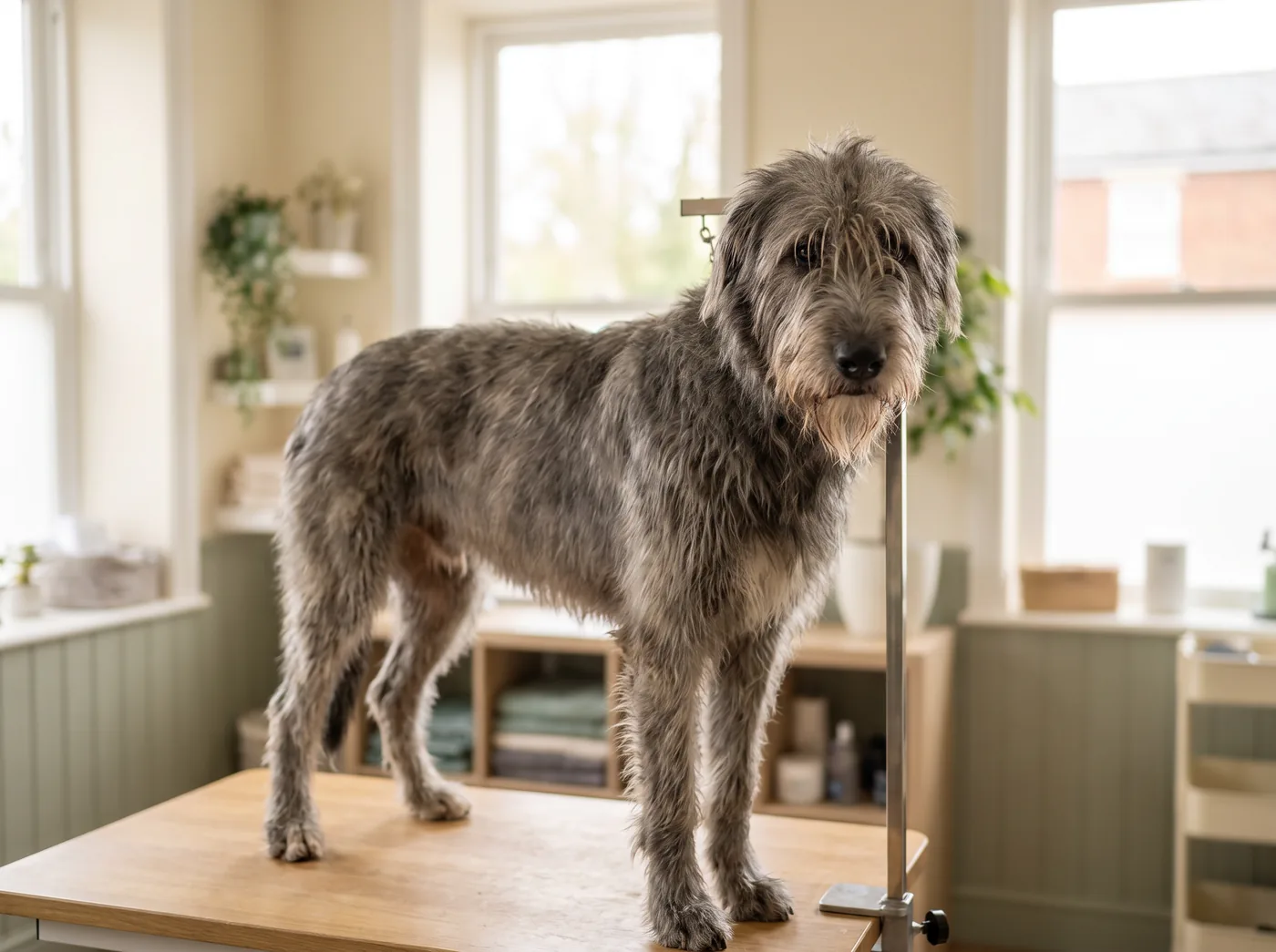
About the Irish Wolfhound
The tallest dog breed there is, and one of the more straightforward coats there is, which is not the same as saying it is an easy dog to groom.
The coat is rough and harsh: wiry, dry, medium length, longer and more wiry over the eyes and under the jaw where it forms the eyebrows and beard the breed is known for. There is a soft undercoat underneath but it is nothing like a Husky's.
The rule is the one every harsh coat follows. It is raked and hand stripped, not clipped. Clipping a wiry coat cuts the dead hair off rather than removing it at the root, and the coat comes back softer, paler and less weatherproof each time.
The real work with this breed is not the coat. It is that everything is happening thirty five inches off the ground on a dog that may weigh more than the person handling it.
The Irish Wolfhound has a double coat that regulates its own temperature. Shaving it does not keep the animal cooler, removes the protection against sun and insects, and the top coat often grows back patchy or never returns correctly. A thorough deshed takes out the undercoat and does the job the owner was actually asking for.
Raking, stripping and leaving it alone
Weekly is enough for most of the year. Go through the coat with a slicker or a pin brush and then a wide toothed comb, and use a rake to pull the dead undercoat when it is shedding.
Matting is a moderate risk rather than a severe one. The coat is not long enough or dense enough to pelt the way a Briard does, and where it does tangle is predictable: behind and under the ears, the beard, the armpits, the britches and the feathering on the tail.
Twice a year or so the dead outer coat needs stripping out, either by hand or with a stripping knife used as a grip. On a dog this size that is a long session, and plenty of owners learn to do it themselves in stages across a fortnight rather than paying for it in one go.
A stripped Wolfhound looks distinctly tidier and the harsh texture stays. An unstripped one carries dead hair that dulls the coat and eventually mats.
Do not clip. Beyond softening the coat permanently, a clipped Wolfhound loses the weatherproofing that a rough coated sighthound with very little body fat genuinely relies on.
Trimming for function is fine: the pads, the sanitary area, and tidying the feathering where it drags.
The eyebrows, the beard and the eyes
The furnishings over the eyes and under the jaw are characteristic and they are also the parts that cause trouble.
The eyebrows grow long and can fall onto the eye surface. The breed sees through them and there is no need to remove them, but hair actually resting on the cornea irritates it, so ask for them kept clear of the eye rather than cut off.
The beard is a beard like any other: it goes into the water bowl at every drink and the food at every meal, and on a harsh dry coat it holds what it collects. Comb it daily, wipe and dry it after meals, and wash it more often than the rest of the dog. A shallow wide bowl helps.
Wolfhounds are prone to a few eye conditions and their eyes sit fairly deep, so any squinting, discharge or rubbing is worth a veterinary look rather than more wiping.
Ears are small rose ears carried folded back, which is a better shape than a full drop ear, but still worth a weekly lift, look and smell.
Nails need doing every three to four weeks. This is a heavy dog and overgrown nails change how it stands, which matters more on a giant frame than on a small one.
Handling a dog this tall
Most of the difficulty in grooming an Irish Wolfhound is logistics rather than coat.
A standing Wolfhound's back is at the chest height of many adults, and a grooming table designed for a Labrador is unusable. Many groomers work on the floor with these dogs, or use a low platform, and mobile groomers with a suitable van are often the practical answer. Ask before booking.
They are famously gentle and they are also perfectly capable of leaning their entire weight on somebody without meaning anything by it, so handling has to be trained rather than negotiated. Teach a Wolfhound puppy to stand, to have its feet held, to be brushed on its side, and to accept a nail clipper, because a hundred and sixty pound dog that objects at three years old is not going to be persuaded.
Joints matter. Standing on a hard surface for a long appointment is tiring, and this breed is prone to hip and elbow trouble as well as bone cancer. Ask for a non slip mat, breaks, and as much work as possible done with the dog lying down.
Wolfhounds are also prone to bloat, which is a life threatening twisting of the stomach. Do not feed a large meal immediately before or after an appointment, and know that a dog trying unsuccessfully to vomit with a swollen abdomen is an emergency.
The short life, and what grooming is really for
An Irish Wolfhound lives six to eight years, which is very short even for a giant breed, and it changes what the weekly routine is worth.
A dog with a short life and a high rate of bone cancer and heart disease benefits enormously from being handled all over every week by somebody who would notice a change. The brushing session is a physical examination that happens to remove hair.
Feel down each leg, over the ribs and along the spine. Bone cancer in this breed most often appears in a limb, and a new firm swelling on a leg, or a sudden lameness that does not resolve, needs a veterinarian quickly rather than rest and a wait.
Watch the weight, which is hard to judge under a rough coat, so feel for ribs rather than looking.
Older Wolfhounds tire fast and are often unsteady on smooth floors, so appointments should get shorter and gentler with age rather than staying the same.
None of this is grim. It is the honest reason the weekly ten minutes is worth more on this breed than on almost any other here.
What to tell your groomer
Confirm before booking that they can physically handle a dog this tall, and ask whether they work on the floor or on a low platform.
Say the coat is raked and hand stripped, never clipped.
Ask for the eyebrows kept clear of the eye surface rather than removed, and the beard washed and dried.
Ask for a non slip surface, breaks and as much done lying down as possible, and mention any joint trouble.
Say not to feed the dog around the appointment, because of bloat risk.
Ask them to tell you about any new lump or swelling on a limb, since that is what matters most in this breed.
Keeping the coat between grooms
Brush, comb and rake
Weekly is enough. Behind the ears, beard, armpits, britches and tail feathering.
Weekly
Strip the dead coat out
Twice a year, in stages if you like. Never a clipper on a harsh coat.
Twice a year
Feel down every limb
Bone cancer usually shows first as a firm swelling on a leg. The brush is the exam.
Weekly
No big meal around grooming
Bloat risk on a deep chested giant. Unproductive retching is an emergency.
Every appointment
Common Questions About the Irish Wolfhound
Can you clip an Irish Wolfhound?
No, and it is worth resisting even on a hot day. The coat is harsh and wiry, and clipping cuts the dead hair off while leaving the root, so it grows back softer, paler and less weatherproof with every clip. A rough coated sighthound with very little body fat genuinely relies on that coat. What it needs instead is weekly brushing and combing, raking when it sheds, and hand stripping the dead outer coat roughly twice a year, which many owners do themselves in stages rather than in one long session.
How do groomers handle a dog as tall as a Wolfhound?
Usually on the floor or a low platform rather than a standard table, because a standing Wolfhound's back is at chest height on most adults. Ask before booking whether the salon can physically manage the size, since not all can, and mobile groomers with a suitable van are often the easier answer. Ask for a non slip surface, regular breaks and as much of the work as possible done with the dog lying down, because standing still on a hard floor for an hour is genuinely tiring for a giant breed with heavy joints.
What should I be checking for while brushing a Wolfhound?
Lumps on the limbs above everything else. Irish Wolfhounds live only six to eight years and have a high rate of bone cancer, which most often shows as a new firm swelling on a leg or a lameness that does not resolve, and both need a vet quickly rather than rest and a wait. Use the weekly brush as a physical check: feel down each leg, over the ribs and along the spine, and feel for the ribs to judge weight, since a rough coat hides condition well.
Similar breeds
Same coat, same schedule, or the breeds this one is crossed from.


Airedale Terrier
The largest terrier there is, and the biggest hand stripping job a salon will take on
Airedale TerrierFind a groomer who knows this coat
Search 37,863 groomers by town, or keep reading the breed guide.
Find a Local Groomer View All Breeds