Korat Grooming
The fourth blue cat, and the only one with a single coat and no undercoat
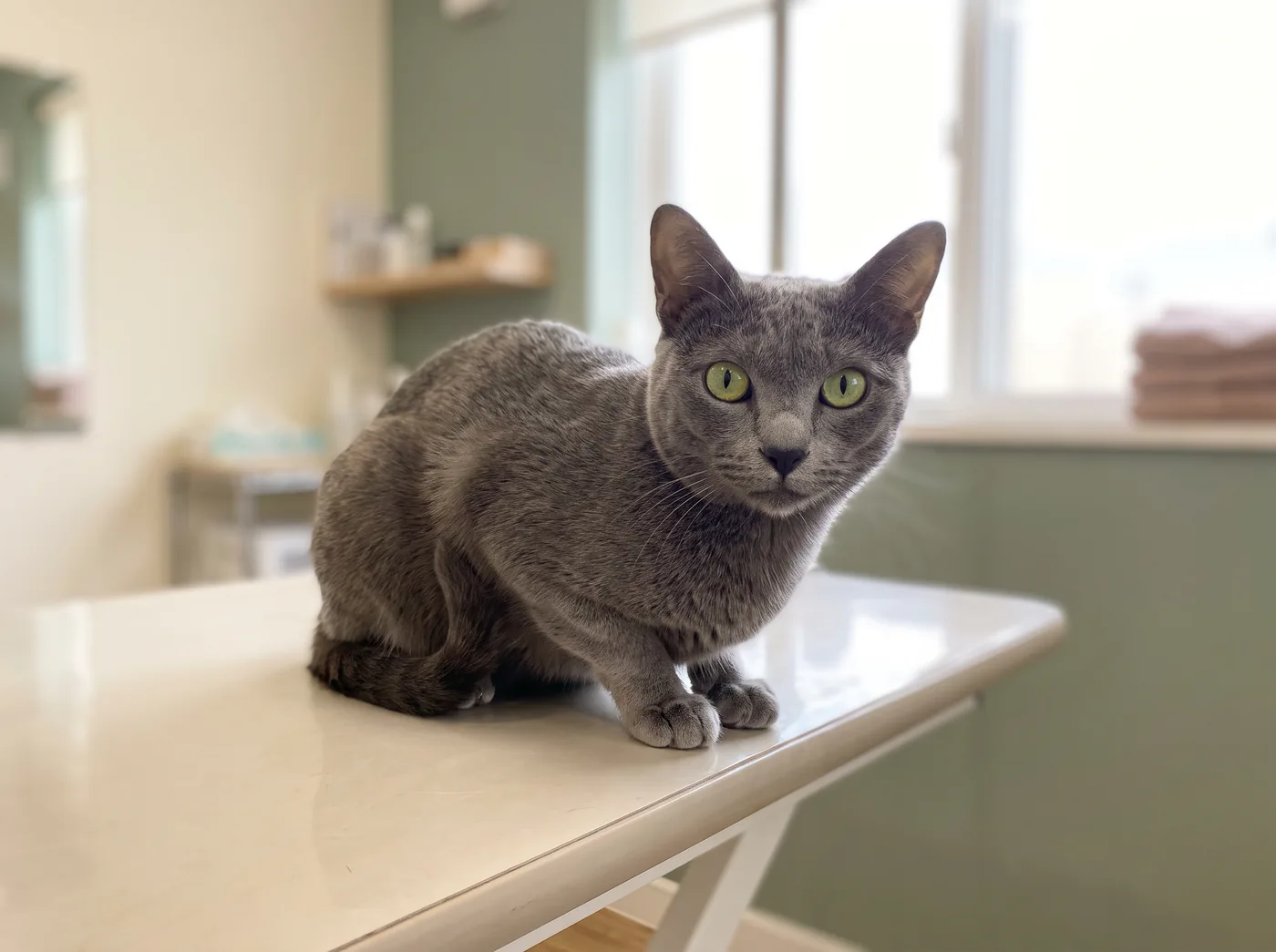
About the Korat
The gray blue cats are mistaken for one another constantly, and this is the one that completes the set.
A Russian Blue has a short dense double coat that stands away from the body and never mats. A Chartreux has a woolly double coat that breaks and does mat. A Nebelung is a semi longhair with the same undercoat and needs combing twice a week.
A Korat has a single coat with no undercoat at all, lying close to the body, and it is the easiest of the four by a clear margin: a comb once a week and nothing else.
The color is a single silver blue, and every hair is tipped with silver so the coat appears to have a halo in good light. Korats come in one color only, which is unusual, and the eyes are a striking peridot green that takes up to four years to reach full color.
The Korat has a double coat that regulates its own temperature. Shaving it does not keep the animal cooler, removes the protection against sun and insects, and the top coat often grows back patchy or never returns correctly. A thorough deshed takes out the undercoat and does the job the owner was actually asking for.
The four blue cats, side by side
Worth setting out in one place, because these breeds are confused constantly and they need genuinely different amounts of work.
Korat: single coat, no undercoat, lies close. Weekly comb. Never mats. Peridot green eyes, heart shaped face, one color only.
Russian Blue: short dense double coat standing away like plush, effectively never mats, weekly comb. Vivid green eyes, fine boned and angular.
Chartreux: woolly double coat that breaks at the neck and flanks and does tangle. Comb every two or three days. Copper or gold eyes, heavy and broad on fine legs.
Nebelung: semi long over a real undercoat, mats in the ruff and britches. Comb every two or three days. Green eyes, long and graceful.
Eye color is the quickest field test: peridot green for a Korat, vivid green for a Russian Blue, copper or gold for a Chartreux.
The practical point is that being blue tells you nothing about the grooming. What matters is whether there is an undercoat and how long the coat is, which is the argument this whole site is built on.
The coat, and the silver tipping
The coat is short, fine, single and close lying, with no undercoat whatsoever. Each hair is lighter at the root and tipped with silver, which produces the halo effect the breed is known for.
Comb once a week with a fine metal comb, or go over the cat with a rubber grooming mitt. That is the entire coat routine, it takes a couple of minutes, and it doubles as the weekly check over the body.
Shedding is low, and there is no seasonal blow worth the name.
Do not use a slicker or a deshedding blade. There is no undercoat to remove and those tools pull live hair from a single coat.
Do not bathe routinely and do not clip. A healthy Korat keeps itself immaculate, and a single fine coat that is clipped can return with a changed texture and takes a long time to recover the tipping.
Because the coat lies so close and there is nothing underneath it, a Korat feels warm and solid in the hand and any weight change is easy to feel, which makes the weekly session genuinely informative.
Chill risk, and a lean cat
A single coat with no undercoat means very little insulation, and Korats are muscular but not heavily built.
If a bath is genuinely necessary, and it rarely is, keep the room and water comfortably warm, work quickly, and dry thoroughly with towels and warm rather than hot air before letting the cat wander off damp.
Clipper work carries the same caution: very little coat between the blade and the skin.
A Korat seeking out a warm spot is doing what a single coated cat does.
Weight matters in the usual way. A cat that becomes heavy stops being able to reach its own back end, and even on a coat that does not mat, a cat that stops grooming itself develops a greasy dull coat and skin problems.
Korats are long lived, often fifteen to nineteen years, so the habits set in the first year run a very long time.
They are also notably attached to their people and dislike being left alone, which makes handling easy and means a withdrawn Korat is worth paying attention to.
The DNA test worth asking about
Korats descend from a small founding population and the breed carries a known inherited risk worth raising with any breeder.
Gangliosidosis, in two forms, is a fatal neurological storage disease that appears in kittens and young cats and causes progressive loss of coordination and function. There is a DNA test for both forms, and responsible breeders test and will show results.
It is not something an owner manages. It is something to avoid by buying from a breeder who tests, and the test is well established and inexpensive.
For an existing cat, what matters practically is taking any developing wobbliness, tremor or loss of coordination in a young Korat seriously and quickly rather than watching it.
Beyond that the breed is generally robust and long lived.
The rest of the routine is the ordinary one: claws tipped every two to three weeks with a good post provided and no declawing, teeth brushed, ears wiped on the visible part weekly, and weight watched monthly.
What to tell your groomer or vet
Say it is a Korat and not a Russian Blue or Chartreux, since all four blue cats need different amounts of work and this is the easiest.
Say the coat is single with no undercoat, so no slicker and no deshedding blade.
Ask for a comb or rubber mitt only, no bathing and no clipping.
Say the cat chills easily for its build, so warmth matters during and after anything wet.
Ask for claws tipped and the mouth looked at.
Mention gangliosidosis testing status if you know it, and take any wobbliness in a young cat seriously.
Keeping the coat between grooms
Comb or mitt, two minutes
Single coat, no undercoat, never mats. No slicker and no deshedding blade.
Weekly
Keep it warm if it gets wet
No undercoat at all. Warm room, warm water, dried thoroughly.
If bathed
Tip the claws
Sharp tip only, clear of the quick. A post, and never declawing.
Every two to three weeks
Take wobbliness seriously
A known inherited neurological risk in young cats. Do not watch and wait.
Ongoing
Common Questions About the Korat
How is a Korat different from a Russian Blue or a Chartreux?
Mainly in the coat, which is what decides the grooming. A Korat has a single coat with no undercoat at all and is the easiest of the four blue cats: a weekly comb and it never mats. A Russian Blue has a dense double coat that stands away like plush and also never mats. A Chartreux has a woolly double coat that breaks and does tangle, needing combing every two or three days. A Nebelung is semi long over a real undercoat. Eye color is the quickest field test.
What makes a Korat coat look like it has a halo?
Silver tipping. Each hair is lighter at the root and tipped with silver, so in good light the whole coat appears to shimmer or have a halo around it. The breed comes in one color only, a single silver blue, which is unusual among cats. The coat is short, fine, single and close lying, so it takes a comb once a week and nothing else, and it should not be clipped, since a fine single coat can come back with a changed texture and takes a long time to recover the tipping.
Are there health tests to ask a Korat breeder about?
Yes, and this one matters. Korats descend from a small founding population and carry a known risk of gangliosidosis in two forms, a fatal neurological storage disease that appears in kittens and young cats. There is an established DNA test for both forms, and a responsible breeder tests and will show you the results. It is avoided by buying carefully rather than managed afterwards. For an existing cat, take any developing wobbliness or loss of coordination in a young Korat seriously and quickly.
Similar breeds
Same coat, same schedule, or the breeds this one is crossed from.

Russian Blue
A short coat dense enough to stand away from the body, and the silver tips that do the work
Russian Blue

Find a groomer who knows this coat
Search 37,863 groomers by town, or keep reading the breed guide.
Find a Local Groomer View All Breeds