Labradoodle Grooming
The original doodle, and the one whose coat varies most from dog to dog
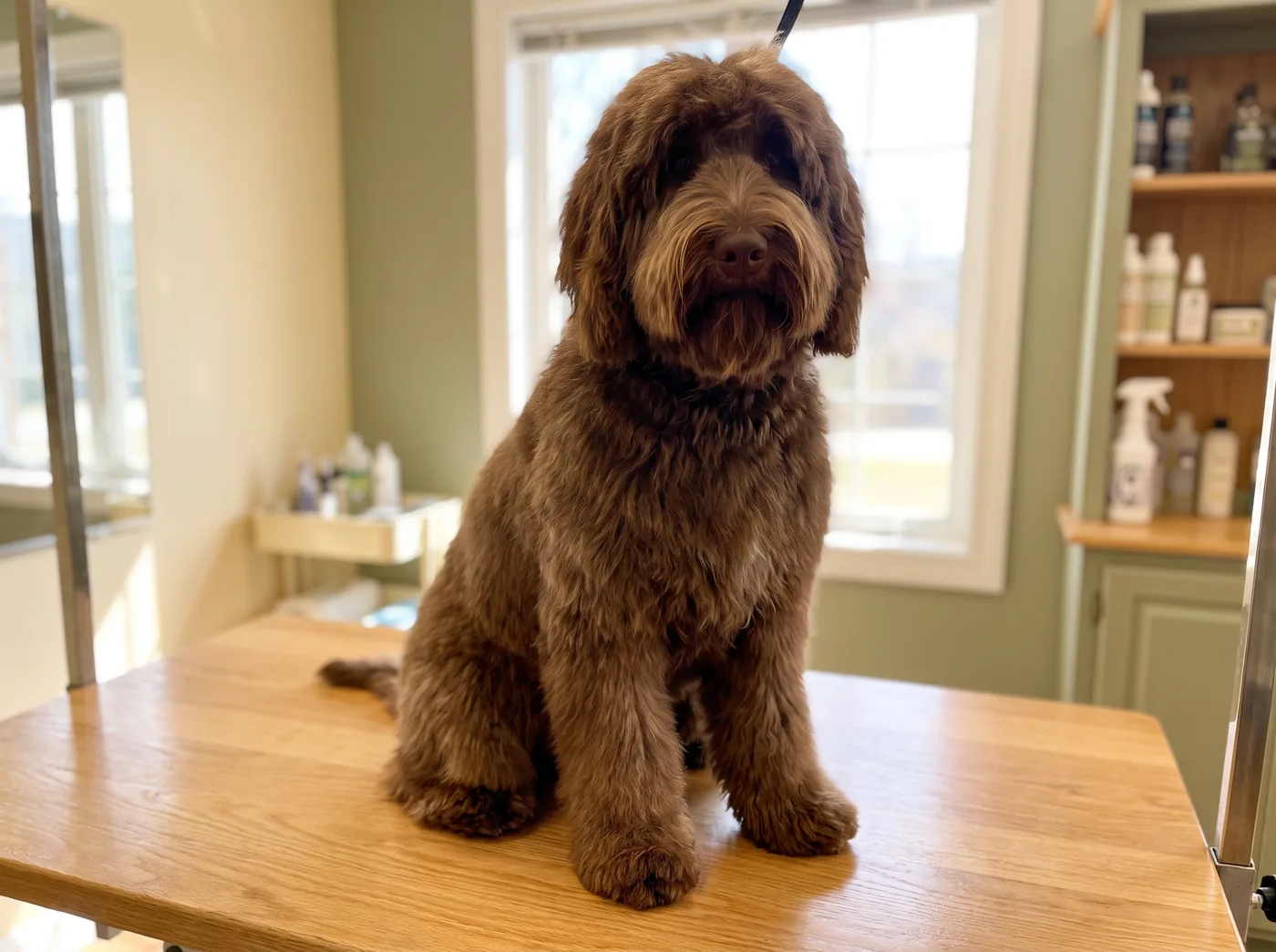
About the Labradoodle
The Labradoodle was the first of the deliberate doodle crosses, bred in Australia in the late 1980s as a guide dog for a handler whose partner was allergic. Everything that followed, every Goldendoodle and Bernedoodle and Cavapoo, traces back to it.
It is also the cross whose coat varies most from dog to dog, and that matters more than any other fact about grooming one. A first cross Labradoodle can inherit anything from a tight Poodle-like wool to a coat barely different from a Labrador's, and the two need completely different appointments.
What they share, when the Poodle side wins, is a coat that grows continuously and holds shed hair rather than dropping it. That is the low shedding people want and the matting they are not warned about, and it is the same fact seen from two sides.
What the Labradoodle is crossed from
Three coats under one name
Groomers sort Labradoodle coats into three, and knowing which you have decides everything else.
Wool is the tightest, closest to the Poodle. It feels dense and springy, it sheds essentially nothing, and it is the highest maintenance of the three. It mats fastest and needs the shortest interval.
Fleece is soft and wavy with a loose curl, which is what most people picture and what most Labradoodles have. It sheds very little and mats readily once it grows past a few inches.
Hair is straighter and coarser, closest to the Labrador side. It sheds noticeably, it tangles far less, and it needs the least work of any of them. Owners who wanted a low shedding dog are often disappointed by it, and owners who wanted a low maintenance dog have quietly got what they were after.
Generation labels give a rough prior and nothing more. An F1 is a first cross and the most variable of all; an F1b is bred back to the Poodle and is more likely to be woolly, lower shedding and higher maintenance. Judge the coat in front of you rather than the paperwork.
What a full groom involves
One of the longer appointments in a salon, and very little of it is the haircut.
It starts dry, with a full brush and comb through. Anything tangled comes out before water touches it, because bathing a coat with tangles sets them and a mat that could have been combed out beforehand often cannot be afterward. On a grown out fleece coat this stage alone can be an hour.
Then a rough pre clip to take off bulk so the bath and dry are not spent on hair about to be removed. Then a double bath and conditioner.
Then the dry, done with a high velocity dryer and a brush working together, which matters more on a curly coat than almost anything: a coat dried flat sets flat and cannot be scissored to a true line, and damp undercoat left in is where the next mat starts.
Then clipper work to set the body length, and scissor work on the legs, head, ears and tail, which is where the shape comes from and where most of the skill sits.
Three hours is normal for a coat in good condition.
How often, and the first year that catches everyone
Every four to six weeks on a wool or fleece coat. A hair coated Labradoodle can go longer and is really a deshedding job rather than a haircut.
The interval and the length have to move together, and this is where owners get caught. A long fluffy trim and a ten week booking are not compatible with each other. If you want the coat left long, comb it properly every day and book at four weeks. If you would rather book at eight, ask for it shorter and enjoy that it holds its shape the whole time.
Then the puppy coat change, between about eight and fourteen months. The soft puppy coat is pushed out by the adult coat arriving underneath and cannot fall away, because the coat holds it, so it tangles into the new growth. A dog that has been easy to brush its whole life becomes impossible in about three weeks, usually without the owner changing anything.
It is completely predictable and it is why so many young Labradoodles have their first short clip at a year old. What gets you through it is frequency rather than effort: short daily sessions with a comb, and appointments moved closer together for that period rather than further apart.
What moves the price
Coat condition first, by a distance. A maintained coat is a haircut; a felted one is a strip down, which takes longer, is harder work and often needs a second pair of hands.
Coat type second, and it is invisible over the phone. A wool coated dog is meaningfully more work than a hair coated one and the breed name covers both, which is why a quote given on the phone and a price charged at the counter can differ. Send photographs before booking and the quote will hold.
Size third, and Labradoodles span a wide range: a miniature at thirty pounds and a standard at sixty-five are genuinely different bookings.
Then the finish, because a scissored outline with rounded legs and a shaped head is an hour of handwork a short uniform clip is not.
The lever you actually control is the interval and the combing. Everything else is fixed by the dog you have.
What to tell your groomer
Bring a photograph rather than a style name. Teddy bear, puppy cut and doodle cut mean different things in different salons and a picture does not.
Say the age. Anybody who works with these coats hears "eleven months" and knows exactly what is coming.
Be honest about the combing you actually do rather than the combing you intend to. A groomer told twice a week will recommend a length that survives twice a week, and you will like the result more than a long trim that mats in three.
Say whether the dog swims, because a wet fleece coat that is not dried properly is where a lot of matting starts.
And book the next appointment before you leave. A Labradoodle on a standing four to six week cycle is a predictable job at a predictable price, every time.
Keeping the coat between grooms
Line comb, do not surface brush
A slicker glides over the top while the layer against the skin felts. Work from the skin outward in sections and prove each one with a metal comb.
Daily on wool and fleece coats
Check the six hot spots
Behind both ears, both armpits, the trousers and either side of the tail base.
Weekly
Dry the coat after water
A Labrador parent means a dog that likes swimming, and damp fleece is where matting starts.
After every swim or wet walk
Book before you leave
A standing four to six week cycle is the whole solution, and almost every bad outcome with this cross is a gap that got away from somebody.
Every visit
Common Questions About the Labradoodle
What is the difference between a Labradoodle and a Goldendoodle?
The non-Poodle half. A Labradoodle is crossed with a Labrador and a Goldendoodle with a Golden Retriever. For grooming they are close cousins: both carry a continuously growing coat that mats, both need a full groom every four to six weeks, and both go through the same puppy coat change. Labradoodle coats are somewhat more variable, because the Labrador coat is further from the Poodle coat than the Golden coat is.
Are Labradoodles hypoallergenic?
No dog is truly hypoallergenic, and this cross is the origin of that particular misunderstanding. The allergen is a protein in dander and saliva rather than in hair, and every dog produces it. What a fleece or wool coat does is hold shed hair instead of releasing it into the room, which genuinely reduces circulating allergen for many people. A hair coated Labradoodle sheds normally and offers much less benefit.
How do I know which coat type my Labradoodle has?
Feel it and comb it. A wool coat is dense and springy with a tight curl and almost no shedding. A fleece coat is soft, wavy and loose, and it is what most Labradoodles have. A hair coat is straighter and coarser, sheds visibly onto your clothes, and a comb passes through it easily. If you are finding loose hair around the house, you have a hair coat, and the grooming schedule can relax considerably.
Similar breeds
Same coat, same schedule, or the breeds this one is crossed from.

Goldendoodle
The busiest coat in any grooming salon, and the one owners are warned about least
Goldendoodle
Labrador Retriever
A short coat with a full undercoat under it, and the shedding to prove it
Labrador RetrieverFind a groomer who knows this coat
Search 37,863 groomers by town, or keep reading the breed guide.
Find a Local Groomer View All Breeds