Lykoi Grooming
A sparse roan coat and bare patches that look like disease and are not
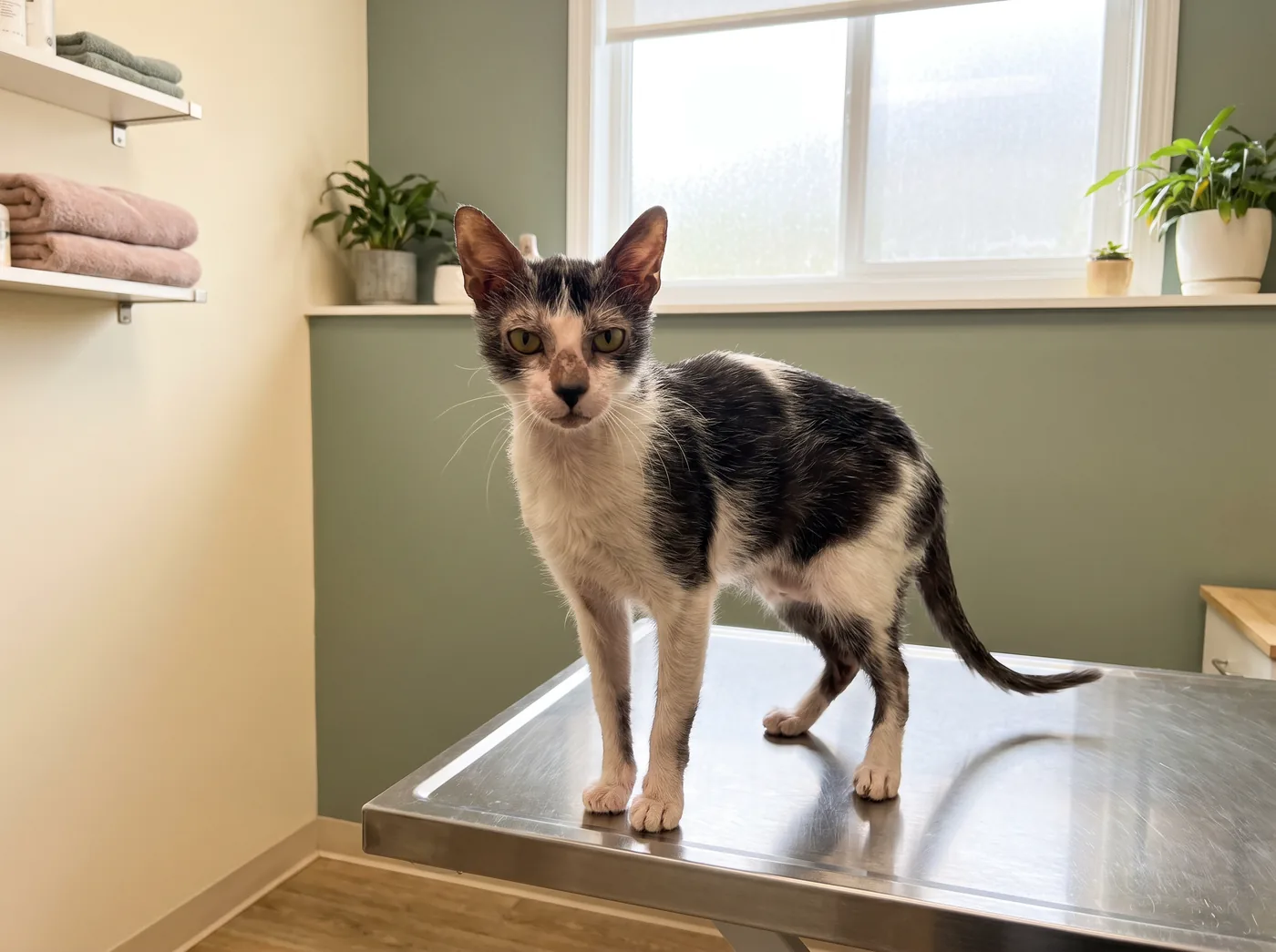
About the Lykoi
The most useful thing about this page is that a healthy Lykoi looks like a sick cat, and people act on that.
A Lykoi has a sparse roan coat: black hairs mixed heavily with white ones, over skin that shows through. It has bare skin around the eyes, on the muzzle, behind the ears and on the feet, which is called the mask. It has no undercoat at all. And it moults, sometimes to near total baldness, then grows the coat back, on its own schedule and often more than once a year.
Every one of those reads as ringworm, demodectic mange, alopecia or a hormonal disease to somebody who has not met the breed, and Lykoi have been treated for conditions they did not have.
The breed comes from a natural mutation found in feral cats in 2010, and it has been screened: these are healthy domestic shorthairs with an unusual coat gene.
The Lykoi has a double coat that regulates its own temperature. Shaving it does not keep the animal cooler, removes the protection against sun and insects, and the top coat often grows back patchy or never returns correctly. A thorough deshed takes out the undercoat and does the job the owner was actually asking for.
What is normal, and what is not
Worth listing plainly, because the whole point of the page is to separate the two.
Normal: bare skin around the eyes, on the muzzle, on the chin, behind the ears and on the feet. Sparse hair over the body with skin visible through it. A roan pattern of black and white hairs. Whiskers that are sparse, crinkled or missing. Moulting to patchy or near total baldness and regrowing, sometimes seasonally, sometimes not.
Also normal: a coat that differs from the cat's littermates, and one that changes through its life.
Not normal, and needing a veterinarian exactly as in any cat: skin that is red, inflamed, scabbed, crusted, weeping or thickened; itching or overgrooming; a smell; circular lesions with a defined edge; hair loss that comes with lethargy, weight change or drinking more.
The distinction is condition rather than coverage. A Lykoi that is bald and has clean, supple, comfortable skin is a Lykoi. One with sore skin is a sick cat, and being a Lykoi does not exempt it.
Tell a new vet what the breed is before they see it, and tell a groomer or cattery too.
The routine, which sits between two others
A Lykoi is neither a coated cat nor a hairless one, and the care sits between them.
Where the skin is bare, it behaves like Sphynx skin: it produces oil with no coat to spread it into, so it collects, particularly on the mask, in the folds behind the ears and in the nail beds where it goes brown and waxy.
Where there is coat, it needs almost nothing: a gentle rubber mitt or a very soft brush once a week, and no slicker, since the hair is sparse and the skin is exposed underneath.
Bathe roughly every three to four weeks with a plain gentle shampoo, which is less often than a Sphynx and more than a coated cat. Pay attention to the mask, behind the ears and the feet.
Clean the nail beds weekly with a soft damp cloth.
Dry thoroughly and keep the cat warm afterwards, since there is not much insulation.
During a moult, when the cat is baldest, move toward the Sphynx end: more wiping, more attention to oil. As the coat returns, back off.
Warmth and sun
A sparse coat with no undercoat provides very little insulation, and the bare areas none at all.
Lykoi seek out warmth and will burrow into blankets and press against people, which is normal rather than a symptom. Keep the house warm and provide covered beds.
Bath water and drying air comfortably warm rather than hot, and the cat never left damp.
Sun is the mirror problem. Bare skin burns, including through window glass, so limit access to strong direct sun. The mask and the ears are the exposed areas.
Lykoi also eat more than a coated cat of the same size, because they burn calories staying warm, and that is expected. A Lykoi that stays thin despite eating well should see a vet rather than simply be fed more.
Ears are large and open with bare skin behind them, so wipe the visible part weekly and check the skin behind the ear at the same time, since oil collects there.
Where it sits among the unusual coats
Several cats have coats that are easy to misread, and it is worth putting the Lykoi in that context.
The Sphynx is fully hairless from a recessive gene and stays that way.
The Donskoy is hairless from a dominant gene and may be born coated and lose it, or shed and regrow seasonally.
The Peterbald carries the Donskoy gene in five coat types including a full coat.
The Cornish and Devon Rex have fragile down coats that break if worked.
The Lykoi is different again: a separate recessive mutation affecting the hair follicles, producing a partial coat that cycles.
The common thread across all of them is that coverage is not the same as health, and the question worth asking is not how much hair there is but whether the skin under it is comfortable.
What to tell your groomer or vet
Say what the breed is before they see the cat, because a healthy Lykoi looks like a sick one.
Say that bare skin on the mask, behind the ears and on the feet is normal, and that moulting to near baldness and regrowing is normal.
Say that sore, red, scabbed or itchy skin is NOT normal and should be treated as it would be in any cat.
Ask for a soft mitt only and no slicker, since the skin is exposed under a sparse coat.
Ask for the nail beds and the skin behind the ears cleaned, where oil collects.
Say the cat chills easily and should be kept warm and never left damp.
Keeping the coat between grooms
Say what it is, first
A healthy Lykoi looks like a sick cat. Tell a new vet or groomer before they look.
Every visit
Wipe the mask and nail beds
Bare skin collects oil like a Sphynx. Behind the ears and the feet too.
Weekly
Bathe every three to four weeks
Less than a Sphynx, more than a coated cat, and more while it is moulting.
Every three to four weeks
Judge skin, not coverage
Bald with comfortable skin is fine. Sore skin is a sick cat, breed or not.
Weekly
Common Questions About the Lykoi
My Lykoi is going bald. Is it ill?
Probably not. Lykoi moult, sometimes to patchy or near total baldness, and then grow the coat back, on their own schedule and often more than once a year. Bare skin around the eyes, on the muzzle, behind the ears and on the feet is also normal and is called the mask. What matters is the condition of the skin rather than how much hair covers it. Red, scabbed, crusted, weeping or itchy skin, or hair loss with lethargy or weight change, needs a vet exactly as in any cat.
How do you groom a partly hairless cat?
It sits between a Sphynx and a coated cat, and it shifts as the coat cycles. Where the skin is bare it collects oil like Sphynx skin, so wipe the mask, behind the ears and the nail beds, and bathe every three to four weeks with a plain shampoo. Where there is coat, a gentle rubber mitt or very soft brush once a week is enough, and never a slicker, since the hair is sparse and the skin is exposed. When the cat is at its baldest, do more; as the coat returns, do less.
Is the Lykoi a healthy breed?
Yes. It comes from a natural mutation found in feral cats around 2010, and the founding cats were screened for the conditions the appearance suggests, including ringworm, mange and hormonal disease, and cleared. These are healthy domestic shorthairs with an unusual coat gene. The practical problem is not the cat's health but other people's reading of it, which is why it is worth telling a vet, groomer or cattery what the breed is before they see it.
Similar breeds
Same coat, same schedule, or the breeds this one is crossed from.


Find a groomer who knows this coat
Search 37,863 groomers by town, or keep reading the breed guide.
Find a Local Groomer View All Breeds