Ocicat Grooming
Spotted like a wildcat, built from Abyssinian and Siamese, with no wild blood
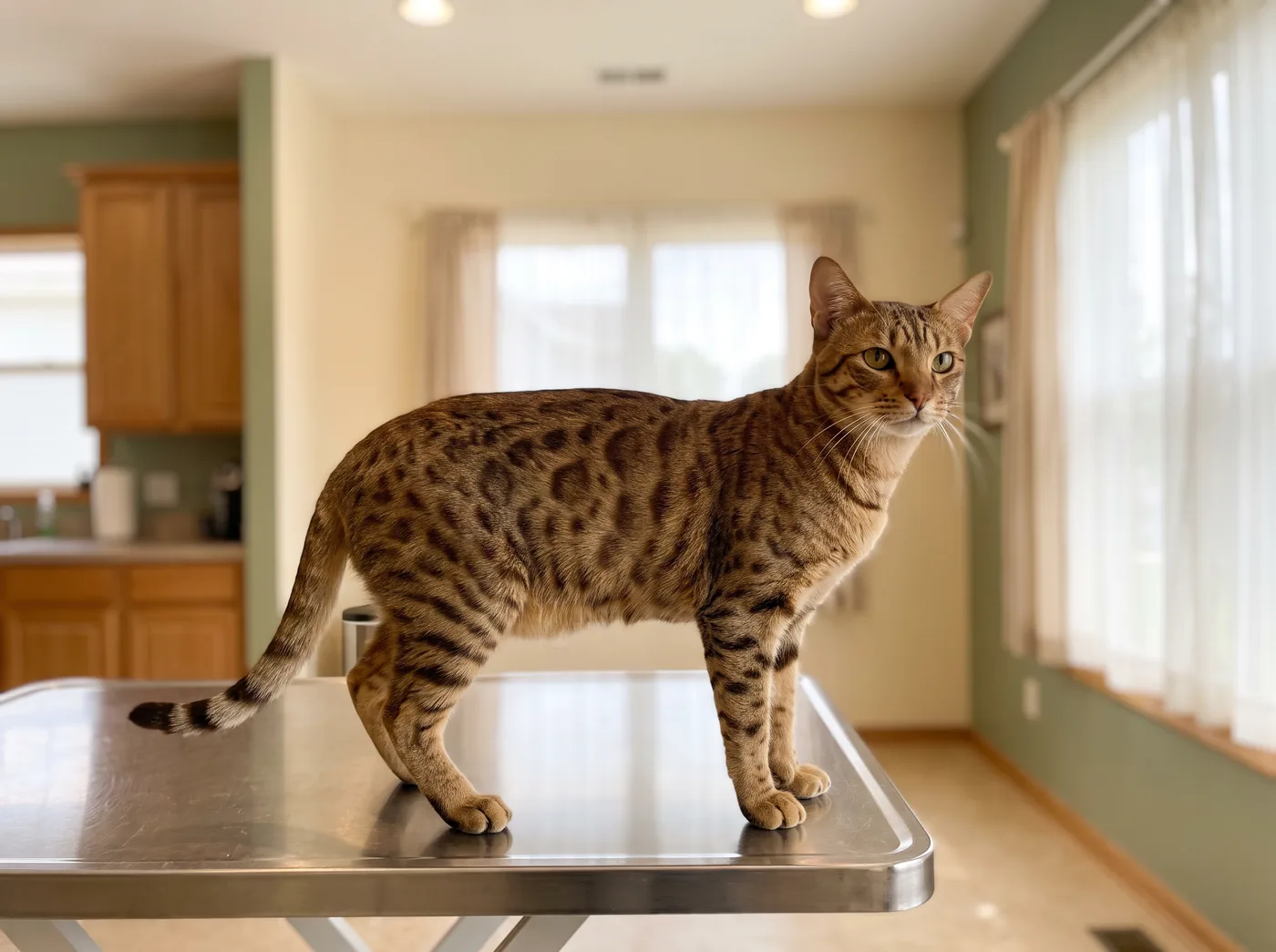
About the Ocicat
An Ocicat looks like a small wild cat and has no wild ancestry whatsoever. It was created from Abyssinian and Siamese crosses, with American Shorthair added later for size and for the silver colors, and the first one appeared by accident in 1964 while a breeder was trying for something else entirely.
That makes it the deliberate opposite of the Bengal and the Savannah: the same visual idea, arrived at without introducing a wild species, and therefore without any of the legal restrictions or handling caveats those breeds carry.
The Egyptian Mau is the third answer, being naturally spotted rather than either designed or hybridised.
Grooming is a weekly comb and nothing else.
The Ocicat has a double coat that regulates its own temperature. Shaving it does not keep the animal cooler, removes the protection against sun and insects, and the top coat often grows back patchy or never returns correctly. A thorough deshed takes out the undercoat and does the job the owner was actually asking for.
A designed pattern, not a wild one
The spots are large, well defined thumbprint marks laid out in a bullseye pattern around the flanks, with a scarab shaped marking on the forehead and broken rings on the legs and tail. It is a deliberate layout rather than the random scatter of an Egyptian Mau, and that is the quickest way to tell the two apart.
Each individual hair is banded with alternating colors except at the tip, which is the agouti pattern inherited from the Abyssinian, and it is what gives the coat its depth and shimmer.
The coat itself is short, smooth, tight and satiny, with a natural sheen and no undercoat to speak of.
Grooming is a rubber mitt or a fine comb once a week, going over the whole cat. It removes the small amount of loose hair and spreads the skin oils that produce the shine, and it doubles as the weekly health check.
Shedding is low and steady with a mild seasonal increase.
Do not bathe routinely and do not clip. Some breeders rub a satin coat down with a chamois or a soft cloth for shows, which does no harm and adds shine for a day.
Why none of the hybrid warnings apply
This is the point of the page and it is worth being direct.
A Savannah is a domestic cat crossed with a serval, and early generations are restricted or banned in a number of states, need experienced handling and are refused by many groomers.
A Bengal traces to the Asian leopard cat a few generations back, and carries a reputation for being difficult to handle that varies enormously by individual.
An Ocicat has neither. Abyssinian, Siamese and American Shorthair are all fully domestic breeds, and the wild look was achieved entirely through selective breeding of domestic cats. There are no legal restrictions anywhere, no handling caveats, and no reason for a salon to decline one.
Temperamentally it is nearly the opposite of the expectation the appearance sets up. Ocicats are sociable, confident, extremely people oriented, often described as dog like, and they generally enjoy being handled.
That makes them one of the easiest cats there is to groom, medicate and take to a vet. Owners of nervous breeds would find the contrast startling.
An owner told their Ocicat needs a specialist because it is a hybrid has been misinformed.
A confident cat, and what to do with that
Ocicats are busy, athletic, intelligent and demanding of attention, and they do not do well ignored for long stretches.
For grooming this is entirely to your advantage. A cat that comes to see what you are doing is a cat you can teach to accept nail clippers, a toothbrush and being turned over, and it is worth doing all of that in kittenhood while it is easy.
Claws want tipping every two to three weeks. Provide a substantial post, since an athletic confident cat will use it hard, and never consider declawing.
Teeth are worth brushing, and the Siamese ancestry brings some tendency toward gum disease, so it is more than a nicety.
Ears are moderately large and open, needing a weekly wipe of the visible part only.
The breed inherits some risks from its founding breeds, including a heart condition seen in several breeds and, from the Abyssinian side, conditions affecting the eyes and red blood cells, so a breeder should be open about testing.
Weight is worth watching on a muscular cat that is heavier than it looks.
Telling the spotted cats apart
The spotted and striped cats get confused constantly, so it is worth setting them apart.
Ocicat: large thumbprint spots in a deliberate bullseye layout, scarab marking on the forehead, agouti banded hairs, satiny coat, no wild ancestry, extremely sociable.
Egyptian Mau: random spots of varying size, spots present on the skin as well as the coat, a pronounced belly flap, naturally occurring pattern, shyer with strangers.
Bengal: often rosetted rather than simply spotted, frequently with a glittered coat, recent Asian leopard cat ancestry, and the most variable temperament of the four.
Toyger: vertical tiger stripes rather than spots, built from Bengal lines, fully domestic.
Grooming is nearly identical across all four, which is the reassuring part: a short coat, a weekly comb or mitt, no bathing, no clipping. What differs is legality, handling and what an owner should expect from the cat.
If a groomer treats all spotted cats as hybrids, that is worth correcting.
What to tell your groomer or vet
Say the breed has no wild ancestry at all, since the appearance suggests otherwise and some salons have hybrid policies.
Ask for a rubber mitt or fine comb only, no bathing and no clipping.
Say the cat is confident and sociable and will usually cooperate, so there is no need for heavy restraint.
Ask for claws tipped and the mouth looked at, given the Siamese ancestry and gum disease.
Mention any known heart or eye testing from the breeder.
Ask them to feel for ribs, since a muscular cat hides weight.
Keeping the coat between grooms
Rubber mitt or fine comb
Once a week over the whole cat. Spreads the oils that make the coat shine.
Weekly
Teach everything in kittenhood
A confident sociable cat will accept clippers and a toothbrush if you start early.
Ongoing
Brush the teeth
Siamese ancestry brings a tendency to gum disease, so this is more than optional.
Daily if you can
Feel for the ribs
A muscular athletic cat that is heavier than it looks and hides weight well.
Monthly
Common Questions About the Ocicat
Is an Ocicat part wild cat?
No, and that is the whole point of the breed. It was created from Abyssinian and Siamese crosses with American Shorthair added later, all fully domestic breeds, and the wild look was achieved purely by selective breeding. The first one appeared by accident in 1964. So none of the restrictions or caveats attached to the Savannah, which is a serval cross, or the Bengal, which traces to the Asian leopard cat, apply here. There are no legal restrictions anywhere and no reason for a groomer to decline one.
How do I tell an Ocicat from an Egyptian Mau?
By the layout of the spots. An Ocicat has large well defined thumbprint spots arranged in a deliberate bullseye pattern around the flanks, with a scarab marking on the forehead. An Egyptian Mau has random spots of varying size and placement, no two cats alike, and its spots appear on the skin as well as in the coat. The Mau also has a pronounced loose flap along the flank. Temperament differs too: Ocicats are confident and outgoing, Maus tend to be shyer with strangers.
How much grooming does an Ocicat need?
Almost none. A rubber mitt or fine comb over the whole cat once a week removes the small amount of loose hair, spreads the skin oils that give the satiny coat its shine, and doubles as a health check. There is no undercoat worth the name, shedding is low, and neither bathing nor clipping is needed. The rest of the routine is claws tipped every two to three weeks, teeth brushed, and a weekly wipe of the visible part of the ears.
Similar breeds
Same coat, same schedule, or the breeds this one is crossed from.

Abyssinian
A ticked coat that needs almost nothing, on a cat that would not sit still for it anyway
Abyssinian

Savannah
A coat that needs almost nothing, on a cat that changes everything else about the appointment
SavannahFind a groomer who knows this coat
Search 37,863 groomers by town, or keep reading the breed guide.
Find a Local Groomer View All Breeds