Wirehaired Vizsla Grooming
A separate breed from the Vizsla, and the coat is the entire difference
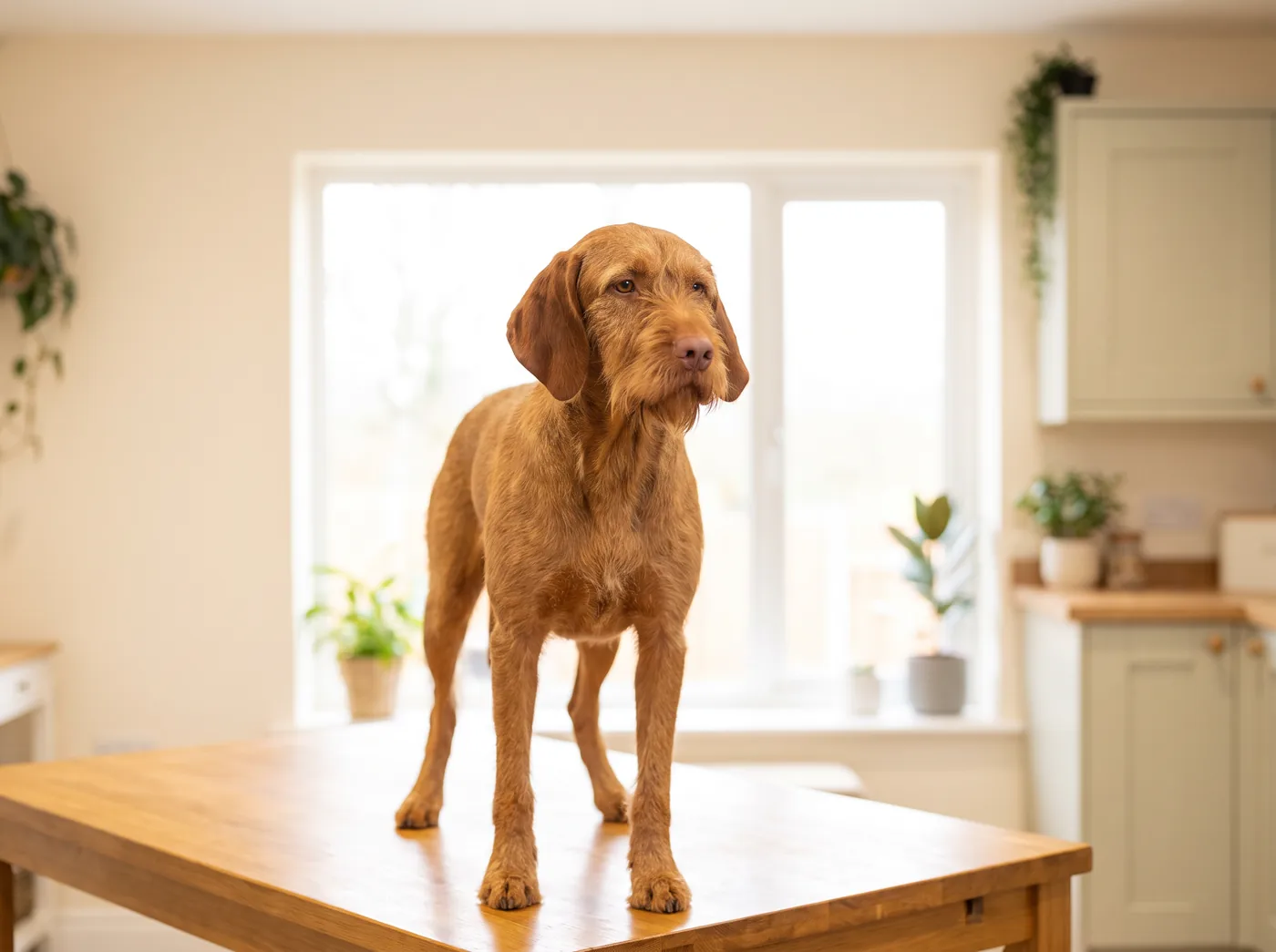
About the Wirehaired Vizsla
The Vizsla page describes a dog you can groom in five minutes: a short smooth single coat, a rubber mitt, no undercoat and nothing to trim.
The Wirehaired Vizsla is a separate breed, developed in Hungary in the 1930s by crossing Vizslas with German Wirehaired Pointers to produce a dog that could work in cold water and rough cover.
Everything else is much the same. Same golden rust color, same size, same energy, same demand for work.
The coat is the entire difference and it changes the routine completely: a harsh dense wiry outer coat about an inch long, with a beard, pronounced eyebrows and a water resistant undercoat that grows in for winter.
It is closer to a German Wirehaired Pointer than to a Vizsla in every way that costs money.
The Wirehaired Vizsla has a double coat that regulates its own temperature. Shaving it does not keep the animal cooler, removes the protection against sun and insects, and the top coat often grows back patchy or never returns correctly. A thorough deshed takes out the undercoat and does the job the owner was actually asking for.
Never shave a wire coat, and here is what happens
The single most damaging thing done to this breed is a summer shave, usually by a groomer who sees a shaggy dog and a hot month.
The harsh outer hairs are what make the coat water resistant and what keep burrs, thorns and mud from reaching the skin. Clipping cuts every one of them, and what regrows is softer, thinner and paler, often patchily.
The change can be permanent. A wire coat that has been clipped repeatedly may never come back harsh.
Nor does it help with heat, since the coat is insulation in both directions, and a shaved sporting dog burns.
The correct maintenance is hand stripping: pulling the dead hairs out by the roots so a new harsh coat grows in. Twice a year is usually enough, and it can be rolled a little at a time instead.
Many pet owners never strip at all and simply brush weekly and pluck the worst of the dead hair by hand, which is a legitimate choice for a companion dog and keeps the texture far better than clippers do.
If you use a groomer, say the words "hand strip, do not clip" and be specific.
The beard, which is the daily job
The face furnishings are where the actual daily work is, and they are the part a Vizsla owner has never had to deal with.
The beard holds water after every drink and food after every meal, and on a dog that swims and works in cover it holds mud and weed as well. Left alone it sours, smells and can develop skin infection underneath.
Rinse and dry the beard daily. Comb it through a couple of times a week.
The eyebrows are pronounced by design, and they protect the eyes in cover, so do not trim them off. Keep them combed clear of the eye and check underneath for grass seeds after country walks.
Grass seeds are a genuine hazard in this breed: they work into a wire coat, then into the skin, the ear canal, between the toes and occasionally into the eye. After any walk in dry summer grass, check the feet, ears, armpits and face.
The ears are long and hanging, which is the pointer inheritance, so they need weekly checking and thorough drying after swimming.
Nails every three to four weeks on a dog that runs on soft ground.
Bathing, and why less is more
A harsh coat is naturally water repellent and reasonably self cleaning. Mud dries and falls out or brushes out, which is what the texture is for.
Frequent bathing with strong shampoo softens the coat, strips the oils that carry the water resistance and produces a dog that gets wet through instead of shedding water.
Bathe every couple of months, or after something genuinely foul, and use a plain dog shampoo rather than anything conditioning. Conditioner on a wire coat is a mistake: it softens exactly the texture you want harsh.
Between baths, brush weekly with a slicker and go over the coat with your hands, pulling out dead hair as you find it.
Dry thoroughly after swimming, especially the ears and the beard.
The undercoat comes in for winter and sheds out in spring, and a rake through the coat during that change reduces what ends up in the house.
The same rule as the Chesapeake: with a working water coat, the natural oils are the equipment, and washing them off is the mistake.
The same dog underneath
Everything the Vizsla page says about temperament applies here, and it is worth repeating because people choose the wire coat for looks and inherit the rest.
These are intense, athletic, extremely people-focused dogs bred to hunt all day. They need real exercise and a job, and they do not cope with being left alone. The nickname "velcro dog" attaches to both breeds for good reason.
At a salon that means a dog that wants to be with its person and finds separation harder than handling, so a short appointment with the owner nearby beats a long day in a kennel.
They are sensitive and do not respond to harsh handling, which is worth saying if the groom involves stripping, since stripping is uncomfortable if done badly and fine if done well.
A dog that has been stripped roughly once will fight it forever.
Start handling and short stripping sessions in puppyhood.
Keep them lean. It is an athlete and it should look like one.
What to tell your groomer
Say hand strip, do not clip, and say it in those words. A clipped wire coat may never come back harsh.
Say this is the Wirehaired Vizsla and not the Vizsla, since the names are close and the jobs are not.
Ask for the beard washed and dried properly, and the eyebrows combed clear but not trimmed off.
Ask for no conditioner, since it softens the coat you want harsh.
Ask them to check for grass seeds in the feet, ears and face after summer.
Say the dog is sensitive and a rough strip will make it fight the next one.
Keeping the coat between grooms
Hand strip, never clip
Clipping cuts the harsh hairs and the regrowth may never be harsh again.
Twice a year
Rinse and dry the beard
It holds water, food, mud and weed, and sours if left damp.
Daily
Hunt for grass seeds
Feet, ears, armpits and face after any walk through dry summer grass.
After every walk
No conditioner
It softens the exact texture the coat needs to shed water and thorns.
Every bath
Common Questions About the Wirehaired Vizsla
Can a Wirehaired Vizsla be clipped short in summer?
It can be, and it should not be. The harsh outer hairs make the coat water resistant and keep thorns and mud off the skin, and clipping cuts every one of them so the regrowth is softer, thinner and paler, sometimes permanently. It also does not cool the dog, because the coat insulates in both directions, and a shaved sporting dog sunburns. The correct maintenance is hand stripping twice a year, or simply brushing and plucking dead hair by hand.
How is a Wirehaired Vizsla different from a Vizsla?
It is a separate breed, developed in Hungary in the 1930s by crossing Vizslas with German Wirehaired Pointers for work in cold water and rough cover, and the coat is essentially the entire difference. A Vizsla is a five minute dog: short smooth coat, rubber mitt, nothing to trim. A Wirehaired Vizsla has a harsh inch-long coat with a beard and pronounced eyebrows, a winter undercoat, and a stripping schedule. Same temperament, same size, very different bill.
How often should a Wirehaired Vizsla be bathed?
Rarely, every couple of months or after something genuinely foul. A harsh coat is naturally water repellent and largely self cleaning: mud dries and brushes out, which is what the texture is for. Frequent bathing strips the oils that carry the water resistance and softens the coat, producing a dog that soaks through instead of shedding water. Skip conditioner entirely, since it softens exactly the texture you want harsh, and dry the ears and beard properly after swimming.
Similar breeds
Same coat, same schedule, or the breeds this one is crossed from.

Vizsla
The thinnest coat in the sporting group, on the dog least able to be left alone at a salon
Vizsla
German Wirehaired Pointer
A wire coat that is a tool rather than a style, and is tidied rather than sculpted
German Wirehaired Pointer
Wirehaired Pointing Griffon
A harsh straight gundog jacket that is plucked, with eyebrows and a beard
Wirehaired Pointing GriffonFind a groomer who knows this coat
Search 37,863 groomers by town, or keep reading the breed guide.
Find a Local Groomer View All Breeds