German Wirehaired Pointer Grooming
A wire coat that is a tool rather than a style, and is tidied rather than sculpted
About the German Wirehaired Pointer
The German Shorthaired Pointer page tells owners that its wirehaired relative is a separate breed and a completely different appointment, and that a salon expecting a shorthair will have booked the wrong amount of time. This is that breed.
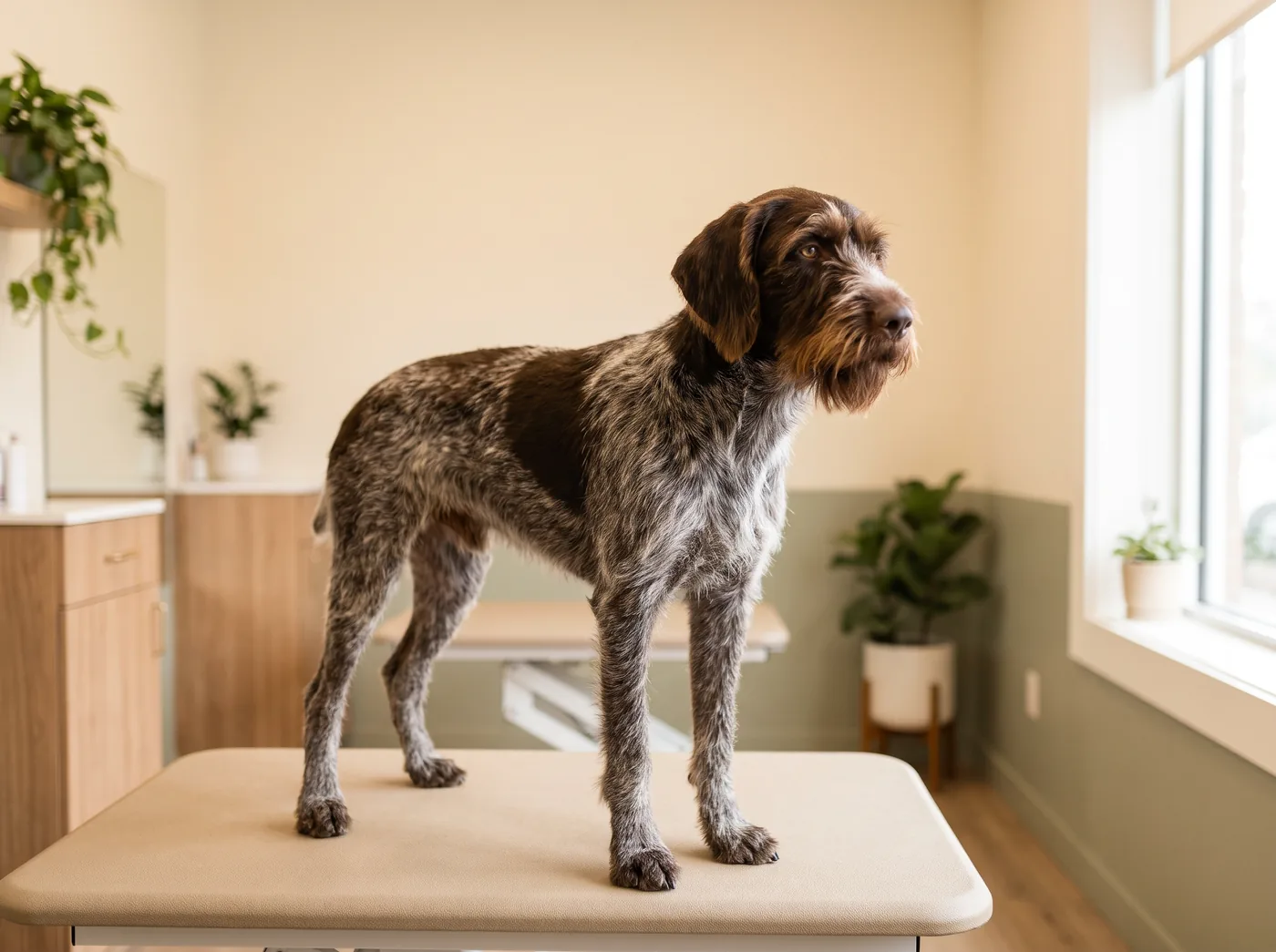
The German Wirehaired Pointer carries a harsh, flat lying, weather resistant wire jacket about an inch and a half long, with a dense undercoat that thickens in winter and thins in summer, plus bushy eyebrows and a full harsh beard. It was developed to work rough cover and cold water in all weather, and the coat is protective equipment.
The important distinction from the show terriers is that this is not a coat with furnishings to be shaped. A GWP is tidied, never sculpted. There is no defined jacket outline, no skirt and no styled head, and a groomer who scissors one into a shape has misunderstood the dog.
This coat can be clipped, but the texture or the color may change and it will not always come back the same. Talk it through with your groomer before the first one.
A wire coat that is doing a job
The jacket is straight, harsh and lies flat rather than standing off, which is different from a terrier jacket and deliberate: it is meant to shed water and turn thorn while a dog pushes through cover at speed.
Underneath there is a real undercoat, which most wire breeds carry only lightly. It thickens noticeably in winter for insulation and thins in summer, so a GWP has a genuine seasonal shedding pattern that an Airedale does not.
The face carries the recognizable furnishings: harsh bushy eyebrows shielding the eyes from thorn, and a full beard protecting the muzzle. Those are functional too, which is a good reason not to trim them back hard.
Weekly maintenance is a slicker or a stripping comb through the jacket plus a metal comb through the beard and any leg furnishings. Ten minutes.
Matting is not really the issue on this coat. The jacket is too harsh and too short to felt, and the undercoat is not dense enough to compact the way a Chow undercoat does. Where a GWP does tangle is the beard, the ear feathering and occasionally the trousers.
Bathing every couple of months at most. Frequent bathing softens a harsh coat and strips the oils that make it repel water, which on a working dog is a functional loss.
Stripping, clipping and tidying
Mechanically it is the same as every wire coat: the outer hairs grow, die, and sit loose in the follicle rather than falling out, so they are pulled rather than cut.
Hand stripping keeps the jacket harsh, weatherproof and correctly colored, and prompts the same coat to grow back. On a GWP it is less work than on a terrier because there are fewer furnishings and no outline to build, and many owners strip the coat themselves a few times a year.
Clipping cuts at the surface and leaves the dead root, so the undercoat comes to dominate. The jacket goes soft and woolly, loses its water resistance and its ability to turn thorn, and the liver coloring dulls. On a dog that actually works, that is a real loss rather than a cosmetic one, and it is close to irreversible after a few years.
For a pet GWP that never sees cover, clipping is a perfectly reasonable choice and plenty are clipped. Just make it deliberately.
Either way, the appointment is a tidy: dead coat out, the longest straggling hairs shortened, the beard and eyebrows neatened rather than shaped, feet cleared, sanitary area trimmed. The dog should still look rough and functional afterwards.
Every eight to twelve weeks, which is a longer interval than a terrier because there is no outline to maintain.
Do not bathe before a stripping appointment. A washed coat is soft and slippery and the hairs will not release cleanly.
The beard, the ears and the water
The beard is the daily job on this breed and the part most owners underestimate. It goes into every water bowl and every meal, it holds both, and on a liver and white dog it stains and sours quickly. Rinse it and dry it after meals, and comb it through daily.
A wet beard is also how a dog spreads water round a house, and a permanently damp beard gets sore underneath.
The ears are drop, moderately feathered and sit over a canal that does not drain by gravity, and this is a breed that swims by preference in cold water. Ear infections are common and largely preventable.
Lift the flap weekly, look and smell. Dry the ears and the feathering after every swim and every wet walk. Ask a groomer to keep the hair under the flap and around the opening trimmed for airflow.
Head shaking, a head tilt, redness or dark discharge is a veterinary matter rather than a cleaner.
The eyebrows want checking too. They do their job by catching things, so they collect seeds and burrs, and anything caught close to the eye needs removing carefully rather than combed through.
And check the feet and between the toes after any work in cover, for grass seeds, thorns and cuts. This is a dog that goes through rather than around.
The wider family, and a dog that has to work
The German pointing breeds are a family and are constantly confused, which matters because the appointments differ enormously.
The German Shorthaired Pointer has a short harsh coat and nothing to cut: a curry and a deshed.
The German Wirehaired Pointer is this page: a harsh jacket, stripped or clipped, tidied every eight to twelve weeks.
The German Longhaired Pointer has a medium silky coat with feathering and needs combing like a setter.
There is also the Deutsch Drahthaar, which in Germany is the same wirehaired dog under a separate performance-tested registry rather than a different breed, so a dog described that way is a GWP for grooming purposes.
And the Wirehaired Vizsla, mentioned on the Vizsla page, is a separate breed created partly from GWP stock and groomed much the same way.
Beyond coat, the thing that decides every appointment is exercise. A GWP is a high drive hunting dog bred to work all day, and one that is under-exercised will not stand still, will be mouthy and will make a straightforward tidy into a fight. Work the dog properly first.
They are generally people-friendly and biddable when their needs are met, and can be aloof with strangers, which is worth mentioning to a groomer.
What to tell your groomer
Say it is a wirehaired pointer rather than a shorthair when you book, because the time needed is completely different.
Say the coat is tidied and not sculpted, and that you want it to look rough and functional afterwards.
Say whether you want it stripped or clipped, and understand that clipping permanently softens the jacket and dulls the color.
Do not bathe the dog beforehand if it is being stripped.
Ask for the beard and feet done every visit, the ear hair kept short for airflow, and the eyebrows neatened rather than cut back.
Mention any ear history, whether the dog swims, and any grass seed history.
Keeping the coat between grooms
Rinse and dry the beard
It goes into every bowl and every meal. On a liver and white dog it stains and sours within days.
Daily
Strip the jacket, do not sculpt it
Dead coat out and the longest hairs shortened. This is a working coat, not an outline to build.
Every eight to twelve weeks
Dry the ears after every swim
A drop ear over a canal that does not drain, on a dog that chooses cold water. Largely preventable.
After every swim
Check feet, toes and eyebrows
A dog that goes through cover rather than around it. Grass seeds, thorns and burrs, especially near the eyes.
After every outing
Common Questions About the German Wirehaired Pointer
How is a German Wirehaired Pointer different from a Shorthaired one?
They are separate breeds with completely different coats. A GSP has a short harsh coat with nothing to cut, needing a weekly curry and a deshedding bath a few times a year. A GWP has a harsh wire jacket about an inch and a half long with bushy eyebrows and a full beard, which is stripped or clipped and tidied every eight to twelve weeks, plus a beard that needs daily attention. Say which you have when booking, because the appointment lengths are not comparable.
Does a German Wirehaired Pointer need hand stripping?
If you want to keep the harsh weatherproof jacket, yes, every eight to twelve weeks, and it is less work than a terrier because there are no furnishings to shape. Clipping is acceptable for a pet that never works cover, but it permanently softens the coat, dulls the liver coloring and removes its ability to shed water and turn thorn. Either way the appointment is a tidy rather than a sculpt: the dog should still look rough and functional afterwards.
Do German Wirehaired Pointers shed?
Moderately, and with a genuine seasonal pattern, which is unusual for a wire breed. The harsh outer jacket holds its dead hair until it is stripped, but underneath there is a real undercoat that thickens in winter and thins in spring, so there is noticeable shedding at the seasonal changes. A weekly slicker or stripping comb through the jacket handles most of it, and the coat does not mat except in the beard and ear feathering.
Similar breeds
Same coat, same schedule, or the breeds this one is crossed from.

German Shorthaired Pointer
A short harsh coat built for cold water, that sheds far more than it looks like it should
German Shorthaired Pointer
Airedale Terrier
The largest terrier there is, and the biggest hand stripping job a salon will take on
Airedale TerrierFind a groomer who knows this coat
Search 37,863 groomers by town, or keep reading the breed guide.
Find a Local Groomer View All Breeds