Bolognese Grooming
An open flocked coat that is combed out and left standing, never brushed flat
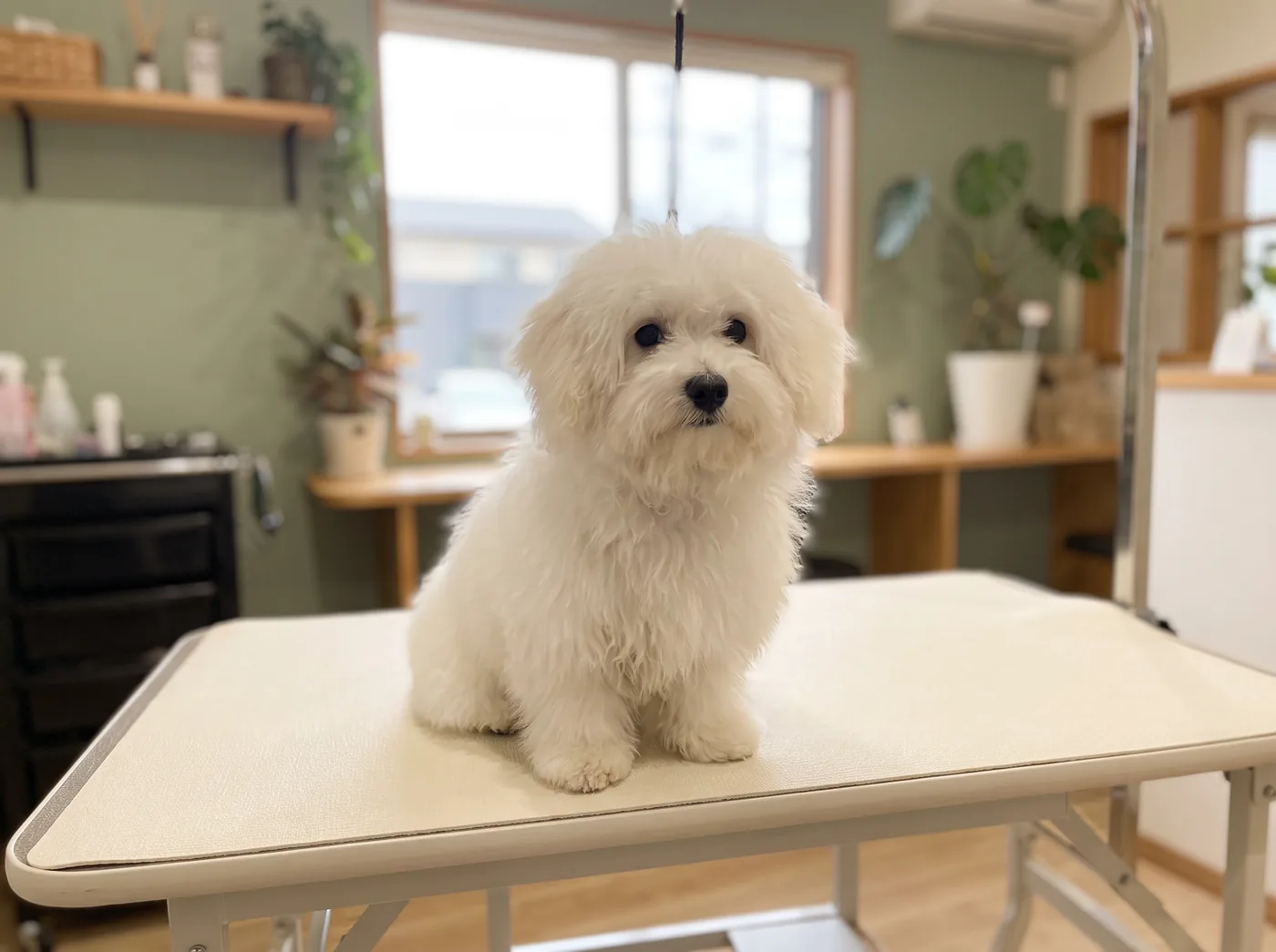
About the Bolognese
One of the small white European companion breeds, and the one whose coat texture is genuinely different from the rest of them.
A Maltese coat hangs straight and flat. A Bichon coat is scissored into a dense round shape. A Coton is soft and cottony.
A Bolognese coat is long, single, and falls in loose open flocks that stand away from the body rather than lying against it. The standard wants that fluffy open look, and a groomer who brushes it down flat or scissors it into a rounded outline has produced the wrong dog.
It has no undercoat and it sheds almost nothing, which again is not the same as easy.
What comes loose stays in the flocks, and a coat this fine felts to the skin quickly, so this is a daily comb.
Comb it out, do not brush it down
The texture is the whole point of this breed, and it is lost by ordinary brushing.
Use a metal comb rather than a slicker for the main work. Part the coat and comb each section to the skin, then let it fall back where it wants to. The flocks re-form on their own.
A slicker used hard, or a brush stroked down the body, flattens the coat against the skin and produces a dog that looks like a small Maltese with frizzy edges.
Do not blow the coat straight either. Dry gently and let the texture come back.
Every day is the honest frequency, and every other day is the minimum. A fine single coat with no undercoat felts at the skin and the surface still looks fine.
The trouble spots are behind and under the ears, the armpits, the groin, the rear and anywhere a harness sits.
Comb out completely before any bath, since water turns a tangle into felt.
Never scissors on a mat. A nine pound dog has very little skin between a mat and a blade.
Tear staining on a white dog
A white faced dog shows every drop, and the Bolognese is prone to it.
Tears contain porphyrins, iron-containing compounds that oxidize on contact with air and light and stain white hair a permanent reddish brown.
Once the hair is stained it stays stained, so the whole strategy is preventing the wetness rather than treating the color.
Wipe under each eye daily with a clean damp cloth and then dry the area. Dry matters more than clean.
Keep the hair around the eyes combed clear so it is not wicking tears down the face.
What is worth a vet rather than a wipe: sudden or increased tearing, squinting, a thick or colored discharge, or a dog pawing at its face. Blocked tear ducts, ingrown lashes and eye irritation all cause overflow and all have treatments.
Do not use any product marketed as a tear stain remover that contains an antibiotic, and be wary of unlabeled ones generally.
The same applies to the beard, which stains from food and water.
The pet clip, which is a fair choice
A full Bolognese coat is a daily job for the life of the dog, and not every owner wants that.
A short all-over pet clip every six to eight weeks is legitimate and does no harm: it is a single coat with no undercoat, so it grows back the same texture.
What it does lose is the open flocked look, which is the breed's distinguishing feature, and it is worth being clear-eyed about that trade rather than surprised by it.
A middle option many owners take is a longer pet trim of an inch or two, which keeps some of the texture and roughly halves the combing.
Say which you want at booking, since a groomer who knows the breed will default to leaving it long.
Bathe every four weeks or so, comb out fully first, and use a gentle whitening or plain shampoo.
Keep the hair between the pads cleared and the sanitary area trimmed on a dog this small, since both go unnoticed under a long coat.
Nails every three to four weeks and teeth brushed daily.
The six small white companions, finished
The set is complete, and the summary is worth having in one place.
Bichon Frise: a curly double coat, scissored into a round outline. The most professional work.
Havanese: a soft long silky double coat, mats readily, often kept in a puppy clip.
Coton de Tulear: a cotton textured coat with the same matting problem.
Maltese: a single straight coat that hangs flat, stains, and is usually clipped short.
Lowchen: a soft wavy single coat, plus an optional lion trim.
Bolognese: a single coat in open flocks that must not be brushed flat.
All six shed almost nothing and all six mat, and five of the six get combed to the skin daily or near enough. The differences are texture and finish, not workload.
Anyone sold one of these as low maintenance was told the shedding figure and nothing else.
What to tell your groomer
Say the coat falls in open flocks and must not be brushed flat or blown straight.
Ask for a metal comb to the skin, section by section, rather than a slicker over the top.
Say whether you want it long, a longer pet trim or a short clip. All three are fine.
Ask for the eye area kept clear and dried, since tear stains are permanent.
Say never scissors on a mat, and that a short clip beats a cut.
Ask for the pads cleared and the sanitary area trimmed, both of which hide under the coat.
Keeping the coat between grooms
Comb to the skin, then let it fall
The flocks re-form on their own. Brushing it down flat kills the texture.
Daily
Wipe and DRY under the eyes
Porphyrin stains white hair permanently. Prevention is the only strategy.
Daily
No blow drying it straight
Dry gently and let the open flocked texture come back on its own.
Every bath
A pet clip is allowed
Single coat, grows back the same. You lose the look, not the health.
Every six to eight weeks
Common Questions About the Bolognese
How is a Bolognese coat different from a Maltese or Bichon?
By texture and how it sits. A Maltese coat hangs straight and flat against the body, and a Bichon is scissored into a dense round shape. A Bolognese coat falls in loose open flocks that stand away from the body, and that fluffy open look is what the standard wants. So it is combed out and allowed to fall back, never brushed down flat or blown straight, and a groomer who rounds it into a Bichon outline has produced the wrong dog.
Is a Bolognese low maintenance because it does not shed?
No. It has no undercoat and sheds almost nothing, which means every loose hair stays in the coat, and a fine single coat felts at the skin while the surface still looks fine. It needs a metal comb to the skin every day, or every other day at the absolute minimum. It sits with the other small white companion breeds, all of which shed almost nothing and all of which mat. The shedding figure is the only easy thing about any of them.
How do I deal with tear stains?
By preventing the wetness, because the color itself is permanent. Tears contain porphyrins that oxidize on contact with air and stain white hair reddish brown for good. Wipe under each eye daily with a clean damp cloth and then dry the area, and keep the hair around the eyes combed clear so it is not wicking tears down the face. Sudden or increased tearing, squinting or a thick discharge needs a vet, since blocked ducts and ingrown lashes are treatable causes.
Similar breeds
Same coat, same schedule, or the breeds this one is crossed from.


Coton de Tulear
A dry cotton textured coat that mats like wool and is ruined by heavy conditioner
Coton de Tulear
Find a groomer who knows this coat
Search 37,863 groomers by town, or keep reading the breed guide.
Find a Local Groomer View All Breeds