Lowchen Grooming
A lion trim that is entirely optional, over a soft coat that mats like any bichon
About the Lowchen
The "little lion dog", and the only breed whose name is a description of its haircut.
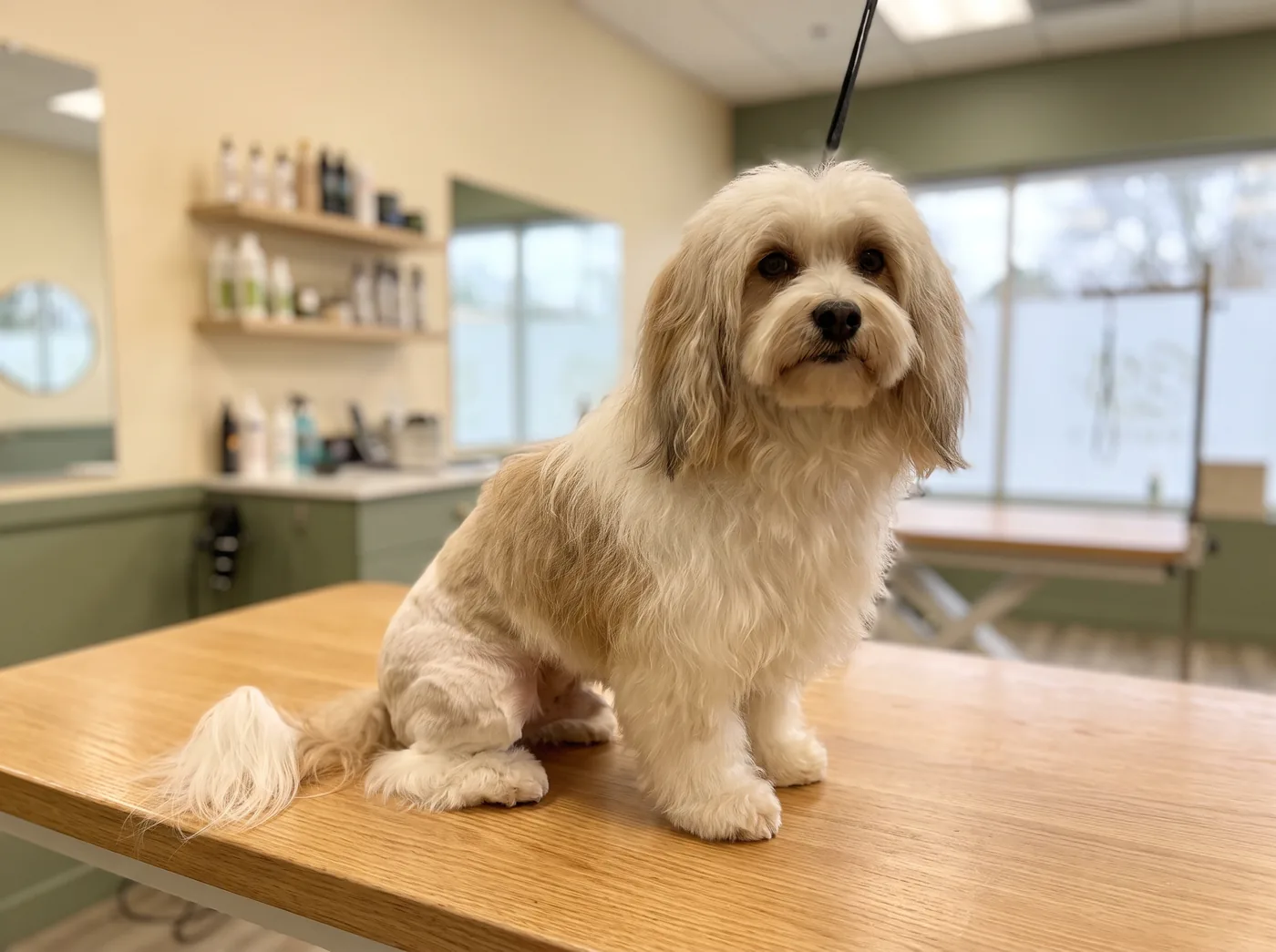
The traditional trim clips the hindquarters, the tail base and part of the front legs short, leaving a full mane over the head, neck and shoulders, a plume on the tail tip and cuffs at the ankles. It goes back centuries in European paintings.
The one thing worth knowing before anything else is that the trim is cosmetic and entirely optional. It is a show requirement and nothing more. A Lowchen kept in a short all-over pet clip, or in full coat, is not being neglected.
Underneath it is a bichon type: a soft, moderately long, slightly wavy single coat with no undercoat, which sheds very little and mats readily.
So the real work is the same as a Havanese or a Bichon, and the lion is decoration on top.
The trim is a costume, and here is the choice
Three options, all legitimate, and a groomer should offer all three.
The lion trim. Hindquarters, tail base and part of the front legs clipped short, with a full mane, tail plume and ankle cuffs left long. It needs redoing every six to eight weeks and the long parts need combing every few days.
Worth knowing: the clipped areas are naked skin on a dog with no undercoat, so a lion-trimmed Lowchen genuinely gets cold and genuinely sunburns on the bare parts. A coat in winter and shade in summer are practical, not fussy.
A short pet clip all over. The easiest option by a distance. One length everywhere, redone every six to eight weeks, brushed twice a week.
Full natural coat. The most work: combing to the skin every day or two, because a soft single coat of that length mats against the body wherever it rubs.
Most pet owners are happiest with the pet clip and the site is not going to pretend otherwise.
Whichever you pick, say it clearly, because a groomer seeing the breed name may assume the lion by default.
The coat mats and the trim does not change that
Whatever is left long has to be combed to the skin, and this is where owners of trimmed dogs get caught out.
A lion trim looks like less coat, so people comb less. But the mane is the thickest, longest part of the coat and sits exactly where a collar and harness rub, which is the classic matting site.
Comb the mane, the tail plume and the ankle cuffs every two to three days with a metal comb, working to the skin in sections rather than skimming the surface.
Check behind the ears, under the collar, in the armpits and around the rear.
A soft single coat mats quietly. It felts against the skin and looks fine from above until a groomer parts it.
Never cut a mat out with scissors on a dog this size. Skin lifts into the blades far more easily than people expect.
A matted Lowchen has one honest answer, which is a short clip and a fresh start, and that is a management decision rather than a failure.
Bathe every six weeks or so, and always comb out completely BEFORE the bath. Water tightens an existing mat into felt.
A rare breed with an easy temperament
The Lowchen was once listed among the rarest breeds in the world, with numbers in the tens in the 1970s, and it is still uncommon.
Practically that means a groomer probably has not done one, so bring a photograph of the trim you want and expect to explain it.
The temperament is one of the easier ones in the group: friendly, adaptable, moderately active, happy to be handled and generally sound on a table if handled from puppyhood.
They are lively enough to need real exercise and mentally quick, and they are not a fragile lap breed.
They bark, and the breed is alert rather than yappy in most cases.
Because they are small and sit still well, the daily comb is easy to establish as a habit, which is what actually keeps a soft coat out of trouble.
Ears want checking weekly and the hair inside the ear canal keeping clear, since a drop ear with no undercoat still traps warmth.
Nails every three to four weeks and teeth brushed daily on a small dog with a fifteen year life.
The bichon family, and what they share
The small white European companion breeds are far more alike than their names suggest.
Bichon Frise: a curly double coat, scissored into a round outline, the most work.
Havanese: a soft long silky double coat that mats readily and is often kept in a puppy clip.
Coton de Tulear: a cotton textured coat with the same matting problem.
Maltese: a single straight coat that mats and stains, and is usually clipped short.
Lowchen: a soft wavy single coat, plus an optional costume.
All five shed very little, all five mat, and all five need combing to the skin rather than over the top. Low shedding is not low maintenance and these five are the proof.
The differences are texture and outline, not routine.
What to tell your groomer
Say which of the three you want: lion trim, short pet clip or full coat. Do not let the breed name decide it.
Bring a photograph, since the breed is rare and the lion has several variants.
If it is the lion trim, say the clipped skin sunburns and gets cold, so no shorter than needed.
Ask for combing to the skin on whatever is left long, especially the mane under a collar.
Say never scissors on a mat, and that you would rather have a short clip than a cut.
Ask for the ear canal hair kept clear and the pads cleared.
Keeping the coat between grooms
Choose the trim yourself
Lion, pet clip or full coat. All three are legitimate. Say which.
Every booking
Comb the mane to the skin
The longest thickest coat, right where a collar rubs. It felts quietly.
Every two to three days
Protect the clipped skin
No undercoat under a lion trim means real sunburn and real cold.
All year
Comb out BEFORE the bath
Water turns an existing mat into felt that has to be cut off.
Every bath
Common Questions About the Lowchen
Does a Lowchen have to be kept in the lion trim?
No. The lion trim is cosmetic, a show requirement and nothing more, and a Lowchen in a short all-over pet clip or in full natural coat is not being neglected. Most pet owners are happiest with the pet clip, which is one length everywhere redone every six to eight weeks. Say which you want when you book, because a groomer seeing the breed name may assume the lion by default, and the three options are very different amounts of daily work.
Does the lion trim mean less brushing?
No, and this is where owners get caught. The trim removes coat from the hindquarters and part of the legs, but what it leaves is the mane, which is the thickest and longest part of the coat and sits exactly where a collar or harness rubs. Comb the mane, tail plume and ankle cuffs every two to three days with a metal comb, working to the skin in sections. A soft single coat mats quietly and looks fine from above until somebody parts it.
Does a Lowchen in a lion trim get cold?
Yes, and it sunburns too. The clipped areas are close to naked skin on a dog with no undercoat at all, so a winter coat and summer shade are practical rather than indulgent. If you want the trim, ask the groomer not to take the clipped areas shorter than they need to be. If the dog lives outdoors much of the time, or in a very hot or very cold climate, a short all-over pet clip is the more sensible choice.
Similar breeds
Same coat, same schedule, or the breeds this one is crossed from.

Havanese
A long soft wavy coat that mats quietly, and a puppy coat change that catches everyone
Havanese
Bichon Frise
One of the fastest matting coats there is, under one of the most forgiving surfaces
Bichon Frise
Find a groomer who knows this coat
Search 37,863 groomers by town, or keep reading the breed guide.
Find a Local Groomer View All Breeds