Kerry Blue Terrier Grooming
A terrier with a soft coat that is scissored, not stripped, and born black
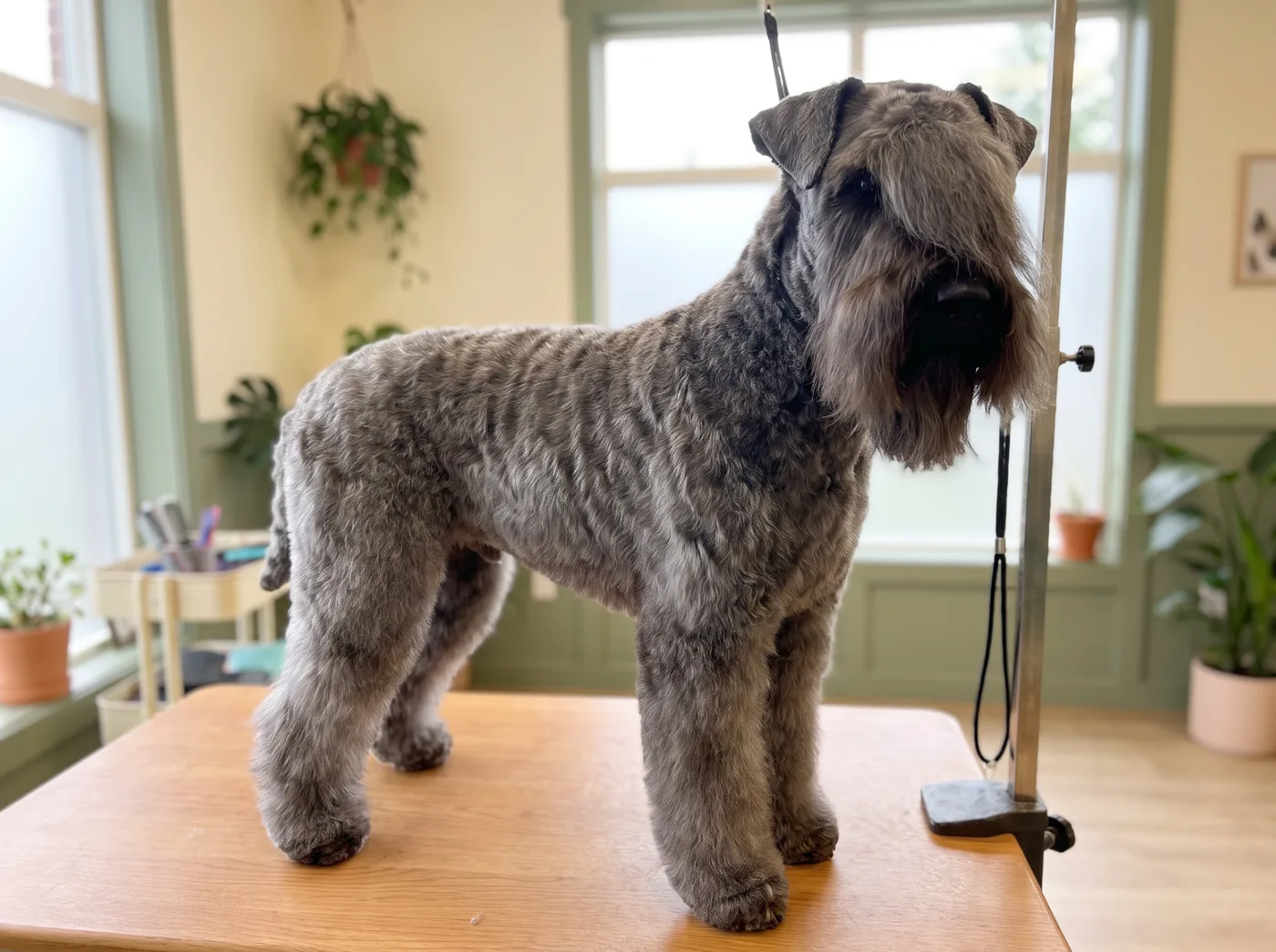
About the Kerry Blue Terrier
Nearly every other terrier tells the same story: a harsh jacket, hand stripped, softened permanently by clipping. The Wire Fox, the Welsh, the Norwich and the Airedale all take that route.
The Kerry Blue does not, and a groomer working from terrier habit gets it wrong.
The coat is soft, dense and wavy with no undercoat, closer to a Poodle or a Wheaten than to a wire jacket. It is clipped and scissored into shape, it sheds almost nothing, and it mats badly if it is not combed daily.
The second surprise is the color. Kerry Blue puppies are born black, and the blue comes in gradually over eighteen months to two years.
The terrier that is not stripped
The Kerry Blue coat is soft and wavy rather than harsh and wiry, and there is no undercoat. That single fact reverses the whole terrier routine.
There is nothing to hand strip. The coat does not shed out in cycles the way a wire jacket does, and pulling at it achieves nothing except discomfort. It is clipped or scissored, every four to six weeks, into the recognizable Kerry outline: a smooth body, full furnishings on the legs, a beard, and a long fall of hair over the eyes.
Because the coat grows continuously and sheds almost nothing, the dead hair stays in it and tangles into new growth. That makes matting a severe risk rather than a moderate one, and it is why the daily comb is not optional.
Comb to the skin every day with a metal comb, not a slicker alone. The failure points are the beard first, then behind and under the ears, the armpits, the chest, the britches and under a collar or harness.
Say it explicitly at a salon: this coat is scissored, not stripped. Some groomers will assume otherwise from the group alone.
The show trim is skilled scissoring and takes two hours. A pet trim is shorter all over and much quicker.
Born black, and clearing to blue
Kerry Blue puppies are born black, or very close to it, and the adult blue develops slowly.
The clearing usually starts around nine months, works through a range of dark slates and grays, and is complete somewhere between eighteen months and two years. Some dogs take longer, and a Kerry that has not cleared by eighteen months is still within normal.
The shade it settles at varies from a deep slate blue to a pale silver blue, and it is not predictable from the puppy.
This causes real confusion. Owners ask breeders whether the dog is fading, going gray early, or is the wrong breed, and groomers occasionally record a young Kerry as a black dog.
Nothing about it needs managing. It is simply what the breed does.
One practical note: clipping does affect the apparent shade. A closely clipped Kerry looks lighter, because you are seeing the newer growth nearer the skin, and the coat darkens again as it grows out. That is a clipper effect rather than a color change.
Sun bleaching also lightens the coat over a summer and grows out.
The beard, the fall and the face
The Kerry carries a full beard and a long fall of hair over the eyes, and both are part of the outline rather than furnishings to be cut off.
The beard goes into the water bowl at every drink and the food at every meal, and being soft rather than harsh, it soaks and holds. Comb it daily, wipe and dry after meals, and wash it far more often than you bathe the dog. A shallow wide bowl helps a great deal.
A permanently damp beard sours, stains and eventually leaves the skin under the chin red and sore.
The fall over the eyes is traditional and the dog sees through it. Hair actually resting on the eye surface is different and should be kept clear, since it irritates and eventually scars.
Many pet owners have the fall shortened, which is a reasonable choice, and it should be a stated one rather than a default.
Ears are small folded drop ears, so lift them weekly, look and smell, and keep the hair around the opening trimmed.
Bathe every four weeks, comb out first, and brush while drying, since a soft coat dried in a heap sets that way.
Booking, temperament and the interval
Kerry Blues need a professional groom every four to six weeks and there is no realistic way around it on a continuously growing coat.
That is the single most important commitment of the breed and it is where things go wrong: an interval that stretches to ten or twelve weeks on a coat that mats severely ends in a shave down.
Book the next appointment before you leave. Give a length in numbers rather than naming a style, and bring a photograph if you want the traditional outline.
Kerries are bold, alert, strongly terrier dogs, and many are dog aggressive with unfamiliar dogs even when perfectly friendly with people. That matters in a salon with other dogs moving around, so be honest at booking and ask for a quiet slot.
They are also intelligent and stubborn, so handling has to be established in puppyhood rather than negotiated later.
Nails every three to four weeks, pads cleared, and the sanitary area kept short.
What to tell your groomer
Say the coat is scissored and clipped, never stripped, because the group alone suggests otherwise.
Give a length in numbers and say whether you want the traditional outline or a shorter pet trim.
Say whether the fall over the eyes is kept or shortened.
Ask for the beard washed and dried and the hair right around the mouth kept short.
Say honestly when the dog was last combed to the skin, since this coat mats severely.
Say how the dog is with other dogs, and ask for a quiet slot if needed.
Keeping the coat between grooms
Comb to the skin
A metal comb, daily. This coat mats severely and a slicker only moves the top.
Daily
Say scissored, not stripped
The group suggests stripping and this coat has nothing to strip.
Every visit
Wash and dry the beard
Soft hair that soaks up every meal and drink. A shallow wide bowl halves it.
Daily
Keep the four to six week slot
A stretched interval on a severely matting coat ends in a shave down.
Every four to six weeks
Common Questions About the Kerry Blue Terrier
Is a Kerry Blue Terrier hand stripped like other terriers?
No, and this is the thing groomers get wrong from habit. The Kerry coat is soft, dense and wavy with no undercoat, much closer to a Poodle or a Wheaten than to a wire jacket, so there is nothing to strip. It is clipped and scissored into shape every four to six weeks. Because it grows continuously and sheds almost nothing, it also mats severely, which means combing to the skin daily with a metal comb rather than relying on a slicker.
Why is my Kerry Blue puppy black?
Because they all are. Kerry Blue puppies are born black or nearly black, and the adult blue clears in gradually: usually starting around nine months, working through dark slates and grays, and finishing somewhere between eighteen months and two years. Some take longer and that is still normal. The final shade ranges from deep slate to pale silver blue and is not predictable from the puppy. Nothing needs managing, and a young Kerry recorded as a black dog is simply mid-change.
How often does a Kerry Blue need grooming?
Every four to six weeks professionally, plus combing to the skin daily at home, and there is no way around either on a continuously growing coat that mats severely. Stretching the interval to ten or twelve weeks is how Kerries end up shaved down, and at that point the shave is the kind option rather than a shortcut. Book the next appointment before you leave, give a length in numbers, and pay particular attention to the beard, behind the ears and under any harness.
Similar breeds
Same coat, same schedule, or the breeds this one is crossed from.

Cesky Terrier
The other terrier that is clipped rather than stripped, and also born black
Cesky Terrier
Soft Coated Wheaten Terrier
The terrier that carries a silky single coat, which reverses every rule the group page states
Soft Coated Wheaten Terrier
Airedale Terrier
The largest terrier there is, and the biggest hand stripping job a salon will take on
Airedale TerrierFind a groomer who knows this coat
Search 37,863 groomers by town, or keep reading the breed guide.
Find a Local Groomer View All Breeds