Wire Fox Terrier Grooming
The sharpest sculpted outline in terriers, and the one clipping softens fastest
About the Wire Fox Terrier
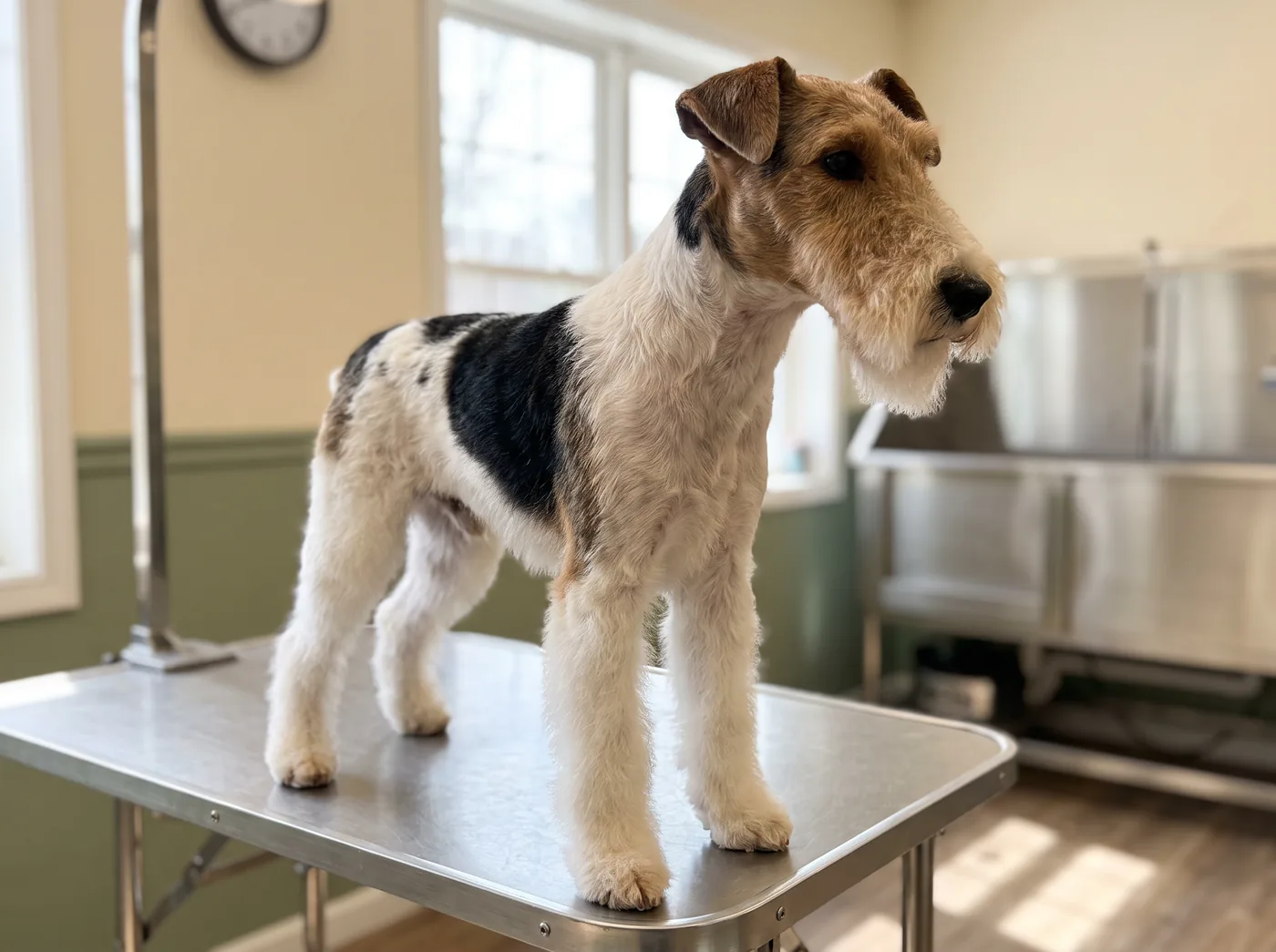
The Wire Fox Terrier carries the classic wire terrier package taken to its most sculpted extreme: a dense, harsh, crinkly jacket over a short softer undercoat, with long dense furnishings on the legs and a full beard, all scissored and stripped into an outline sharper than any other terrier.
The head is the thing. A Wire Fox Terrier head should read as a long, flat sided, almost rectangular wedge, and that shape is created by grooming rather than by bone. It is the most skilled scissor work in the group.
It also means this is a breed where the groomer genuinely matters. A Wire Fox Terrier clipped down by a salon that treats every small terrier alike comes back soft, pale and round headed, and it takes a year or more of stripping to recover if it recovers at all.
This coat can be clipped, but the texture or the color may change and it will not always come back the same. Talk it through with your groomer before the first one.
Stripping, clipping, and the color
The mechanics are the same as every wire coat here. Each outer hair grows to length, dies, and sits loose in the follicle rather than dropping, so it comes out by hand or with a stripping knife used as a lever rather than a blade.
Done on a coat that is ready it does not hurt, and a dog stripped regularly from puppyhood treats it as routine.
Many owners and groomers roll a Wire Fox Terrier coat, taking out the longest hairs every few weeks so the dog is always presentable and the jacket is always at a slightly different stage. That is the traditional approach for this breed and it produces the best coat.
Clipping cuts the hair at the surface and leaves the dead root behind, so the softer undercoat progressively dominates. On this breed the result is unusually obvious, for one reason: the coat is white with black and tan markings, and clipping fades those markings badly. Black goes to a dull grizzle gray and tan goes pale and washed out, while the whole jacket softens and starts holding dirt rather than shedding it.
It is close to a one way door. After a few years of clipping, stripping will not bring the hard jacket or the sharp color back.
None of it harms the dog and a clipped Wire lives perfectly happily. But owners are frequently not told, and they notice their dog has changed color and assume something is wrong.
Every six to eight weeks, and do not bathe before a stripping appointment: a washed coat is soft and slippery and will not release.
The furnishings, the beard and the daily work
As on every wire breed, the dog carries two coats that want different things, and it is the furnishings rather than the jacket that make the daily work.
The leg furnishings are long, dense and soft, faster growing than the jacket, and they mat in the armpits, on the inside of the back legs, and anywhere a harness rubs. Comb them through with a metal comb weekly, to the skin, and after any muddy walk.
The beard is substantial on this breed and it is a daily job. It goes into every water bowl and every meal and holds both, and on a mostly white dog it stains and sours quickly. Rinse it and dry it after meals, and comb it daily.
The eyebrows and the hair around the eyes want keeping out of the eyes, and the ears, which fold forward in a small neat V, want a weekly lift and smell.
Feet want the hair between the pads kept flush.
Because the jacket sheds very little while it is in good condition, owners often describe Wire Fox Terriers as non shedding. That is true only while the coat is being stripped on schedule. Leave it and the dead hair comes out everywhere at once, which is the coat asking for an appointment.
Bathe every six weeks or so, and less if the jacket is being kept hard. A harsh coat sheds dirt as it dries and frequent washing softens it.
Wire and Smooth are two breeds
Worth stating plainly, because the names invite confusion and the appointments are nothing alike.
The Smooth Fox Terrier is a separate recognized breed with a short, flat, hard coat. It needs a rubber curry once a week, sheds moderately, and has nothing to strip, cut or shape. It is a ten minute dog.
The Wire Fox Terrier is this page: a harsh jacket, long furnishings, a beard, and a two hour sculpted appointment every six to eight weeks.
They were once considered varieties of one breed and were separated formally in the 1980s. They share the build and the temperament and differ completely in coat.
So somebody booking a fox terrier has told a salon almost nothing, and the difference between the two bookings is roughly two hours.
The same distinction runs through the group generally, and it is why the terrier group page argues that group membership predicts grooming badly: this group contains harsh stripped jackets, a soft silky coat on the Wheaten, a non-shedding wool coat on the Bedlington, and short smooth coats on the Staffy and Bull Terrier. Five completely different appointments under one heading.
A terrier that does not stop
Wire Fox Terriers are among the most energetic and least still dogs in the group. They were bred to bolt fox from earths, which required a dog that would keep going underground alone, and that temperament is entirely intact: busy, bold, noisy, and endlessly interested in everything.
On a table that means a dog which does not naturally stand still for two hours of scissor work, and a sculpted outline needs the dog to be still.
The two things that help are both owner side. Exercise the dog properly before the appointment. And handle the feet, face and beard daily from puppyhood, and start stripping early, because a dog that has known it since it was young accepts it as routine while one meeting it at four does not.
They are also notorious escapers and diggers, so a salon door is worth treating carefully.
Nails every three to four weeks.
Skin is generally sound, though the breed carries a moderate rate of allergy, which shows as paw licking and recurring ear trouble. The white coat makes staining from licking obvious early, which is useful.
Teeth, on a dog that commonly lives thirteen to fifteen years.
What to tell your groomer
Say Wire rather than fox terrier, because a Smooth is a ten minute dog and a Wire is two hours.
Say whether you want it stripped or clipped, and understand that clipping permanently softens the jacket and fades the black and tan markings badly.
Ask whether they roll the coat, which is the traditional approach for this breed and produces the best jacket.
Do not bathe the dog before a stripping appointment.
Bring a photograph for the head and outline, because the long flat sided head is created by scissoring rather than by bone.
Ask for the beard, feet and sanitary area done every visit, and mention any allergy or ear history.
Keeping the coat between grooms
Strip or roll the coat
Every six to eight weeks. Rolling, taking the longest hairs out regularly, produces the best jacket on this breed.
Every six to eight weeks
Rinse and dry the beard
It goes into every bowl and meal, and on a mostly white dog it stains and sours within days.
Daily
Comb the leg furnishings
The soft furnishings mat, not the harsh jacket. Armpits and inside the back legs first.
Weekly
Do not bathe before a strip
A washed coat is soft and slippery and the dead hairs will not release. Clean and dry is right.
Before appointments
Common Questions About the Wire Fox Terrier
Should a Wire Fox Terrier be hand stripped?
If you want the harsh jacket and the sharp black and tan markings, yes, every six to eight weeks, and many owners roll the coat by taking out the longest hairs every few weeks instead. Clipping is acceptable and plenty of pet Wires are clipped, but it permanently softens the coat and fades the color unusually visibly on this breed: black goes to a dull grizzle gray and tan washes out. After a few years of clipping, stripping will not bring either back.
What is the difference between a Wire and a Smooth Fox Terrier?
They are two separate breeds, formally separated in the 1980s, sharing a build and a temperament and differing completely in coat. A Smooth has a short flat hard coat needing a rubber curry once a week and nothing else. A Wire has a harsh jacket, long leg furnishings and a full beard, needing stripping and sculpted scissor work every six to eight weeks. Booking a fox terrier without saying which tells a salon almost nothing, and the difference is about two hours.
Do Wire Fox Terriers shed?
Very little while the coat is being stripped on schedule, because dead wire hair sits in the follicle rather than dropping. That is why the breed is often described as non shedding. Leave the coat past its cycle, though, and it starts coming out everywhere at once, which is the coat asking for an appointment rather than a problem. The soft leg furnishings and beard shed normally and are what mats.
Similar breeds
Same coat, same schedule, or the breeds this one is crossed from.

Airedale Terrier
The largest terrier there is, and the biggest hand stripping job a salon will take on
Airedale Terrier
Jack Russell Terrier
Three coats in one breed, and only one of them behaves the way a terrier coat should
Jack Russell Terrier
Bedlington Terrier
A terrier with a wool coat, clipped and scissored where every other terrier is stripped
Bedlington TerrierFind a groomer who knows this coat
Search 37,863 groomers by town, or keep reading the breed guide.
Find a Local Groomer View All Breeds