Morkie Grooming
A Maltese crossed with a Yorkie, so the coat is silk either way and mats either way
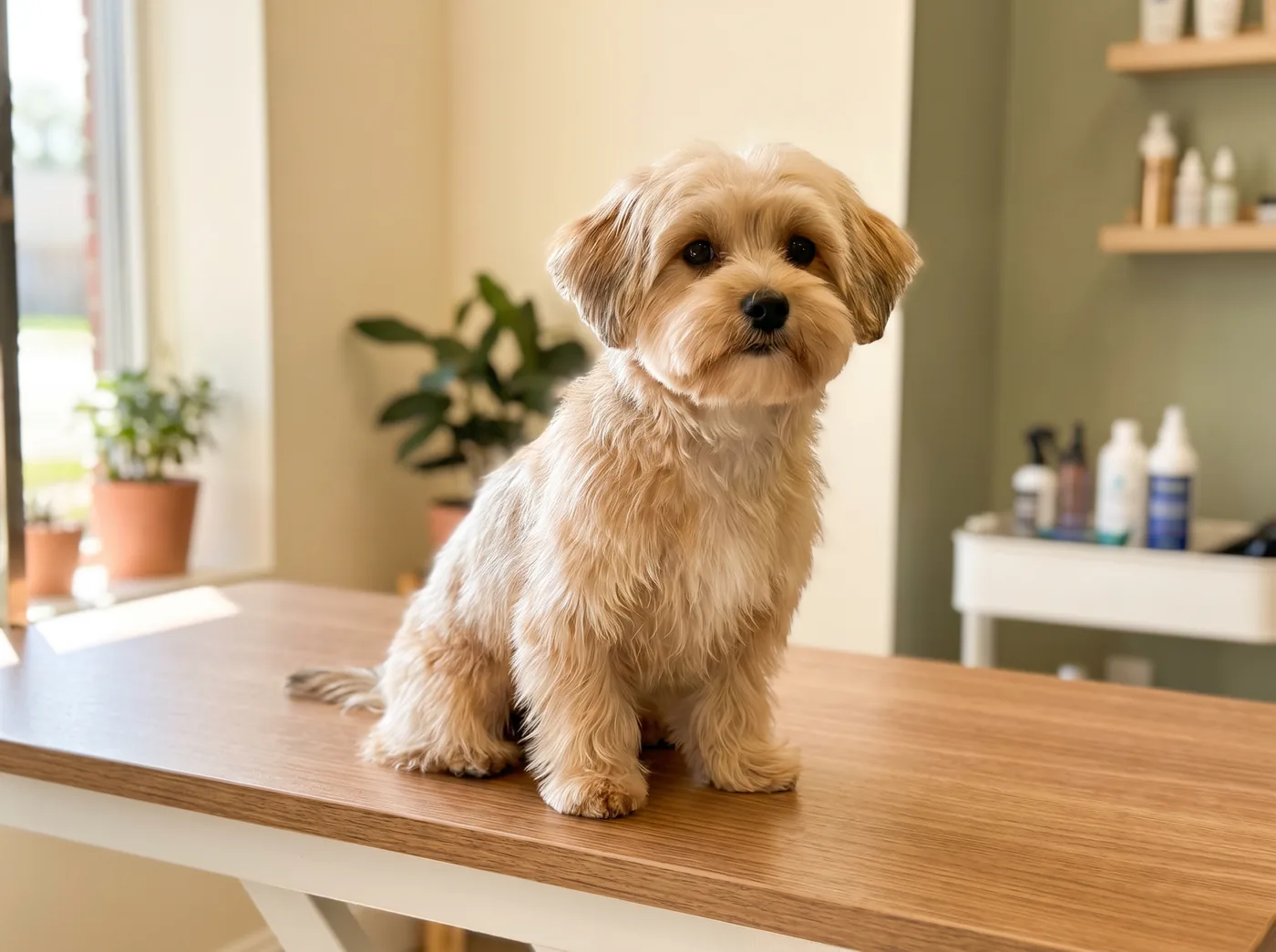
About the Morkie
Most designer crosses are a coat lottery between two very different parents. The Goldendoodle can land anywhere between a wavy retriever coat and a Poodle's wool, and the Cavachon page exists to explain which parent does what.
A Morkie is unusual in that both parents give roughly the same answer. A Maltese carries a fine, straight, silky coat with no undercoat that grows continuously. A Yorkshire Terrier carries a fine, straight, silky coat with no undercoat that grows continuously. So whatever mix you get, it is silk, it keeps growing, it sheds almost nothing, and it mats.
What varies is color and texture rather than type, and the practical routine is the same either way: comb daily, groom every four to six weeks, and pick a length you will actually keep up with.
What the Morkie is crossed from
One coat type, and why it still mats
Both parents contribute a single silky coat with no undercoat, so a Morkie sheds very little. That is the selling point, and it is also the problem, because the hair a dog does not shed does not disappear. It stays in the coat and tangles into what is still growing.
The coat is fine, which means it tangles easily, and it grows continuously, which means it never stops needing cutting.
Comb to the skin daily with a metal comb. Not a slicker on its own: a slicker moves the surface of a fine coat and leaves felt forming underneath, which is how an owner who brushes every day still arrives with a matted dog.
The test is whether the comb passes freely from skin to tip. If it will not, that section is not brushed.
The six places that fail: behind and under the ears, the armpits, the inside of the back legs, under a collar or harness, the chest and around the rear.
Texture varies a little between individuals. A more Yorkie-influenced coat is often slightly coarser and shinier and holds a length well; a more Maltese-influenced one is softer, cottonier and mats a touch more readily. Neither changes the routine.
The trim, and choosing a length honestly
A Morkie has to be cut, because the coat grows indefinitely. Full length on a dog this small is a show coat commitment nobody with a pet actually wants.
Almost every Morkie wears some version of a puppy trim: an even short length over the body, a rounded face, scissored legs and tidy feet. It is comfortable, practical and looks like what people picture.
Give a length in numbers and bring a photograph. Puppy trim, teddy bear and short mean different things in different salons, and the phrase alone is how people end up disappointed.
The interval is four to six weeks. That is the point at which daily combing stops keeping pace with the growth.
The single most useful decision an owner makes is length, and the honest version of the advice is the same as on every silk coated toy here: a shorter trim on a shorter cycle is a comfortable dog and an easy routine, while a long trim on a stretched cycle ends in a pelted coat and a shave down that nobody wanted. The shave down is the kind option at that point, not a shortcut.
Keep the sanitary area, the paw pads and the hair around the eyes short whatever else you choose.
The face, the eyes and staining
Both parents have prominent eyes and hair that grows straight down into them, so the face needs more attention than the body.
Keep the hair around the eyes trimmed short, or tied up if the coat is long. Hair resting on the eye surface irritates it and eventually scars it, and it is the commonest avoidable eye problem in silky toy breeds.
Tear staining is very visible on a pale Morkie. The cause is porphyrin, an iron compound in tears that oxidizes on contact with air and permanently marks the hair it dries in. It does not wash out; it grows out.
So prevention is everything: wipe under each eye daily with a damp cloth and dry it, keep the hair around the eyes short so tears reach air rather than sitting in a fringe, and keep the muzzle dry after meals and drinks.
Avoid tear stain products containing antibiotics. Giving a dog a low dose antibiotic indefinitely for a cosmetic problem is a bad trade.
Sudden increased tearing, squinting, pawing at the face or a thick or colored discharge is a veterinary matter. Blocked tear ducts and inward rolling eyelids are both common in small breeds and both present exactly this way.
A very small dog, and what that means
At four to eight pounds this is one of the smallest dogs on the site, and size brings its own list.
Teeth are the big one. Toy breeds have full sized teeth crowded into small jaws, which traps food and produces dental disease early and severely, and both parent breeds are notorious for it. Brush daily from puppyhood and expect professional cleanings. This is the health issue most likely to shorten a Morkie's life or its comfort.
Retained puppy teeth are common in toys, so if an adult tooth comes through beside a baby tooth rather than replacing it, that needs a veterinarian.
Handling matters. A dog this small is easily hurt by a jump off a table, and grooming tables are exactly where that happens. It should never be left unattended on one, and it should be lifted rather than allowed to leap.
Cold is a real consideration: very little body mass, a single coat and a short trim add up to a dog that genuinely needs a coat outdoors in winter.
Nails every three to four weeks, and the hair between the pads kept clear, since a tiny dog with slippery hairy feet skids on hard floors.
Do not let anyone put a bow in and call it done. The comb work is the job.
What to tell your groomer
Give a length in numbers and bring a photograph rather than saying puppy trim.
Say honestly when the dog was last combed to the skin and where you found tangles, particularly behind the ears.
Ask for the hair around the eyes kept short, the pads cleared and the sanitary area trimmed.
Ask them to comb the dog out dry before bathing, never to bathe a matted coat.
Ask for the mouth to be looked at and mention any retained baby teeth or bad breath.
Say the dog is never to be left unattended on the table, and book the next appointment before you leave.
Keeping the coat between grooms
Comb to the skin, not the surface
A metal comb. If it will not pass from skin to tip, that section is not brushed.
Daily
Keep the eyes clear and dry
Hair on the eye surface scars it, and porphyrin stains pale hair permanently.
Daily
Brush the teeth
Crowded toy jaws. The health problem most likely to hurt this dog.
Daily
Keep a four to six week slot
A continuously growing coat on a tiny dog. The interval is what prevents the shave down.
Every four to six weeks
Common Questions About the Morkie
Do Morkies shed?
Very little, because both parents give a single silky coat with no undercoat. That is the selling point and also the catch: hair a dog does not shed stays in the coat and tangles into the hair still growing, so a Morkie mats readily and needs combing to the skin every day with a metal comb, plus a groom every four to six weeks. A slicker alone is not enough, since it moves the surface of a fine coat while felt forms underneath, which is why owners who brush daily still arrive with matted dogs.
What kind of coat will a Morkie puppy have?
Silk, whichever parent it favors, which makes this an unusually predictable cross. A Maltese and a Yorkshire Terrier both give a fine, straight, continuously growing single coat with no undercoat, so unlike a doodle cross there is no low shedding versus heavy shedding lottery to worry about. What varies is color and slight texture: a more Yorkie-influenced coat tends to be a little coarser and glossier, a more Maltese-influenced one softer and cottonier. The daily combing and the four to six week groom are the same either way.
What is the biggest health thing to watch on a Morkie?
Teeth. Toy breeds carry full sized teeth in small crowded jaws, which traps food and causes dental disease early and severely, and both the Maltese and the Yorkshire Terrier are known for it. Brush daily from puppyhood and budget for professional cleanings, because this is the problem most likely to cause real pain. Watch too for retained baby teeth, where an adult tooth erupts alongside a puppy tooth instead of replacing it, which is common in toys and needs a vet.
Similar breeds
Same coat, same schedule, or the breeds this one is crossed from.


Maltipoo
A coat you cannot predict from the name, which is the whole difficulty with the cross
MaltipooFind a groomer who knows this coat
Search 37,863 groomers by town, or keep reading the breed guide.
Find a Local Groomer View All Breeds