Toybob Grooming
Genuinely small all over, with normal legs, which is a different thing entirely
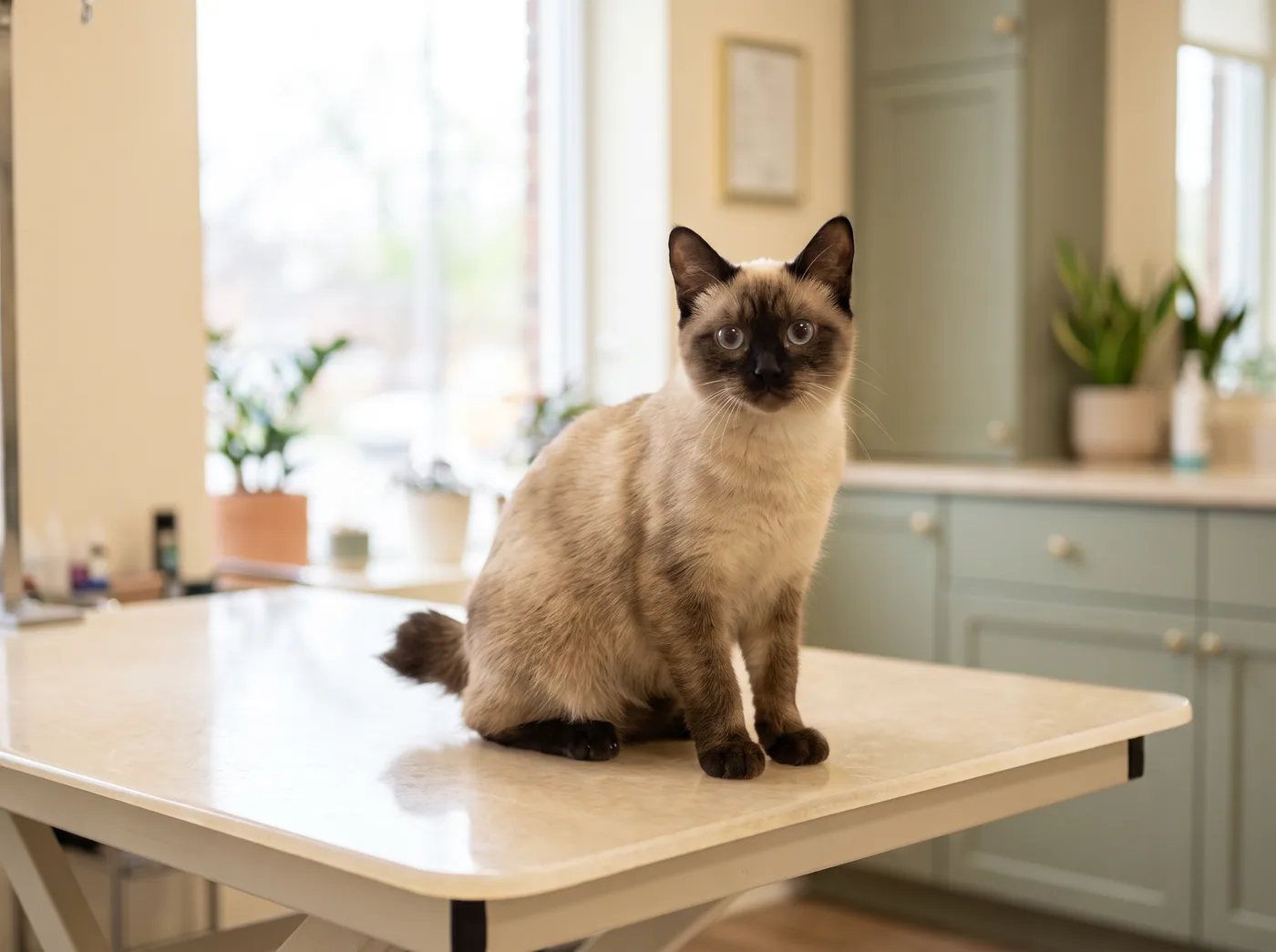
About the Toybob
Three short legged breeds share one problem, the Munchkin, the Minuet and the Bambino, and all three have the same problem: legs a third shorter than normal reduce how much of itself a cat can reach.
Read together, those pages could easily leave the impression that a very small cat is a compromised cat, and that is not true. The Toybob is the counterpoint.
A Toybob is one of the smallest cat breeds in the world, with adults at three to six pounds, roughly the size of a large kitten. But it is small in proportion: normal length legs, normal body ratios, normal movement.
There is no dwarfism gene, no reach problem and nothing an owner has to do that they would not do for any cat.
The coat takes five minutes a week and the tail carries a fifth independent bobtail mutation.
The Toybob has a double coat that regulates its own temperature. Shaving it does not keep the animal cooler, removes the protection against sun and insects, and the top coat often grows back patchy or never returns correctly. A thorough deshed takes out the undercoat and does the job the owner was actually asking for.
Small in proportion, which changes everything
The distinction is worth being precise about, because it is the difference between a cat that needs help and one that does not.
Dwarfism, as in the Munchkin and its derivatives, comes from a gene affecting long bone growth. The legs are short while the body is normal, so the proportions change and the cat cannot fold itself round to reach its own back and rear as easily.
The Toybob is not that. It is simply a small cat: everything scaled down together, with normal leg length relative to the body, normal flexibility and normal reach.
So a Toybob grooms itself completely, the way any cat does, and the owner's job is the ordinary one.
Comb once a week with a fine comb or a rubber mitt on the shorthair, twice a week on the semi-longhaired variety. Nothing mats, nothing needs bathing, nothing needs clipping.
The one thing size does change is fragility. A three pound adult cat is genuinely delicate, so it should not be handled roughly, should not be left where it can be sat on or stepped on, and should be lifted with two hands rather than one.
Weigh it monthly, since half a pound on a four pound cat is a large change.
The fifth bobtail gene
The tail is short, kinked and often described as a pom, usually two to seven vertebrae, and no two are the same shape.
It comes from a mutation entirely independent of the ones behind the other bobtailed breeds.
Manx and Cymric: dominant, affecting spinal development generally, with real associated disease.
Japanese Bobtail: recessive, tail only.
American Bobtail: dominant, tail only.
Kurilian Bobtail: a fourth independent mutation, tail only.
Toybob: a fifth, tail only.
So of five bobtail genes, only the Manx one is a welfare problem, and the Manx assumption travels to every short tailed cat by default. A short tail on a cat tells you almost nothing until you know which gene made it.
Handle a Toybob tail normally. It is ordinary tissue with ordinary sensation, and the kinks are fused vertebrae rather than injuries, so a vet who is not familiar with the breed may want reassuring.
The rest of a very small cat
Claws want tipping every two to three weeks. On a cat this small they are fine and easy to quick, so small frequent trims beat occasional large ones, and good light matters.
Provide a proper scratching post anyway. Size does not remove the need and declawing is never appropriate.
Teeth are worth attention. A small mouth crowds its teeth in the same way a toy dog's does, and dental disease is the most common reason a cat stops grooming itself.
Ears are ordinary and well ventilated. Wipe the visible part weekly.
Food portions matter more than usual: a three pound cat needs very little and it is easy to overfeed by eye. Weigh food rather than guessing, and weigh the cat monthly.
Warmth is worth thinking about, since a very small body loses heat faster than a large one, and a short plush coat is not much insulation on a four pound cat.
The breed is generally healthy, and its small size comes from selection for overall size rather than from a known disease-linked mutation, which is not the case for every small breed.
Buying one, and what to be careful of
The Toybob is rare, recognized by some registries and not others, and the gene pool is small, so the buying questions matter.
Ask what the breeder outcrosses to and what they test for.
Be careful about names. "Toybob" is sold alongside a number of unrelated marketing terms for small cats, and some sellers advertise "teacup" or "miniature" cats of ordinary breeds, which usually means either runts, cats with genuine growth disorders, or simply young kittens sold on a promise.
A Toybob is small because the whole cat is small and it breeds true. A "teacup Persian" is not a thing.
Ask to see adult cats rather than kittens, since that is the only way to know what small actually means in that line.
None of that affects grooming, which is five minutes a week. It affects whether the cat you buy is healthy.
Toybobs are typically confident, affectionate, quiet and undemanding, which makes handling easy from kittenhood.
What to tell your groomer or vet
Say the cat is small in proportion, with normal legs, so it has none of the reach problems of the short legged breeds.
Say the short tail is a tail-only mutation and carries none of the Manx spinal problems.
Say the kinks in the tail are fused vertebrae by design and not injuries.
Say the adult weight, since three pounds surprises people who assume it is a kitten.
Ask for a comb or mitt, claws tipped and the mouth checked. Nothing else.
Ask them to weigh the cat, since small changes are large percentages here.
Keeping the coat between grooms
Comb once a week
Normal proportions and normal reach, so the cat does most of it itself.
Weekly
Handle it like glass
A three pound adult is genuinely delicate. Two hands, and never rushed.
Every time
Weigh food and cat
Half a pound on a four pound cat is a large change either way.
Monthly
Correct the Manx assumption
A fifth independent tail gene, tail only, with no spinal disease at all.
Every visit
Common Questions About the Toybob
Is a Toybob a dwarf cat like a Munchkin?
No, and it is an important distinction. Munchkin dwarfism comes from a gene affecting long bone growth, so the legs are short while the body is normal, which changes the proportions and reduces how easily the cat can reach its own back and rear. A Toybob is simply small: everything scaled down together, with normal leg length, normal flexibility and normal reach. It grooms itself completely and needs nothing extra from its owner beyond ordinary care.
Is the Toybob's short tail a Manx tail?
No. It comes from a mutation independent of the Manx one and it affects the tail only, with no spinal, bladder or hind leg problems attached. There are at least five separate bobtail genes across the cat breeds, and only the Manx one is a welfare problem. Handle the tail normally: it is ordinary tissue with ordinary sensation, and the kinks are fused vertebrae by design rather than old injuries, which is worth telling a vet unfamiliar with the breed.
Is a Toybob the same as a teacup or miniature cat?
No, and the difference matters when buying. A Toybob is a recognized breed that is small because the whole cat is small and it breeds true. "Teacup" and "miniature" are marketing terms applied to ordinary breeds, and they usually mean runts, cats with genuine growth disorders, or simply kittens sold on a promise about adult size. Ask to see adult cats rather than kittens, since that is the only way to know what small means in a given line.
Similar breeds
Same coat, same schedule, or the breeds this one is crossed from.

Munchkin
A normal cat body on legs that cannot reach everywhere, which is the entire grooming story
Munchkin

Kurilian Bobtail
A fourth independent short tail gene, on a dense working coat from the Kurils
Kurilian BobtailFind a groomer who knows this coat
Search 37,863 groomers by town, or keep reading the breed guide.
Find a Local Groomer View All Breeds